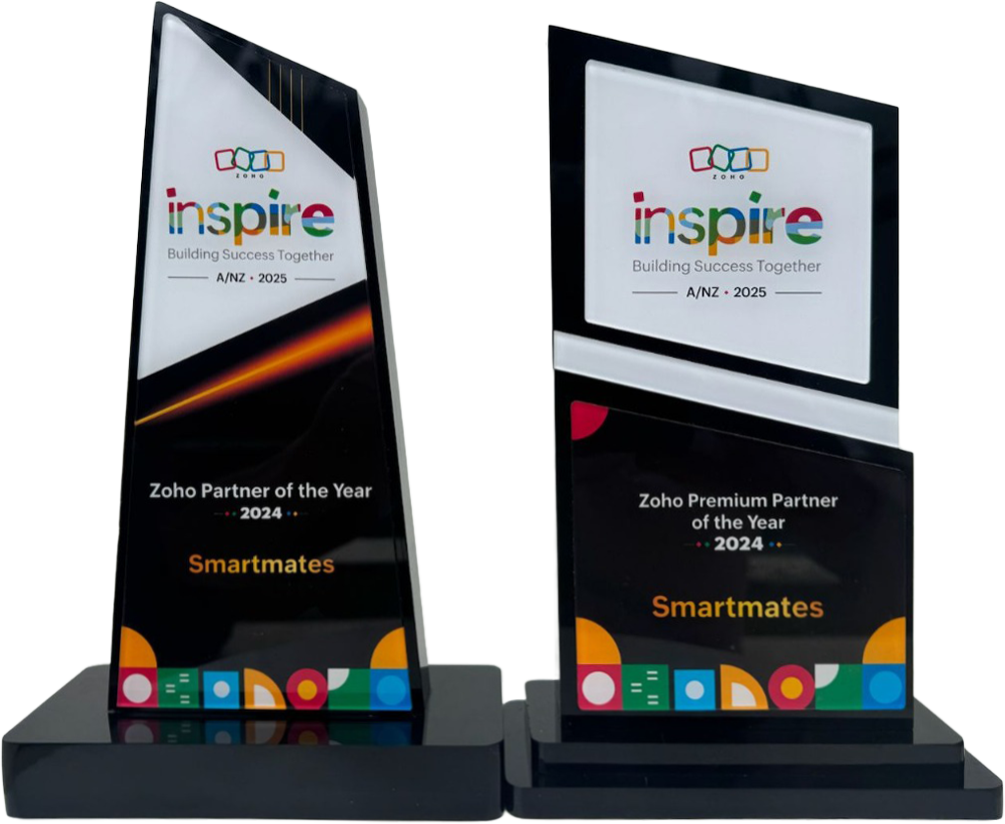
4 Years in a Row
Officially awarded Zoho Partner of the Year in Australia for 2022, 2023, 2024 and 2025. Chosen from 60+ Australian Zoho Partners by Zoho themselves.*
- First Top-Up Special $129 $99/hr + GST
Book your free video conference with our Zoho Consultants
Get your free comprehensive Zoho rollout quotation
Recognised as Australia’s #1 Zoho Partner, 4 years running
Minimum project size 10 consulting hours.

Zoho CRM Training For Nonprofits Managing Donors And Relationships


It’s Tuesday morning at your nonprofit, and your development coordinator is staring at three different spreadsheets trying to figure out which major donors haven’t been contacted in the past six months. Meanwhile, someone just called asking about their donation history, and it’s taking fifteen minutes to piece together information scattered across email receipts, bank statements, and that one Google Sheet nobody’s updated since 2023.
Oh, and your annual appeal campaign starts next week, but you’re not entirely sure which donors received which version of last year’s campaign or how they responded. So you’ll probably just send the same message to everyone and hope for the best.
Sound painfully familiar?
Here’s the uncomfortable truth about nonprofit donor management: most organisations are losing donations not because their cause isn’t compelling or their work isn’t valuable, but because their systems for managing donor relationships are barely holding together with digital sticky tape and hope.
The nonprofits that are actually growing their donor base and increasing retention rates? They’re running Zoho CRM configured specifically for nonprofit needs, and more importantly, they’ve invested in proper Zoho CRM training so their team knows how to use it effectively for donor relationship management.
Let’s explore why training matters so much for nonprofits and how it transforms donor management from chaos into sustainable growth.
The Nonprofit Donor Management Challenge
Managing donor relationships in nonprofits is fundamentally different from managing customers in for-profit businesses. Your “customers” are giving you money and expecting nothing tangible in return except the satisfaction of supporting a cause they believe in.
That’s a unique relationship dynamic. It requires consistent communication, genuine appreciation, transparent impact reporting, and personal connection. Miss any of these elements and donors quietly disappear.
Most nonprofits are trying to manage these critical relationships using tools that were never designed for the job. Spreadsheets that become unwieldy after 50 donors. Email programs that can’t track who opened what or clicked where. Accounting software that tracks transactions but not relationships. Maybe a basic database that’s so clunky nobody actually uses it.
The result? Donors feel forgotten between appeals. Major donors don’t get the attention they deserve. First-time donors never become repeat supporters. And your fundraising team spends more time wrestling with administrative chaos than actually building relationships.
Why Donor Relationships Require Special Systems
Unlike commercial sales where the transaction is often the end point, donor relationships in nonprofits are ongoing journeys that can span decades.
You need to track donation history across multiple campaigns and years. Record personal preferences and communication choices. Manage volunteering activities alongside financial contributions. Track connections to corporate partners or other donors. Remember birthdays, anniversaries, and significant life events that create natural engagement opportunities.
This complexity requires purpose-built systems. Generic contact databases don’t cut it. You need something designed for relationship management over time, and that’s exactly what Zoho CRM provides when configured properly.
But here’s the critical point that most nonprofits miss: having Zoho CRM is useless if your team doesn’t know how to use it effectively for donor relationship management. That’s where training becomes absolutely essential.
Also Read: For Finance Teams, Zoho Consultants Mean Accuracy On Repeat
Why Zoho CRM Works Well for Nonprofits
Before diving into training specifics, let’s talk about why Zoho CRM is particularly well-suited for nonprofit donor management.
Nonprofit-Friendly Pricing
Zoho offers special pricing for nonprofits, making enterprise-level CRM capabilities accessible even for organisations with limited budgets. You get sophisticated donor management tools without the price tags typically associated with commercial CRM systems.
Flexible Customization
Every nonprofit is different. Your donor segments, campaign types, volunteer programs, and reporting needs are unique to your organisation. Zoho CRM’s flexibility means you can configure it to match your specific requirements rather than forcing your processes to fit rigid software.
Comprehensive Donor Tracking
Track everything about donor relationships in one place. Donation history, communication preferences, volunteer activities, event attendance, campaign responses, personal notes. Complete visibility into every donor relationship.
Campaign Management
Run targeted fundraising campaigns with proper segmentation, personalized messaging, and comprehensive tracking. See who responds, who doesn’t, and what messages resonate with different donor segments.
Volunteer Coordination
Many nonprofits need to manage volunteers alongside donors (and often they’re the same people). Zoho CRM can track volunteer activities, availability, skills, and engagement alongside donation history.
Grant and Corporate Partnership Management
For nonprofits working with foundations or corporate partners, Zoho CRM can manage these relationships separately from individual donors while maintaining visibility across your entire funding picture.
Impact Reporting
Generate reports showing donor engagement, retention rates, campaign performance, and fundraising progress. Make data-driven decisions about where to focus your limited resources.
But again, all of this only delivers value if your team knows how to use it. That’s where Zoho CRM training becomes crucial.
The Training Gap That Hurts Nonprofits
Most nonprofits approach CRM training completely wrong. They either skip it entirely (assuming people will figure it out), do a quick orientation covering basic buttons, or watch a few YouTube videos and call it done.
This approach guarantees poor adoption and wasted investment.
What Inadequate Training Looks Like
Your development team logs donors as contacts but doesn’t use custom fields for donor segments or giving levels. They record donations but don’t connect them to campaigns properly. They send emails but don’t track engagement. They have volunteer information but it’s disconnected from donation history.
Your executive director wants to see fundraising reports but doesn’t know how to access them. Your board asks questions the system could answer, but nobody knows how to pull the data.
Your volunteer coordinator uses a separate spreadsheet because they don’t understand how Zoho CRM handles volunteer management.
Everyone’s technically using Zoho CRM, but nobody’s using it effectively. The system becomes a glorified donor database rather than the relationship management engine it could be.
The Cost of Poor Training for Nonprofits
For nonprofits, poor training isn’t just inefficient. It directly impacts your ability to fulfill your mission.
Donors slip through the cracks because follow-up doesn’t happen systematically. Major donor relationships don’t get the attention they deserve because visibility is poor. First-time donors don’t become recurring supporters because stewardship isn’t automated. Campaign effectiveness stays low because you can’t analyze what works.
Every donor you lose due to poor systems is funding walking out the door. Funding that could be serving your beneficiaries, expanding your programs, or increasing your impact.
Poor training doesn’t just waste the CRM investment. It limits your organization’s potential.
What Effective Zoho CRM Training Looks Like for Nonprofits
Comprehensive Zoho CRM training for nonprofits goes far beyond basic system orientation. Here’s what it actually includes:
1. Donor-Centric Configuration Understanding
Before using Zoho CRM effectively, your team needs to understand how it’s been configured specifically for donor management. What custom fields exist and why? How are donor segments defined? What do different donation types mean? How does the system track giving levels?
Training starts with understanding the structure so people use it consistently and correctly.
2. Complete Donor Profile Management
Teaching your team how to create and maintain comprehensive donor profiles. Logging donation history accurately. Recording communication preferences and restrictions. Tracking volunteer activities and event attendance. Adding personal notes about conversations and preferences.
Rich donor profiles enable personalized relationship management.
3. Campaign Planning and Execution
How to use Zoho CRM for fundraising campaign management. Creating targeted donor lists based on giving history and engagement. Setting up personalized email sequences. Tracking campaign responses and donations. Measuring campaign effectiveness.
Your team learns to run sophisticated campaigns without the chaos.
4. Donor Stewardship Workflows
Building systematic donor stewardship processes. Automated thank-you sequences after donations. Regular touchpoints for major donors. Birthday and anniversary acknowledgments. Impact updates based on donation interests.
Stewardship becomes systematic rather than random, dramatically improving donor retention.
5. Volunteer Management Integration
How to track volunteer activities alongside donor information. Recording volunteer hours and skills. Managing volunteer opportunities and assignments. Seeing the complete picture of how people support your organisation.
This integration is crucial because volunteers often become donors and vice versa.
6. Reporting and Analytics for Nonprofits
Understanding what metrics matter for nonprofit donor management. Building dashboards showing donor retention, campaign performance, giving trends, and engagement levels. Using reports to identify at-risk donors and major gift opportunities.
When your team can see patterns clearly, they make better decisions about resource allocation.
7. Grant and Corporate Partner Tracking
For nonprofits managing institutional funding, training covers how to track grant applications, reporting requirements, and corporate partnerships. Different processes from individual donors, but using the same system for complete visibility.
8. Data Privacy and Compliance
Understanding how to handle donor data responsibly. Privacy settings, communication consent, data access controls. Especially important for nonprofits where trust is fundamental to donor relationships.
Your team learns to use Zoho CRM in ways that protect donor privacy and maintain trust.
9. Team Collaboration and Coordination
How different team members use Zoho CRM collaboratively. Development coordinator tracks donor outreach. Executive director monitors major donor relationships. Volunteer coordinator manages volunteer activities. Everyone sees relevant information without duplicating effort.
Collaboration features turn individual activities into coordinated team effort.
10. Ongoing Optimization and Best Practices
Training on how to continuously improve your Zoho CRM usage. Identifying bottlenecks, streamlining processes, implementing new features, sharing best practices across the team.
This ensures your CRM effectiveness grows over time rather than stagnating.
The Training Delivery Approach That Works for Nonprofits
How you deliver Zoho CRM training matters enormously, especially for nonprofit teams who are often juggling multiple responsibilities with limited time.
Role-Specific Training Tracks
Different roles need different training. Your development coordinator needs deep expertise in donor management and campaigns. Your volunteer coordinator needs volunteer tracking skills. Your executive director needs reporting and dashboard capabilities.
Role-specific training ensures everyone learns what they actually need without wasting time on irrelevant features.
Scenario-Based Learning
Training should use realistic nonprofit scenarios. How do you record a major gift? How do you segment donors for an annual appeal? How do you track grant applications? How do you generate reports for board meetings?
Scenario-based learning makes training immediately practical and memorable.
Hands-On Practice with Real Data
Theory doesn’t stick. People need to actually work in Zoho CRM during training, ideally using your real donor data so everything feels relevant and applicable.
Hands-on practice builds confidence and competence simultaneously.
Digestible Training Sessions
Nonprofits can’t afford to have entire teams unavailable for days of training. Break training into manageable sessions. Two hours on donor management. Ninety minutes on campaign setup. One hour on reporting.
Shorter, focused sessions fit nonprofit schedules better and improve knowledge retention.
Accessible Support Resources
Provide resources people can reference after training. Video tutorials for common tasks. Quick-reference guides. FAQs. Access to someone who can answer questions when they get stuck.
Ongoing resources turn training into lasting competence.
Measuring Training Success in Nonprofits
How do you know if your Zoho CRM training investment is paying off? Here are the metrics that matter for nonprofits:
System Adoption Rate
What percentage of your team uses Zoho CRM daily? Are they logging all donor interactions? Updating records consistently? Using campaign features?
High adoption means training was effective and the system fits your needs.
Data Quality and Completeness
Are donor profiles comprehensive and accurate? Communication preferences recorded? Donation history complete? Volunteer activities tracked?
Good data quality indicates people understand how to use the system properly.
Donor Retention Improvement
This is the ultimate measure. Are donors sticking around longer? Are lapsed donors being won back? Are first-time donors becoming repeat supporters?
Improved retention means your donor relationship management is working.
Campaign Effectiveness
Are your fundraising campaigns generating better response rates? Higher average donations? More engaged donors?
Campaign performance improvements demonstrate that proper donor management delivers results.
Staff Efficiency
Is your team spending less time on administrative tasks and more time on relationship building? Can they find information quickly? Are reports generated easily?
Efficiency gains mean training translated into practical productivity improvements.
Board and Leadership Satisfaction
Can your leadership access the information they need for decision-making? Do board reports generate smoothly? Does everyone have visibility into fundraising progress?
Leadership satisfaction indicates the system is serving organizational needs effectively.
Common Training Mistakes Nonprofits Make
Having worked with numerous nonprofits on Zoho CRM implementation, here are the training mistakes that consistently cause problems:
Mistake 1: Assuming People Will Figure It Out
Nonprofits often have smart, capable teams. But that doesn’t mean they’ll intuitively understand donor management in Zoho CRM without proper training.
Mistake 2: Generic Training Not Tailored to Nonprofits
Commercial CRM training focused on sales pipelines and customer acquisition doesn’t translate well to nonprofit donor management. You need training designed specifically for nonprofit use cases.
Mistake 3: Training Only One Person
Making one person the Zoho CRM expert creates a bottleneck and single point of failure. What happens when they’re on leave or move to another organization?
Mistake 4: No Ongoing Support After Initial Training
Initial training without follow-up means people forget, develop bad habits, and eventually stop using features they were trained on.
Mistake 5: Focusing on Features Instead of Outcomes
Training that teaches buttons and menus without connecting to donor relationship outcomes doesn’t motivate adoption. People need to understand how features serve your mission.
Why Nonprofits Should Work with Training Specialists
You might think, “Can’t we just train ourselves using Zoho’s documentation?” Maybe. But here’s why working with specialists makes sense:
Nonprofit-Specific Expertise
Specialists who work with nonprofits understand donor relationship management differently from commercial sales. They know what matters in your context.
Efficient Knowledge Transfer
Specialists can teach in hours what would take you weeks to figure out through trial and error. Your limited time is better spent serving your mission.
Best Practice Guidance
They’ve seen what works across multiple nonprofits. They can share strategies, workflows, and approaches that deliver results.
Objective Assessment
External specialists can identify inefficiencies or opportunities you might miss because you’re too close to your own processes.
Ongoing Partnership
Good training partners provide ongoing support, so your Zoho CRM effectiveness continues improving over time.
The Smartmates Approach to Nonprofit Zoho CRM Training
When discussing Zoho CRM training for Australian nonprofits, Smartmates offers an approach worth serious consideration.
Smartmates is an Australian tech consultancy specializing in Zoho and HubSpot implementations. While they work across multiple sectors, they bring genuine understanding of nonprofit challenges and the unique requirements of donor relationship management.
What Makes Smartmates Training Effective for Nonprofits
- Understanding Nonprofit Context: Smartmates recognizes that nonprofits operate differently from for-profit businesses. Budget constraints, volunteer coordination, donor stewardship, mission focus. Training acknowledges these realities.
- Zoho Certification and Expertise: Certified Zoho specialists who know the platform deeply. Advanced capabilities, integration possibilities, and nonprofit-specific configurations.
- Practical, Hands-On Approach: Training emphasizes doing rather than just listening. Your team practices with real donor scenarios and actual data.
- Customized Programs: Training tailored to your specific nonprofit context, donor segments, and organizational structure. No generic, one-size-fits-all sessions.
- Budget-Conscious Solutions: Smartmates understands nonprofit budget realities and works to deliver maximum value within your constraints.
- Ongoing Support Model: Training isn’t abandoned after initial sessions. Ongoing coaching and support ensure continued improvement.
What Nonprofit Training Includes with Smartmates
- Strategic Planning: Understanding your nonprofit’s specific donor management needs, challenges, and goals before training begins.
- Custom Configuration Guidance: Helping configure Zoho CRM specifically for nonprofit donor management before training, so people learn the system they’ll actually use.
- Role-Based Training: Separate tracks for development staff, volunteer coordinators, leadership, and anyone else who’ll use the system.
- Scenario-Based Workshops: Interactive sessions using realistic nonprofit scenarios. Recording major gifts, planning campaigns, generating board reports.
- Resource Development: Creating custom guides and references specific to your nonprofit’s Zoho CRM configuration.
- Post-Training Support: Continued access to Smartmates specialists for questions, troubleshooting, and optimization advice.
- Performance Monitoring: Regular check-ins to assess adoption, identify challenges, and provide additional coaching where needed.
This comprehensive approach ensures training delivers lasting results rather than just checking a box on your implementation project.
Real-World Impact for Australian Nonprofits
Let’s talk about what effective Zoho CRM training actually delivers for nonprofits managing donor relationships.
Consider a mid-sized environmental nonprofit in Melbourne with about 2,500 donors. They implemented Zoho CRM but did minimal training. Six months in, adoption was poor, donor data was inconsistent, and their fundraising team was still mostly using spreadsheets.
They engaged Smartmates for comprehensive training. Role-specific programs for development staff, volunteer coordinators, and leadership. Hands-on workshops using their actual donor data. Three months of ongoing coaching after initial training.
Twelve months after proper training, their results transformed completely. Zoho CRM adoption across the team reached 94%. Donor retention improved from 61% to 78%. Average gift size increased by 23% due to better major donor relationship management. Volunteer coordination became systematic, and volunteer-to-donor conversion doubled.
Same CRM platform. Same team. Different training. Completely different outcomes.
That’s the power of proper Zoho CRM training tailored specifically for nonprofit donor management.
Taking Your Next Step
You’ve read this far, which suggests you recognize that your current approach to donor relationship management probably isn’t delivering everything it could. That recognition is valuable. It’s the starting point for meaningful change.
The nonprofits growing their donor base and increasing retention aren’t lucky or better funded. They’re more systematic. They’ve invested in proper tools like Zoho CRM and backed that investment with comprehensive training so their teams can leverage the capabilities effectively.
Your nonprofit can be one of them. The question isn’t whether you can afford comprehensive Zoho CRM training. It’s whether you can afford to keep losing donors to poor systems and inadequate relationship management.
Think about what inadequate donor management is costing your mission. Donors who give once and disappear because follow-up was inconsistent. Major donors who drift away because they don’t feel valued. Volunteers who could become financial supporters but the connection never gets made. Campaigns that underperform because targeting is poor.
Every lost donor is funding that could serve your beneficiaries. Impact you could create. Programs you could expand.
Transform Your Donor Relationships Today
Donor relationship management is the lifeblood of nonprofit sustainability. But good intentions without good systems just create frustration and missed opportunities.
Zoho CRM provides the platform for excellent donor relationship management. Proper training transforms that platform into mission-enabling competitive advantage.
The nonprofits building strong, growing donor bases aren’t doing anything magical. They’re being systematic about relationship management. Using proper tools. Training their teams well. Executing consistently.
That can be your nonprofit. That should be your nonprofit.
Ready to transform your nonprofit’s donor relationship management with proper Zoho CRM training? Connect with Smartmates at smartmates.com.au and discover how comprehensive training programs can help you build stronger donor relationships and increase sustainable funding for your mission.
The future of your nonprofit’s impact depends on the donor relationships you nurture today. Make those relationships strong. Make them systematic. And make sure your team has the training they need to manage them effectively.
Because every donor who feels valued and connected becomes an advocate for your cause. Every volunteer who becomes a financial supporter multiplies your impact. Every well-stewarded relationship creates ripples of positive change.
Your mission is too important to let poor systems stand in the way. Invest in the training your team needs, and watch your donor relationships transform from transactional to truly transformational.
Request a Callback from Smartmates
Sarah
I’ll listen to your Zoho needs to understand your business challenges and goals, ensuring a tailored approach.
I’ll bring a certified Zoho engineer to our first consultation to explore solutions and clarify your requirements.
We’ll deliver your free project plan quotation, detailing the steps, timeline, and costs—up to this point, it’s completely free!
“My mission is to solve your key problems, build your trust in our capabilities and deliver exceptional value for money.”