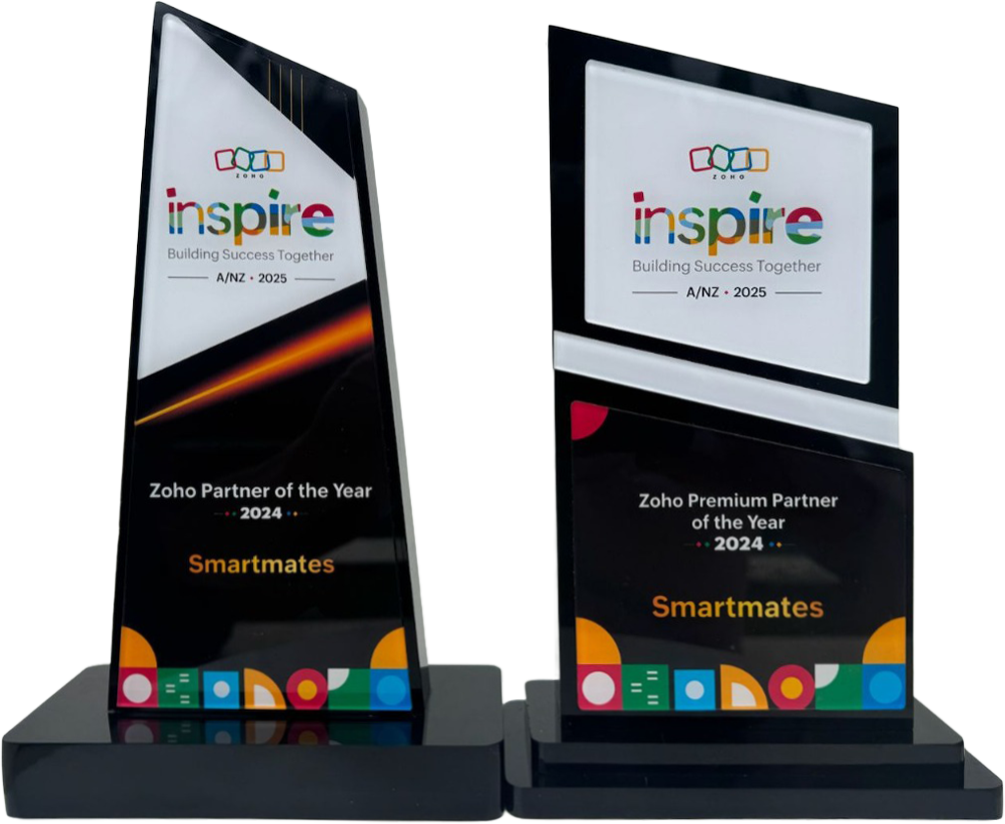
4 Years in a Row
Officially awarded Zoho Partner of the Year in Australia for 2022, 2023, 2024 and 2025. Chosen from 60+ Australian Zoho Partners by Zoho themselves.*
- First Top-Up Special $129 $99/hr + GST
Book your free video conference with our Zoho Consultants
Get your free comprehensive Zoho rollout quotation
Recognised as Australia’s #1 Zoho Partner, 4 years running
Minimum project size 10 consulting hours.

Zoho CRM Expert For Construction Sales And Job Tracking


Your construction business is bleeding opportunities, and you might not even realise it. That quote you sent three weeks ago? Lost in someone’s email. The job that’s running over budget? You found out two weeks too late. The client who wanted an update? They’ve stopped calling back.
Construction isn’t just about building anymore. It’s about managing complex sales cycles, tracking multiple jobs simultaneously, coordinating subcontractors, and keeping clients happy while juggling a million moving parts. And let’s be brutally honest: spreadsheets and sticky notes aren’t cutting it anymore.
Here’s the uncomfortable truth. Your competitors who seem to be winning more tenders, delivering projects smoothly, and growing faster? They’re not necessarily better builders. They’ve just figured out something you haven’t yet. They’re using proper systems, working with Zoho CRM experts who understand construction, and they’re running circles around businesses still stuck in the dark ages of manual tracking.
The gap between those who embrace smart technology and those who resist it is widening every single day. Which side of that gap do you want to be on?
Why Construction Businesses Need Specialised CRM Expertise
Construction isn’t like selling widgets or providing standard services. Your sales cycle might stretch across months. You’re juggling multiple stakeholders, from architects to project managers to end clients. Every job is unique, with different specifications, timelines, and challenges.
A generic CRM setup simply doesn’t work. You need something built for the specific chaos of construction sales and project delivery.
Think about what happens in a typical construction sale. First, there’s the initial inquiry. Then site visits, measurements, detailed quotes with multiple line items, revisions based on client feedback, tender submissions, negotiations, contract signing, project scheduling, regular progress updates, variations, payments tied to milestones, defect management, and finally, handover and warranty tracking.
Now multiply that across 20, 50, or 100 active opportunities and jobs. Without proper systems, information gets lost. Follow-ups don’t happen. Jobs drift off schedule. Clients feel ignored. Money slips through cracks.
Common disasters we see in construction businesses without proper CRM:
- Sales leads going cold because nobody followed up at the right time
- Duplicate quotes sent with different pricing, embarrassing everyone
- Job costs spiralling because nobody tracked variations properly
- Subcontractors showing up on wrong dates because communication broke down
- Client complaints about being kept in the dark about progress
- Financial chaos at tax time because records are scattered everywhere
- Inability to accurately forecast revenue or capacity
Sound familiar? You’re definitely not alone. But here’s where it gets interesting.
What Makes A Zoho CRM Expert Different From A General Consultant
Anyone can watch a few YouTube tutorials and claim they know CRM. A real Zoho CRM expert? That’s a completely different beast. They bring three critical elements that generic consultants simply can’t match.
Deep platform knowledge.
Zoho CRM isn’t just one product. It’s an entire ecosystem with dozens of modules, thousands of features, and countless ways to configure things. Real experts know which features solve which problems. They’ve seen what works and what creates more headaches. They understand the quirks, the limitations, and the clever workarounds.
Industry-specific experience.
Construction has unique workflows that don’t exist anywhere else. A Zoho CRM expert who specialises in construction understands your world. They know about practical completion certificates, retention payments, defects liability periods, and variation management. They speak your language.
Strategic thinking.
Amateur implementations focus on features. Expert implementations focus on outcomes. What business results do you actually need? How should information flow through your organisation? Where are the bottlenecks? What reports will drive better decisions?
At Smartmates, we’ve implemented Zoho CRM for construction companies ranging from small residential builders to commercial contractors managing multi-million dollar projects. We’ve seen every scenario, solved every weird problem, and learned what actually works in the real world of Australian construction.
The difference between working with us versus a general IT consultant is like the difference between hiring a specialist surgeon versus a GP for complex surgery. Sure, they both have medical degrees. But when things get complicated, expertise matters enormously.
Core Zoho CRM Capabilities That Transform Construction Operations
Let’s talk specifics. How does Zoho CRM actually solve construction business problems? What capabilities matter most?
Lead and opportunity management transforms how you handle sales. Every inquiry gets captured automatically, whether it comes from your website, email, phone, or referrals. The system tracks exactly where each opportunity sits in your sales pipeline, from initial contact through to won or lost.
You can see instantly which quotes need follow-up, which ones are going stale, and where your sales team should focus energy. No more opportunities falling through cracks because someone forgot to call back.
- Custom modules let you track construction-specific information that standard CRM simply can’t handle. Job schedules, site diaries, RFIs, variations, defect lists, subcontractor details, equipment tracking. Whatever your business needs, it can be built.
- Workflow automation eliminates repetitive manual tasks. When a quote is accepted, the system automatically creates the job record, assigns tasks to project managers, sends welcome emails to clients, and updates capacity planning. When a variation is requested, it triggers approval workflows based on value thresholds.
- Document management keeps everything organised and accessible. Plans, specifications, contracts, certificates, photos, correspondence. All linked to the relevant job, searchable, and version-controlled. No more digging through email attachments or filing cabinets.
- Financial integration connects sales and job data with your accounting system. Track costs against budgets in real-time. Generate progress claims automatically. Manage retention amounts properly. See actual profitability per job, not just guesses.
The Smartmates Implementation Process For Construction Companies
Understanding what implementation actually involves helps set realistic expectations. Nobody likes surprises, especially not when you’re investing significant time and money.
Phase One: Discovery and Requirements (2-3 weeks)
We start by understanding your business deeply. How do sales actually happen? What information matters most? Where do things break down currently? What reports would help you make better decisions?
This isn’t just interviews. We shadow your team, review your current processes, and dig into the details. We want to understand not just what you do, but why you do it that way. Sometimes the “why” reveals opportunities for improvement.
Phase Two: Solution Design (1-2 weeks)
Based on discovery, we design your custom Zoho CRM solution. This includes detailed specifications for modules, fields, workflows, reports, and integrations. We create mockups so you can visualise how everything will work.
This phase involves collaboration. We propose solutions based on experience, you provide feedback based on knowing your business. The back-and-forth ensures the final design truly fits your needs.
Phase Three: Configuration and Development (4-6 weeks)
Here’s where we build your system. Custom modules get created. Workflows get configured. Integrations get developed. Templates get designed. Everything gets set up according to the approved specifications.
You’ll see regular progress updates and demos. This isn’t a black box process where we disappear for weeks then reveal something. You’re involved throughout, providing feedback as we go.
Phase Four: Data Migration (1-2 weeks)
Moving existing data into Zoho CRM requires careful planning. Client records, active opportunities, job histories, documents. We clean the data, map it properly, and migrate it systematically.
This phase often reveals interesting discoveries about data quality. It’s amazing how many duplicate records, incomplete entries, and outdated information accumulate in old systems.
Phase Five: Testing and Training (2-3 weeks)
Before going live, we test everything thoroughly. Can users complete common tasks easily? Do workflows trigger correctly? Are reports accurate? Do integrations work reliably?
Training happens in multiple formats. Hands-on workshops for power users. Video tutorials for common tasks. Written guides for reference. We train based on roles, so sales teams learn different things than project managers.
Phase Six: Go Live and Support (Ongoing)
Launch day is exciting and slightly nerve-wracking. That’s normal. We provide intensive support during the first few weeks as your team adapts. Quick responses to questions, immediate fixes for issues, and hand-holding when needed.
After the initial transition period, we shift to ongoing support and optimisation. Technology should evolve with your business, not remain static.
Throughout this journey, you’re not just a client receiving a solution. You’re a partner collaborating on transformation.
Critical Features Every Construction CRM Needs
Not all CRM systems are created equal, and not all features matter equally for construction businesses. Understanding what’s essential versus what’s nice-to-have helps prioritise implementation efforts.
Quote and tender management sits at the heart of construction sales. You need the ability to create detailed, professional quotes quickly. Line items with descriptions, quantities, rates, and totals. Optional extras. Terms and conditions. Validity periods. The ability to create multiple quote versions for the same opportunity.
Templates speed up repetitive work, but flexibility handles unique situations. Integration with estimating tools means prices stay accurate and consistent.
Job stage tracking provides visibility across all active projects. Where is each job in the delivery cycle? On schedule or running late? Within budget or over? Which jobs need immediate attention?
Visual dashboards showing job status at a glance save hours of status meetings. Automated alerts warn about approaching deadlines or budget thresholds.
Variation management separates profitable builders from struggling ones. Every variation request needs capturing with full details. Who requested it? What’s involved? What’s the cost impact? What’s the timeline impact?
Approval workflows ensure proper sign-off before work proceeds. Billing integration ensures variations get invoiced properly. Historical tracking shows which clients request lots of variations, informing future quotes.
Subcontractor coordination eliminates communication chaos. Who’s scheduled on which site when? Have they completed required compliance documentation? Are their invoices matching agreed rates?
Integrated systems mean subcontractors can update progress, submit timesheets, and access job documents without endless phone calls and emails.
Client communication tools transform the customer experience. Automated updates at key milestones. Photo sharing showing progress. Document repositories where clients access certificates and warranties. Self-service portals reducing admin burden.
Happy clients refer more work and provide better reviews. Good communication directly impacts your bottom line.
Financial visibility means knowing job profitability in real-time, not six months later when the accountant finally processes everything. Costs captured as they occur. Budget versus actual comparisons. Margin analysis. Cash flow forecasting based on payment schedules.
Better financial data drives better decisions about which types of work to pursue and which to avoid.
Common Implementation Challenges And How We Solve Them
Every CRM implementation faces predictable challenges. Understanding them upfront and having strategies to address them dramatically improves success rates.
Challenge: User resistance and adoption
Construction workers often prefer familiar tools, even if they’re inefficient. “We’ve always done it this way” is a powerful force. Forcing technology on resistant users guarantees failure.
Our solution involves extensive user involvement from day one. We ask their opinions. We incorporate their feedback. We show them how the new system makes their jobs easier, not harder. We identify champions who influence their peers positively.
Training isn’t optional or rushed. We invest proper time ensuring everyone feels confident and supported.
Challenge: Data quality and completeness
Migrating messy data into a clean system creates a messy system. But cleaning decades of accumulated records seems impossibly time-consuming.
We focus on what truly matters. Recent clients and active jobs get thorough cleaning. Historical data gets basic cleanup. We establish quality standards going forward so the problem doesn’t recur.
Sometimes starting fresh with minimal historical data works better than trying to migrate everything.
Challenge: Unrealistic expectations
Some businesses expect technology to magically solve problems that are actually process or people issues. CRM won’t fix poor communication habits or lack of accountability.
We’re honest about this upfront. Technology enables better processes, but you still need good processes. We help identify and fix underlying issues during implementation, not just paper over them with software.
Challenge: Integration complexity
Construction businesses often use specialised software for estimating, accounting, project management, or scheduling. Making everything work together can get complicated quickly.
We’ve integrated Zoho CRM with dozens of other platforms. MYOB, Xero, QuickBooks, Buildertrend, Procore, Simpro, and many others. We know what’s possible, what’s practical, and what creates more problems than it solves.
Sometimes the best integration strategy is accepting certain manual handoffs rather than building overly complex automated connections.
Challenge: Scope creep and timeline drift
Initial requirements grow as stakeholders think of new ideas. What starts as a six-week project stretches to six months. Costs balloon. Frustration builds.
We establish clear scope boundaries at the beginning and manage changes through formal change request processes. New requirements get evaluated for priority and impact. Some get added, some get deferred to phase two, some get declined as not worth the complexity.
Working with experienced Zoho CRM experts like Smartmates means learning from hundreds of previous implementations. We’ve made the mistakes so you don’t have to.
Integration With Other Construction Tools And Systems
Construction businesses rarely run on a single platform. You’ve likely got estimating software, accounting systems, project management tools, and various other applications. Making everything work together is crucial.
Zoho CRM integrates beautifully with major accounting platforms used by Australian construction companies. Xero, MYOB, and QuickBooks connections mean financial data flows automatically. Quotes convert to invoices. Payments update job records. No duplicate data entry.
Estimating tools can feed pricing data into Zoho CRM, ensuring quotes use current rates and margins. When costs change, updates ripple through to new quotes automatically.
Project management platforms like Buildertrend or Procore can sync with Zoho CRM, linking sales data with project delivery. Sales teams see job progress. Project teams see client communication history. Everyone works from the same information.
Email and calendar systems integrate so all communication lives in one place. Every email sent to clients gets logged against their record. Calendar appointments sync bidirectionally. Your existing tools keep working while gaining CRM benefits.
Document management systems like Dropbox, Google Drive, or SharePoint can connect to Zoho CRM, making documents accessible without switching platforms.
The goal isn’t replacing everything you use. It’s connecting things so information flows smoothly instead of living in isolated silos.
Some integrations work through native built-in connections. Others require custom API development. We assess your specific needs and recommend the most practical approach.
Why Australian Construction Companies Choose Smartmates
Working with a local, specialised Zoho CRM expert offers distinct advantages that offshore providers or generalists simply can’t match.
We understand Australian construction.
Building codes, compliance requirements, industry standards, payment structures, warranty periods. These aren’t universal. They’re specific to Australia. We build solutions that comply with local requirements from day one.
We’re available when you need us.
Time zones matter enormously. When you’ve got a problem at 2pm on a Tuesday, you need help now. Not waiting for someone on the other side of the world to wake up.
We’ve done this before.
Multiple times, across various construction sectors. Residential builders, commercial contractors, civil construction, fit-out specialists, renovators. We understand the similarities and the crucial differences.
We’re certified Zoho partners.
This isn’t just a badge. It means Anthropic has verified our expertise, we maintain ongoing training, and we have direct access to Zoho’s support resources when needed.
We offer ongoing support.
Implementation isn’t the end. It’s the beginning. Your business evolves, requirements change, new opportunities emerge. We’re there for the long term, not just a one-off project.
Smartmates brings deep technical knowledge plus industry expertise plus local presence. That combination is surprisingly rare but enormously valuable.
Taking The First Step Toward CRM Transformation
By now you’re probably in one of two camps. Either thinking “this sounds great but overwhelming” or “we need this immediately.” Both reactions are completely valid.
Transformation doesn’t happen overnight. It’s a journey requiring commitment, investment, and patience. But every journey starts with a single step.
Start by getting brutally honest about your current situation. What’s actually working? What’s breaking down? Where do you lose the most money or time? What frustrates your team most? Where do clients complain?
Write it down. Prioritise it. Understanding your pain points guides everything that follows.
Next, have a conversation with experts who understand both technology and construction. At Smartmates, we offer free consultations where we discuss your challenges, explore whether Zoho CRM fits your needs, and outline what implementation might involve.
No pressure. No obligations. Just honest expertise aimed at helping you make informed decisions.
Then, if it makes sense, start planning properly. Good implementations require adequate time, budget, and stakeholder commitment. Rushing leads to poor outcomes. Be realistic about what’s involved.
The construction companies winning today aren’t necessarily the best builders. They’re the ones who combine building expertise with operational excellence. They embrace technology strategically. They work with partners who understand their world.
Your Competitive Edge Starts Here
The Australian construction industry is competitive and getting tougher. Margins are tight. Client expectations keep rising. Regulatory requirements grow more complex. The businesses that thrive will be those that operate efficiently, deliver consistently, and scale intelligently.
Zoho CRM, implemented by experts who truly understand construction, transforms how you win and deliver work. It’s not about adding more technology for technology’s sake. It’s about having systems that actually support your business instead of holding it back.
Smartmates has spent years perfecting how we help construction companies implement CRM solutions that actually work. We’ve made the mistakes, learned the lessons, and developed approaches that consistently deliver results.
Your competitors are either already using sophisticated systems or planning to. The gap between those who embrace this transformation and those who resist it widens daily.
Which side of that gap will you be on?
Ready to explore what’s possible for your construction business? Reach out to Smartmates today for a no-obligation consultation. We’ll discuss your specific challenges, walk through potential solutions, and help you understand what transformation could look like.
Your team deserves better tools. Your clients deserve better service. Your business deserves better results.
Transform your construction operations. Transform your business growth. The conversation that changes everything starts right here, right now.
Request a Callback from Smartmates

Sarah
I’ll listen to your Zoho needs to understand your business challenges and goals, ensuring a tailored approach.
I’ll bring a certified Zoho engineer to our first consultation to explore solutions and clarify your requirements.
We’ll deliver your free project plan quotation, detailing the steps, timeline, and costs—up to this point, it’s completely free!
“My mission is to solve your key problems, build your trust in our capabilities and deliver exceptional value for money.”