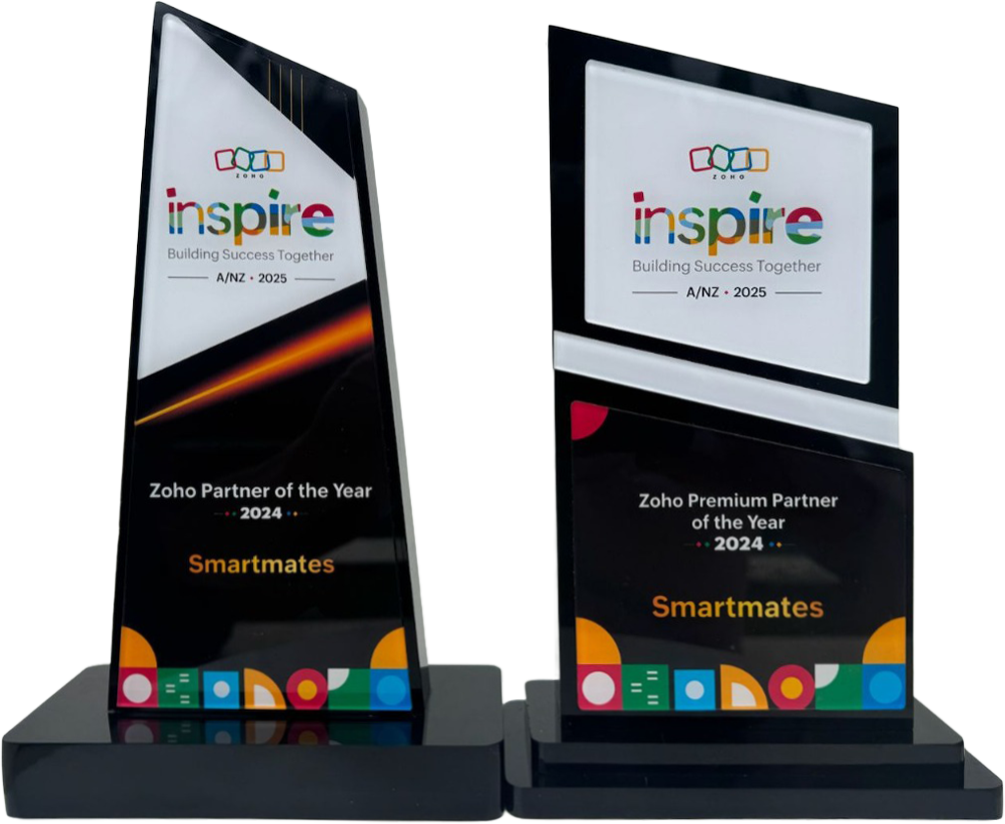
4 Years in a Row
Officially awarded Zoho Partner of the Year in Australia for 2022, 2023, 2024 and 2025. Chosen from 60+ Australian Zoho Partners by Zoho themselves.*
- First Top-Up Special $129 $99/hr + GST
Book your free video conference with our Zoho Consultants
Get your free comprehensive Zoho rollout quotation
Recognised as Australia’s #1 Zoho Partner, 4 years running
Minimum project size 10 consulting hours.

Zoho Consultation For Businesses Planning Smarter Digital Systems


Every business leader has experienced that moment. You’re staring at a whiteboard covered in boxes and arrows, trying to map out how your future digital systems should work. Sales connects to marketing. Customer service needs access to purchase history. Inventory should trigger automatic reordering. Finance needs real-time reporting.
It looks brilliant on the whiteboard. Then reality hits.
Your team starts building, and suddenly nothing connects the way you imagined. Integrations don’t work. Data flows in unexpected directions. What seemed simple in theory becomes complicated in practice. Six months later, you’ve got a Frankenstein system that sort of works but creates as many problems as it solves.
This is where Zoho consultation becomes invaluable. Not for fixing broken systems, but for planning smart digital infrastructure from the beginning. Let’s talk about how proper consultation helps Australian businesses build systems that actually deliver on their whiteboard promises.
Why Planning Digital Systems Is Harder Than It Looks
You wouldn’t design a building without an architect. You wouldn’t rewire your office without an electrician. Yet somehow, businesses regularly attempt to design complex digital ecosystems without expert guidance, assuming technology is simpler than it actually is.
Here’s the uncomfortable truth: most business leaders don’t know what they don’t know about digital systems. You understand your business processes brilliantly. You can explain exactly what needs to happen. But translating business logic into technical architecture requires different expertise.
Think about it like planning a kitchen renovation. You know you want more bench space, better storage, and modern appliances. But do you know about plumbing requirements? Electrical load calculations? Building code compliance? Workflow efficiency in kitchen design?
Probably not. That’s why you hire professionals.
Digital systems are exponentially more complex than kitchens. They involve data structures, integration protocols, automation logic, security requirements, scalability considerations, and about fifty other technical factors that impact whether your vision actually works in practice.
The Gap Between Vision and Execution
Your vision makes perfect sense. Connect your sales system to your accounting software. Automatically generate invoices when deals close. Update inventory in real-time. Send customer service teams instant notifications about issues.
Simple, right?
Except sales systems structure data differently than accounting software. Your inventory platform uses different product codes than your sales system. Customer service tools expect different data formats than your CRM provides. Every connection point requires mapping, transformation, error handling, and ongoing maintenance.
Without expert consultation, you’ll discover these complexities mid-implementation, when changing direction is expensive and disruptive. You’ll build workarounds instead of proper solutions. You’ll compromise on functionality because fixing underlying issues seems too hard.
Smart planning prevents this. Expert consultation identifies these challenges before you commit to approaches that won’t work. It’s the difference between building on solid foundations and discovering you’re on quicksand after construction starts.
Also Read: Zoho Specialist Helping Manufacturers Strengthen Production Visibility
What Strategic Zoho Consultation Actually Involves
Let’s demystify what happens when you engage proper Zoho consultation for digital system planning. Because understanding the process helps you evaluate whether you actually need it and how to maximise its value.
Business Process Analysis That Goes Deep
Good consultants don’t start with technology. They start with understanding your business at a level most vendors never bother with.
They map your current processes, not just at the surface level, but diving into the messy reality of how work actually gets done. They talk to the people doing the work, not just managers describing how they think it happens.
This reveals critical insights. Maybe your sales process has unofficial steps that everyone does but nobody documented. Perhaps customer service has workarounds for system limitations that signal deeper problems. Possibly your inventory management works differently for different product categories, requiring nuanced solutions.
These insights shape system design. Without them, you build systems based on how processes should work theoretically, which inevitably clash with how work actually happens.
Future-State Visioning With Reality Checks
Once consultants understand your current state, they help you envision your ideal future state. But here’s where good consultants earn their fees: they reality-check your vision.
Not everything desirable is feasible. Not everything possible is worth the cost. Not everything that works for other businesses will work for yours.
Expert consultants ask uncomfortable questions. Do you actually need that feature, or do you just like the idea of it? Will your team really use that capability, or will it sit unused? Is this solving a real problem, or creating complexity for its own sake?
This reality-checking saves enormous money and effort. It prevents you from building elaborate systems that impress on demos but fail in daily use.
Technical Architecture Design
This is where consultation gets deeply technical. How should data flow through your systems? What integration approaches make sense? How do you structure databases for scalability? What security measures are necessary? How do you handle errors and exceptions?
Most business leaders can’t answer these questions. That’s fine. That’s what consultants do.
They design technical architecture that supports your business goals while accounting for technical constraints. They choose technologies that integrate well. They plan data structures that scale. They build in redundancy and error handling. They consider performance, security, compliance, and maintenance from the beginning.
This upfront architecture work is invisible to end users but critical to long-term success. It’s the difference between systems that hum along reliably and systems that constantly break in mysterious ways.
Implementation Roadmapping
Smart consultants don’t recommend building everything at once. They create phased implementation roadmaps that deliver value incrementally while managing risk and maintaining business continuity.
Phase one might focus on core CRM functionality. Phase two adds marketing automation. Phase three integrates customer service. Each phase builds on the last, with lessons learned informing subsequent work.
This approach lets you see results quickly while avoiding the chaos of massive system overhauls. You maintain momentum. You build confidence. You adapt as you learn.
Technology Selection and Platform Configuration
Zoho offers 45+ applications. You don’t need all of them. Consultants help you choose which applications actually solve your problems, avoiding the temptation to implement features just because they’re available.
Then comes configuration. How should CRM fields be structured? What stages should your sales pipeline include? How should automation rules trigger? What reports do you actually need?
Configuration decisions made early shape everything that follows. Get them right, and your system feels intuitive and powerful. Get them wrong, and you’re fighting the system constantly.
Expert consultants make these decisions based on experience with what works. They’ve seen what succeeds and what fails. They apply proven patterns while customising for your specific context.
The Strategic Value of Early Consultation
Engaging Zoho consultation during planning, before implementation starts, delivers specific strategic advantages that compound over time.
Avoiding Expensive Mistakes Before They Happen
The cheapest problems to fix are the ones you never create. Early consultation identifies potential issues while they’re still theoretical, when changing direction costs nothing.
Consider data structure decisions. Structure your customer records wrong on day one, and you’ll live with that mistake for years. Restructuring later means migrating data, updating integrations, retraining users, and fixing countless dependencies. It’s painful, expensive, and risky.
Consultants get data structure right from the start because they understand how your business will use and grow that data. They anticipate future needs while building for current requirements.
The same applies to integrations, automations, and workflows. Fix them during planning, and you save months of frustration and thousands in remediation costs.
Building Scalable Foundations
Business growth is wonderful. Growing out of your digital systems is painful.
Many businesses implement systems that work fine at current scale but break under growth. Maybe your automation logic assumes low transaction volumes. Perhaps your reporting queries become unbearably slow with more data. Possibly your integration approach can’t handle increased API calls.
Consultants design for scale from the beginning. They build systems that handle your current reality while accommodating foreseeable growth. They choose approaches that remain performant as data volumes increase. They architect integrations that scale gracefully.
This foresight prevents the nightmare scenario where your success outpaces your systems’ capabilities, forcing expensive rebuilds exactly when you need stability most.
Creating Integration Opportunities
Smart digital planning isn’t just about individual systems. It’s about creating an integrated ecosystem where data flows seamlessly and business processes span multiple platforms.
Consultants map these integration opportunities, identifying where connections create value and planning technical approaches that make integration reliable and maintainable.
For Australian businesses, this often means connecting Zoho with local platforms like MYOB or Xero for accounting, Deputy for staff scheduling, Australia Post for shipping, and local payment gateways. Consultants with Australian experience know these integrations intimately, avoiding costly trial and error.
Establishing Governance and Best Practices
Digital systems require ongoing governance. Who can change configurations? How are updates tested? What’s the process for adding new automations? How do you maintain data quality?
Consultants help establish governance frameworks during planning, preventing the chaos that emerges when everyone can change anything without oversight.
They also instil best practices around naming conventions, documentation standards, testing procedures, and change management. These practices seem bureaucratic until you experience the alternative: systems so tangled that nobody dares change anything for fear of breaking something important.
Common Planning Mistakes Consultation Prevents
Let’s talk specifics about where businesses go wrong when planning digital systems without expert guidance. Recognising these patterns helps you avoid them.
The Feature Overload Trap
More features seem better. Why implement basic CRM when you could have advanced sales forecasting, AI-powered lead scoring, sophisticated territory management, and automated proposal generation?
Because complexity kills adoption. Your sales team just wants to track deals and manage contacts. Bury that simple functionality under layers of advanced features they don’t need, and they’ll resist using the system entirely.
Consultants help you focus on features that actually matter to your team. They push back on complexity for complexity’s sake. They prioritise capabilities that deliver clear value while keeping systems approachable and usable.
The Integration Underestimation
“We’ll just connect these systems with APIs. How hard can it be?”
Harder than you think. APIs have rate limits. Data formats don’t align neatly. Error handling is complex. Some platforms have terrible APIs that make integration painful. Authentication adds complexity. Real-time versus batch synchronisation involves different challenges.
Every integration is a project, not a task. Consultants scope integration work realistically, accounting for all the complications that only become apparent during implementation.
The Customisation Temptation
Zoho is highly customisable. You can build custom modules, custom fields, custom workflows, custom everything. This flexibility is powerful but dangerous.
Heavy customisation creates maintenance burdens. Every Zoho update potentially breaks your customisations. Every new team member needs to learn your unique configuration. Every future consultant must understand your custom logic before helping you.
Good consultants customise judiciously, preferring standard configurations and workarounds over custom development whenever possible. They customise when it delivers clear value, not just because you can.
The Data Migration Disaster
Migrating data from old systems to new ones seems straightforward. Export from the old system, import to the new one, done.
Except old data is messy. Duplicates exist. Formats are inconsistent. Required fields are missing. Historical records have different structures than current ones. Some data shouldn’t migrate at all.
Data migration requires careful planning, cleaning, mapping, and validation. Consultants have processes for this. They know how to identify and fix data quality issues before migration. They understand how to map old structures to new ones. They test thoroughly before final migration.
The Training Afterthought
You’ve built beautiful systems. Now you need people to use them. Training gets scheduled for the last minute as an afterthought.
This guarantees poor adoption. People don’t use tools they don’t understand. They revert to familiar methods, making your new system a costly shelfware investment.
Consultants plan training from the beginning, building it into timelines and budgets. They create documentation during implementation, not after. They identify champions who’ll drive adoption. They design training that fits how people actually learn.
How Australian Context Shapes Digital System Planning
Planning digital systems for Australian businesses involves specific considerations that overseas or generic consultants often miss.
Regulatory Compliance Built In
Australian businesses operate under specific regulatory frameworks. Privacy under Australian Privacy Principles. Consumer protection under Australian Consumer Law. Financial reporting requirements. Industry-specific regulations.
Smart system planning builds compliance into architecture, not bolts it on afterwards. Consultants familiar with Australian requirements design data handling, consent management, reporting, and audit trails that meet local standards from day one.
This matters more than many realise. Non-compliant systems create legal risk and remediation costs. Compliant systems give you confidence and competitive advantage.
Local Integration Ecosystem
Your digital systems need to integrate with distinctly Australian platforms and services. Accounting software like MYOB and Xero. Banking systems from Australian financial institutions. Government reporting portals. Local payment gateways. Australia Post services.
Consultants with Australian experience have solved these integrations repeatedly. They know the quirks, limitations, and best approaches. They can estimate effort accurately and deliver reliably because they’re not learning on your time.
Time Zone and Support Considerations
Planning systems that will be supported long-term requires thinking about time zones. If your consultant or support team is overseas, how do you handle urgent issues outside their working hours?
Australian consultants work when you work. They’re available during your business hours. They understand urgency in your context. They can respond quickly when problems arise, keeping your systems running smoothly.
Cultural Fit and Communication
Australian business culture values directness, practicality, and results over process. We want solutions that work, explained in plain language, without unnecessary complexity or corporate waffle.
Local consultants communicate in ways that feel natural. They understand local business norms. They present options clearly without overwhelming you with technical detail. They respect your time and get to the point.
This cultural alignment makes planning sessions more productive and ensures recommendations actually fit how your business operates.
The Smartmates Approach to Strategic Zoho Planning
When we talk about excellent Zoho consultation for planning smarter digital systems, Smartmates exemplifies what this looks like in practice for Australian businesses.
Smartmates doesn’t start by selling you Zoho. They start by understanding your business, your challenges, your goals, and your context. Only then do they recommend technical approaches, and those recommendations are always tailored to your specific situation.
Their planning process is collaborative rather than prescriptive. They bring technical expertise and experience with hundreds of implementations. You bring business knowledge and understanding of your unique requirements. Together, you design systems that actually work.
What sets Smartmates apart is their combination of technical depth and business acumen. They’re not just Zoho experts who understand the platform technically. They’re business consultants who happen to specialise in Zoho and HubSpot. This means they think about business outcomes first, technology second.
Their team includes Zoho Certified Consultants with extensive experience across Australian industries. They’ve planned and implemented systems for businesses of all sizes, from ambitious startups to established enterprises. This breadth of experience means they can apply proven patterns while avoiding approaches that have failed elsewhere.
Smartmates also brings rare expertise in both Zoho and HubSpot, giving them unique perspective on which platform fits different requirements and how they can work together when needed. This platform agnosticism ensures you get honest recommendations rather than being pushed toward solutions that benefit the consultant rather than your business.
Their planning methodology is thorough without being bureaucratic. They document enough to ensure clarity and alignment but don’t waste time on documentation for its own sake. They focus on decisions that matter and move quickly through areas where choices are obvious.
For Australian businesses specifically, Smartmates understands local compliance requirements, integration ecosystems, and business practices. They design systems that work within Australian regulatory frameworks, integrate with local platforms, and match how Australian businesses actually operate.
Their client-focused approach means they’re invested in your long-term success, not just completing the initial project. They build relationships, not transactions. They remain available as your needs evolve, helping you optimise and expand your systems as your business grows.
Maximising Value From Zoho Consultation
If you’ve decided to invest in proper Zoho consultation for planning your digital systems, here’s how to ensure you get maximum value from that investment.
Be Transparent About Everything
Share your challenges honestly. Admit what you don’t know. Explain your constraints. Discuss your concerns.
Consultants can’t help effectively if you’re hiding problems or presenting an idealised version of your situation. The more transparent you are, the better solutions they can design.
Involve the Right Stakeholders
System planning requires input from people who’ll actually use the systems. Not just executives with high-level vision. The sales rep who tracks deals daily. The customer service agent who handles tickets. The warehouse manager who manages inventory.
These users provide crucial reality checks. They know what actually works and what sounds good but fails in practice. Involve them early and often.
Challenge Recommendations
Good consultants welcome intelligent questioning. If something doesn’t make sense, ask why. If a recommendation seems overcomplicated, say so. If costs seem high for unclear value, push back.
Consultants should be able to explain their reasoning clearly. If they can’t, maybe the recommendation isn’t as solid as it should be.
Think Beyond Initial Implementation
Don’t just plan for going live. Plan for growth, change, and evolution. How will your systems adapt as your business grows? What happens when you add new products? Enter new markets? Acquire another company?
Smart planning accounts for future scenarios, building flexibility without overengineering. Your consultant should help you balance current needs with future possibilities.
Commit to the Process
Strategic planning takes time and mental effort. You’ll need to attend workshops, review documentation, make decisions, and provide feedback. Trying to rush this process or participate half-heartedly wastes everyone’s time and undermines results.
Commit properly or don’t start. Partially planned systems are often worse than no planning at all.
Transform Your Business With Strategic Digital Planning
Here’s what it comes down to. Digital systems can transform how your business operates, creating efficiency, visibility, and capability that seemed impossible before. But only if they’re designed properly from the beginning.
Poor planning leads to systems that frustrate users, require constant maintenance, and never quite deliver promised value. You’ll spend years fighting technology that should be helping you, wasting money on fixes that wouldn’t be necessary if things were built right initially.
Strategic Zoho consultation changes this trajectory entirely. It transforms digital system planning from guesswork into informed decision-making. From trial-and-error into applying proven approaches. From hoping things work out into building on solid foundations.
The investment in upfront consultation pays for itself many times over through avoided mistakes, faster implementation, better adoption, and systems that actually scale with your business. It’s the difference between technology that serves your business and technology that holds it back.
For Australian businesses specifically, working with local consultants who understand your regulatory environment, integration requirements, and business culture isn’t optional. It’s essential to getting systems that work properly in your context.
Smartmates represents the best of what strategic Zoho consultation should be. Local expertise meeting technical depth. Business acumen combined with platform mastery. Client focus driving every recommendation and decision.
They’ve helped hundreds of Australian businesses plan and implement smarter digital systems. They understand what works because they’ve done it repeatedly. They know what fails because they’ve seen the aftermath of poor planning and helped businesses recover.
Ready to plan digital systems that actually deliver on their promise? Ready to build on solid foundations instead of hoping for the best? Ready to transform your business with technology that works the way you need it to?
Connect with Smartmates today and discover what strategic Zoho consultation can do for your business. Because smart planning now prevents expensive problems later. Because expert guidance transforms good ideas into great systems. Because your business deserves technology that empowers instead of frustrates.
The difference between systems that work and systems that don’t often comes down to planning. Plan smart. Build right. Transform completely.
Request a Callback from Smartmates
Sarah
I’ll listen to your Zoho needs to understand your business challenges and goals, ensuring a tailored approach.
I’ll bring a certified Zoho engineer to our first consultation to explore solutions and clarify your requirements.
We’ll deliver your free project plan quotation, detailing the steps, timeline, and costs—up to this point, it’s completely free!
“My mission is to solve your key problems, build your trust in our capabilities and deliver exceptional value for money.”