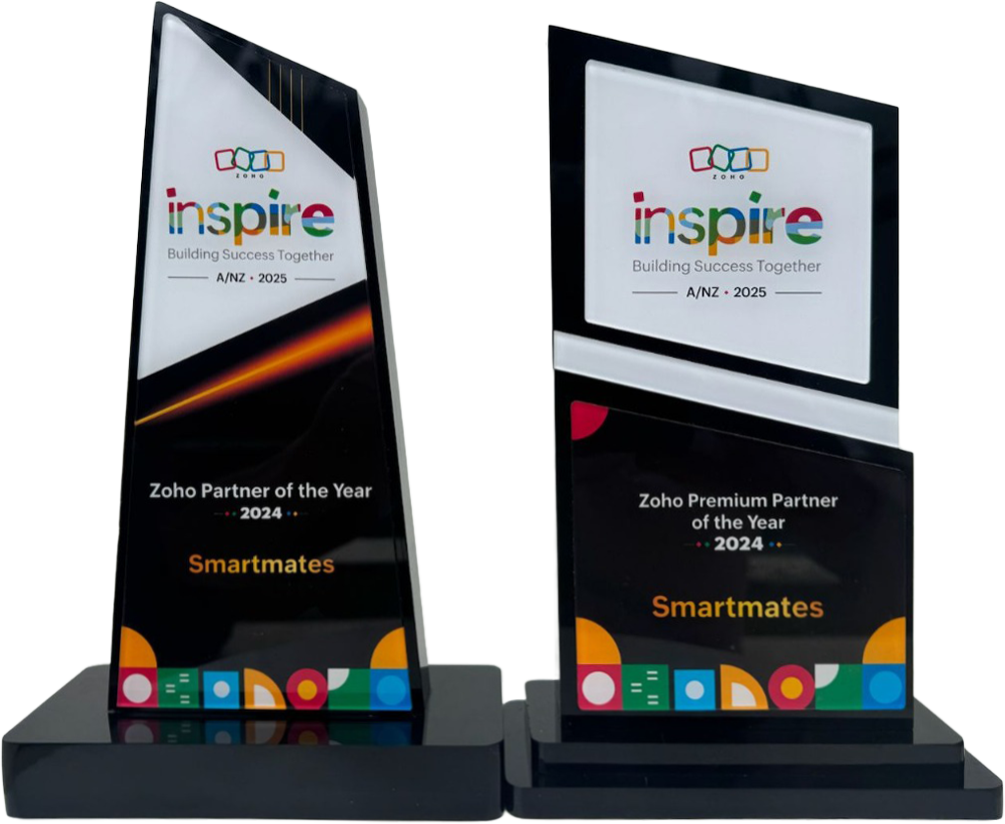
4 Years in a Row
Officially awarded Zoho Partner of the Year in Australia for 2022, 2023, 2024 and 2025. Chosen from 60+ Australian Zoho Partners by Zoho themselves.*
- First Top-Up Special $129 $99/hr + GST
Book your free video conference with our Zoho Consultants
Get your free comprehensive Zoho rollout quotation
Recognised as Australia’s #1 Zoho Partner, 4 years running
Minimum project size 10 consulting hours.

The Logistics Upgrade: Faster Workflows With a Zoho Authorised Partner


Your warehouse manager just called. Again. The shipment that should’ve gone out yesterday is sitting there because someone didn’t update the system. Meanwhile, your customer service team is fielding angry calls, your delivery drivers are waiting for instructions, and you’re wondering why running a logistics operation feels like herding cats through a maze.
Welcome to logistics without proper systems. It’s chaos wrapped in spreadsheets, held together with email chains, and powered by people who are frankly doing their best with tools that stopped being fit for purpose about five years ago.
But here’s the good news. It doesn’t have to be this way. When you work with a Zoho authorised partner who actually understands logistics, those painful bottlenecks transform into smooth workflows. Those constant fires? They stop starting in the first place. And that feeling of barely keeping your head above water? It becomes confidence that your operations actually work.
Why Logistics Breaks Down (And Why Nobody Talks About It)
Let’s start with an uncomfortable truth. Most logistics operations run on systems that were never designed for the job. You’ve got an accounting package doing inventory management. Spreadsheets tracking shipments. WhatsApp groups coordinating drivers. Each piece sort of works, but together? It’s a disaster waiting to happen.
The problem compounds as you grow. What worked when you were shipping 50 orders a week falls apart spectacularly at 500. Your team spends more time updating systems than actually moving products. Information lives in silos. Nobody has the full picture. Mistakes multiply.
Australian logistics has its own special challenges too. The tyranny of distance isn’t just a phrase. It’s your daily reality. You’re coordinating shipments across vast distances, managing multiple time zones, dealing with interstate regulations, and trying to meet customer expectations shaped by Amazon Prime despite operating in a market with completely different economics.
What Actually Makes Logistics Flow
Think about the last time everything just worked. Orders came in, got processed immediately, stock was allocated correctly, picking happened efficiently, shipments went out on time, and customers got exactly what they expected when they expected it. Rare, right? But that’s what’s possible when your systems actually support your operations instead of fighting them.
Smooth logistics isn’t magic. It’s information flowing correctly through well-designed systems. When an order arrives, your system immediately checks stock, reserves inventory, calculates optimal shipping, generates picking lists, notifies relevant teams, updates customers, and tracks everything automatically. No manual intervention. No dropped balls. Just reliable execution.
The difference between chaos and calm is usually visibility. When everyone sees the same information in real time, decisions happen faster and more accurately. When workflows are automated, human error drops dramatically. When systems connect properly, data doesn’t need constant re-entry. It sounds simple because it is. Implementing it, though? That’s where expertise matters.
Why Zoho Changes Everything for Logistics
Zoho isn’t just another software platform trying to do everything and succeeding at nothing. It’s an ecosystem built specifically to handle complex operations, and logistics is right in its sweet spot.
Here’s what makes it different. Instead of forcing your logistics operation into someone else’s idea of how things should work, Zoho bends to match your reality. Custom fields, tailored workflows, integrated systems. You’re not adopting best practices that might work. You’re building solutions that definitely work for your specific operation.
The platform connects your entire logistics chain. Inventory management talks to order processing. Warehouse operations sync with delivery tracking. Customer communications update automatically. Financial data flows through without manual reconciliation. Everything connects, everything updates, everything just works.
But Zoho out of the box is like a Formula One car sitting in your garage. Impressive potential, sure. Actually getting it race-ready? That requires someone who knows what they’re doing. That’s where a Zoho authorised partner becomes less nice-to-have and more essential.
The Hidden Costs of Slow Workflows
Before we dive into solutions, let’s talk about what broken logistics actually costs you. Because it’s not just inefficiency. It’s money pouring out of your operation in ways you might not fully realize.
Start with labour costs. When your team spends half their day updating systems, chasing information, and fixing mistakes, you’re paying for administration instead of productivity. That warehouse worker manually entering tracking numbers? They could be picking orders. That coordinator calling drivers for updates? The system should be doing that.
Then there’s customer satisfaction. Late deliveries, wrong items, poor communication. Each failure chips away at trust and reputation. In Australian markets where competition is fierce and switching costs are low, those failures send customers straight to competitors.
Inventory costs balloon too. Without real-time visibility, you overstock to compensate for uncertainty. Cash sits on shelves instead of in your bank. Or worse, you understock and lose sales. Both scenarios stem from the same root cause: systems that can’t tell you what’s actually happening right now.
How Expert Partners Build Better Workflows
A Zoho authorised partner doesn’t just set up software. They redesign how your logistics operation functions. There’s a massive difference between those two things, and that difference determines whether your implementation succeeds or becomes another expensive experiment that didn’t quite work out.
They start by understanding your operation properly. Not surface-level “tell us about your business” stuff. Deep operational understanding. How do orders flow through your system? Where do bottlenecks happen? What information do people need and when do they need it? What breaks when volume spikes? What keeps your warehouse manager up at night?
Armed with that understanding, they design workflows that eliminate friction. Orders route automatically based on rules you define. Inventory updates in real time across all systems. Picking sequences optimize for efficiency. Shipping integrations happen seamlessly. Exception handling triggers automatically. Everything that can be automated, is. Everything that needs human input gets it at exactly the right time with exactly the right information.
The result isn’t just faster workflows. It’s fundamentally better logistics operations.
Also Read: Simplify Data, Speed Up Decisions, and Win More With A Zoho App
Building Blocks of Brilliant Logistics Systems
Let’s get specific about what actually goes into a properly built Zoho logistics system. This isn’t theoretical. This is what gets implemented when you work with people who’ve done this before and learned what works.
Order Management That Actually Works
Orders come from everywhere. Your website, marketplaces, B2B customers, retail partners, phone calls. A good system captures all of them, validates automatically, checks inventory instantly, and routes for fulfillment without anyone touching a spreadsheet. Priority rules handle rush orders. Allocation logic manages partial stock. Everything just flows.
Inventory Visibility That’s Actually Real-Time
Your warehouse team needs to know what’s available right now. Your sales team needs accurate stock levels. Your procurement team needs to know what to reorder. Real-time inventory tracking means everyone sees the same accurate picture. No more “I thought we had stock” conversations.
Warehouse Operations That Don’t Waste Time
Picking lists optimized for your layout. Packing processes that reduce errors. Shipping label generation that’s automatic. Quality checks built into the workflow. When warehouse operations run through properly designed systems, productivity jumps dramatically. We’re talking 30-50% efficiency gains in most implementations.
Delivery Tracking That Actually Informs
Customers want to know where their stuff is. Your team wants to know if deliveries are on schedule. Drivers need optimized routes. Integrated delivery tracking connects carriers, updates customers automatically, and alerts teams to exceptions. The system works so nobody has to wonder.
Analytics That Drive Decisions
Data means nothing if you can’t interpret it quickly. Custom dashboards show what matters for your operation. Order throughput, fulfillment times, carrier performance, inventory turnover, bottleneck identification. Everything visual, everything actionable, everything designed around how you actually make decisions.
The Australian Logistics Landscape
Working with an Australian Zoho authorised partner means more than convenient time zones, though that certainly helps when you need urgent support. It means partnering with people who understand the unique challenges of Australian logistics.
They know the carriers. They understand interstate shipping complexities. They’re familiar with Australian regulations, compliance requirements, and industry standards. They’ve worked with businesses dealing with the same tyranny of distance, the same market dynamics, the same operational challenges you face daily.
When you’re implementing logistics systems, local expertise matters enormously. Your partner needs to understand not just software, but your industry, your market, and your specific operational reality. That’s not something you get from overseas consultants reading from playbooks designed for different markets.
What Implementation Really Involves
Let’s demystify the implementation process because nobody likes surprises when they’re overhauling critical operations. Working with a proper Zoho authorised partner follows a logical progression, though specifics adapt to your needs.
Discovery comes first. They examine your current processes, identify pain points, map information flows, and understand your goals. This isn’t box-ticking. It’s genuinely understanding how your operation works and where improvements will deliver maximum impact.
Design happens next. Workflow mapping, system architecture, integration planning, custom development scoping. You’re heavily involved here. It’s your operation, after all. But they’re bringing expertise that turns operational requirements into technical solutions.
Then comes development and testing. Building the system, configuring workflows, setting up integrations, testing with real data. Good partners show progress regularly, gather feedback, and adjust based on what they learn. You’re not waiting months for some big reveal.
Finally, deployment and training. The system goes live, your team learns how to use it properly, and you’ve got support for inevitable questions and adjustments. This isn’t a handover and goodbye situation. Proper partners stick around to ensure success.
The Smartmates Approach to Logistics
Look, we could dance around generalities about Zoho partners all day. But let’s be specific about what working with the right team actually means for your logistics operation.
Smartmates operates differently than typical tech consultancies. We’re not here to sell you the biggest system possible and disappear. We’re here to solve your actual logistics problems with solutions that fit your actual budget and deliver measurable results.
Our team holds genuine Zoho certifications and has implemented logistics systems for Australian businesses across industries. Distribution, manufacturing, e-commerce, retail. Each implementation taught us something valuable, and that collective knowledge benefits every client we work with.
But here’s what really matters. We understand logistics operations, not just software. We’ve spent time in warehouses, talked to drivers, understood the pressures your teams face daily. When we design systems, we’re thinking about how your actual people will use them in your actual operation, not building something that looks good in a demo but fails in reality.
Beyond Basic Automation
Once you’ve got solid logistics foundations running smoothly, the possibilities expand beautifully. Advanced analytics, predictive capabilities, AI-assisted optimization. These aren’t future concepts. They’re real capabilities that Zoho supports when you’ve got the expertise to implement them properly.
Imagine systems that predict inventory needs based on historical patterns and market trends. Imagine routing optimization that factors in traffic, weather, and delivery windows automatically. Imagine demand forecasting that helps you prepare for volume spikes before they happen. This is where partnering with certified experts stops being a cost and becomes a competitive advantage.
Making the Decision
You’re probably weighing whether this is worth it for your operation. Fair question. Here’s a practical way to think about it.
Calculate what broken workflows cost you annually. Labour inefficiency, inventory carrying costs, error rates, lost customers, missed growth opportunities. Be brutally honest about those numbers. Now compare that to investing in properly designed logistics systems built by people who actually know what they’re doing.
For most Australian logistics operations, the return on investment is faster than expected. Sometimes within months, usually within the first year. And unlike one-time improvements, better systems deliver value continuously and enable growth that wasn’t previously possible.
Your Next Steps Forward
Upgrading your logistics workflows isn’t some distant future project. It’s something you can start now, see progress on quickly, and benefit from immediately.
Start by honestly assessing where you are. How much time goes into manual processes? Where do bottlenecks consistently happen? What would faster, more accurate workflows enable for your business? These answers tell you how much opportunity exists.
Then talk to people who’ve actually done this. Not vendors reading from scripts, but certified Zoho partners who can show you real implementations and discuss real results. Ask tough questions. Look at case studies. Make sure they understand logistics operations, not just technology.
The Australian logistics landscape is competitive and demanding. Customer expectations keep rising. Margins stay tight. Operational excellence isn’t optional anymore. It’s the baseline for survival and the foundation for growth.
Transform Your Operation
Here’s the uncomfortable truth. Most logistics operations are held together with duct tape and determination. They work, sort of. But they’re exhausting to run, expensive to operate, and fundamentally limit growth. Everyone knows it needs fixing, but the prospect of changing critical systems seems overwhelming.
It doesn’t have to be. Working with a Zoho authorised partner who understands logistics transforms your operation from constantly firefighting to confidently executing. Those bottlenecks disappear. Those errors become rare. That stress reduces dramatically. Your operation becomes something that enables growth instead of limiting it.
Your competitors are either already doing this or they’re about to. The question isn’t whether better logistics systems matter. It’s whether you’ll lead or follow. We’d argue leading is more your style.
Ready to transform how your logistics operation runs? Ready to build workflows that actually work instead of constantly breaking? Let’s talk about what that looks like for your specific situation. Because generic solutions deliver generic results, and your operation deserves better.
Get in touch with Smartmates today. Let’s build something that actually works.
Request a Callback from Smartmates

Sarah
I’ll listen to your Zoho needs to understand your business challenges and goals, ensuring a tailored approach.
I’ll bring a certified Zoho engineer to our first consultation to explore solutions and clarify your requirements.
We’ll deliver your free project plan quotation, detailing the steps, timeline, and costs—up to this point, it’s completely free!
“My mission is to solve your key problems, build your trust in our capabilities and deliver exceptional value for money.”