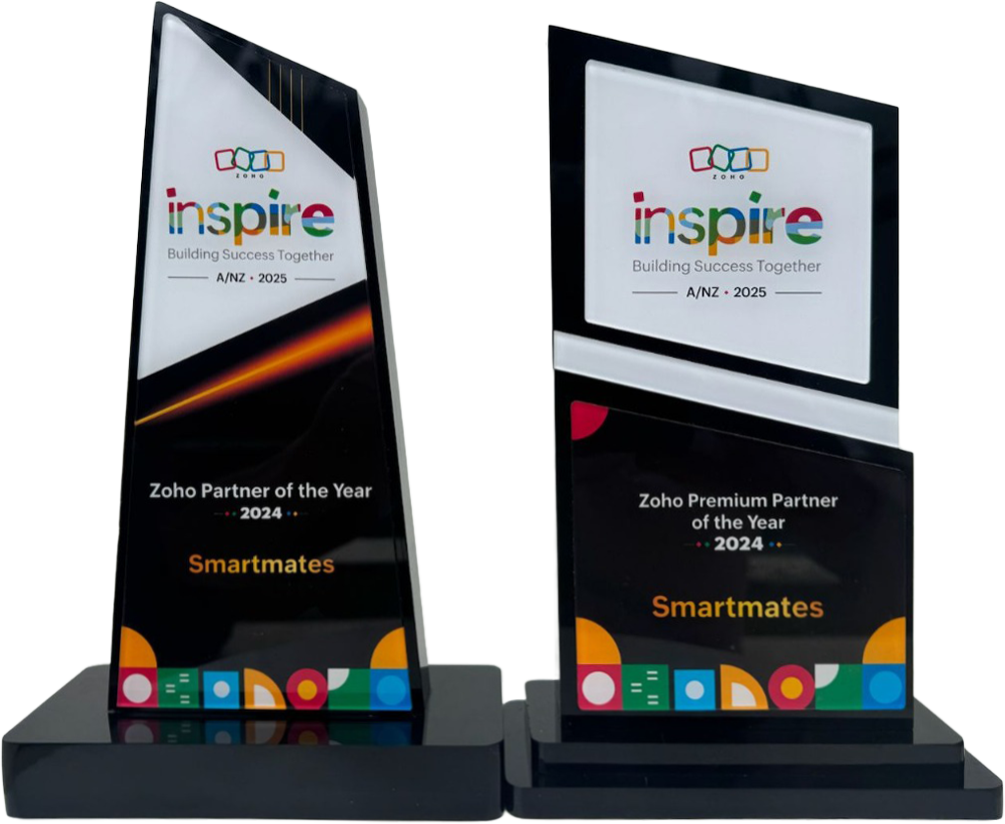
4 Years in a Row
Officially awarded Zoho Partner of the Year in Australia for 2022, 2023, 2024 and 2025. Chosen from 60+ Australian Zoho Partners by Zoho themselves.*
- First Top-Up Special $129 $99/hr + GST
Book your free video conference with our Zoho Consultants
Get your free comprehensive Zoho rollout quotation
Recognised as Australia’s #1 Zoho Partner, 4 years running
Minimum project size 10 consulting hours.

Make Better Calls With a Zoho Analytics Consultant


Let’s talk about a question that probably haunts you more than you’d like to admit: how many of your business decisions are based on actual data versus gut feel, office politics, or whoever spoke last in the meeting?
Be honest. When you decided to increase marketing spend in that channel, did you have solid data showing ROI? When you allocated resources to that project, did you know with confidence it was the highest-value use of those people? When you set sales targets, were they based on pipeline analysis or just last year’s numbers plus 20 percent?
Here’s the uncomfortable truth most businesses face: they’re drowning in data but starving for insights. Your systems generate mountains of information every day. Customer interactions, sales activities, financial transactions, marketing performance, operational metrics. It’s all there, sitting in databases, waiting to tell you something important.
But raw data isn’t insight. Numbers in spreadsheets aren’t decisions. And manually compiling reports from six different systems once a month isn’t intelligence; it’s archaeology.
This gap between data and decisions is where businesses lose competitive advantage. While you’re spending days pulling reports and trying to make sense of conflicting information, competitors with proper analytics are making confident, fast, data-driven decisions that move them ahead.
That’s precisely what a Zoho Analytics consultant does. They transform your data chaos into decision intelligence, building analytics systems that surface insights automatically, answer your critical questions instantly, and enable you to make better calls faster than ever before.
Let’s explore how this works and why it matters more than you might think.
The Decision-Making Crisis: Why Gut Feel Fails
Before diving into solutions, let’s understand why traditional decision-making approaches fall short in modern business.
Gut feel worked when businesses were simpler. Twenty years ago, a business owner could keep most operational details in their head. They knew their customers personally, saw sales patterns directly, and felt changes in the market. Intuition worked because the information space was manageable.
Modern businesses are too complex for intuition. Multiple products, diverse customer segments, various channels, numerous team members, extensive operations. Nobody can hold all this complexity in their head. Gut feel becomes guess work when information exceeds human processing capacity.
Bias distorts gut decisions systematically. Humans are terrible at statistical thinking. We overweight recent events, see patterns in randomness, favour information that confirms our existing beliefs, and make different decisions based on how questions are framed. These biases are predictable and costly.
Speed demands data, not deliberation. Markets move faster than ever. Opportunities appear and disappear quickly. Threats emerge suddenly. You can’t spend weeks deliberating decisions that need to be made this week. Speed requires having insights ready when decisions arise.
Accountability requires evidence. “I had a feeling” doesn’t justify resource allocation when questioned by boards, investors, or leadership teams. Data-driven decisions are defensible. Gut-feel decisions are vulnerable.
Scaling breaks intuition-based management. Founders can run small companies on instinct. But as businesses grow, decision-making must distribute. Other people need access to the same insights founders have, and that requires data systems, not just experienced intuition.
Competition punishes slow, poor decisions. Your competitors are using data analytics. They’re spotting opportunities faster, avoiding problems earlier, and optimising operations more effectively. Every gut-feel decision you make while they use data is a competitive disadvantage.
This is why Zoho Analytics consultants are becoming strategic assets rather than nice-to-have technical resources.
Also read: Why a Zoho Creator Partner Is Essential for Automation Beyond CRM
What Zoho Analytics Consultants Actually Do
Let’s clarify what analytics consultants provide beyond just creating pretty charts.
They identify what questions actually matter. Most businesses don’t have a data problem; they have a question problem. What do you actually need to know to make better decisions? Analytics consultants help you articulate the questions that matter, not just report on data that’s easy to measure.
They design data architectures that enable insight. Analytics requires bringing data together from multiple sources in ways that enable analysis. Consultants design the architecture: what data comes from where, how it connects, what transformations are needed, and how it’s structured for analysis.
They build data pipelines that flow automatically. Analytics is only valuable if it’s current. Consultants build automated data pipelines that continuously pull information from operational systems, transform it appropriately, and make it available for analysis without manual intervention.
They create visualisations that communicate clearly. Good data visualisation reveals patterns instantly that tables of numbers obscure. Consultants design dashboards and reports that communicate insights clearly to different audiences with different needs.
They develop metrics that drive behaviour. Not all metrics are equally useful. Consultants help you identify KPIs that actually predict success and influence behaviour rather than vanity metrics that look impressive but don’t drive improvement.
They implement self-service analytics. Rather than creating bottlenecks where everyone depends on consultants for every question, they build systems where business users can explore data and answer their own questions within appropriate guardrails.
They establish data governance. Who owns different data? What are the definitions of key metrics? How is data quality maintained? Consultants establish governance that ensures analytics remains trustworthy as organisations scale.
They train teams to think analytically. Technology alone doesn’t create data-driven culture. Consultants help teams develop analytical thinking skills and comfort with using data to inform decisions.
This comprehensive approach transforms analytics from technical capability into strategic advantage.
The Core Analytics Capabilities That Transform Decisions
Let’s explore specific analytics capabilities that Zoho Analytics consultants implement to improve decision-making.
Sales analytics reveal what’s really happening. Which products sell best? Which customer segments are most profitable? What does your pipeline actually predict? Where do deals get stuck? Which sales activities correlate with closed deals? Sales analytics answers these questions with data, not opinions.
Marketing analytics prove ROI. Which channels drive the best leads? What content actually influences decisions? How long does nurturing take? What’s the true customer acquisition cost by source? Marketing analytics transforms marketing from cost centre to measurable revenue driver.
Customer analytics improve retention. Who are your best customers? What behaviours predict churn? Which segments are growing? What drives satisfaction and loyalty? Customer analytics enables proactive relationship management instead of reactive problem-solving.
Financial analytics enhance profitability. Which products or services are truly profitable once all costs are considered? Where is working capital tied up? What are the real margins by customer or project? Financial analytics reveals truth that accounting systems alone obscure.
Operational analytics drive efficiency. Where are bottlenecks? What processes take too long? Where do errors concentrate? What capacity constraints limit growth? Operational analytics identifies improvement opportunities based on evidence, not assumption.
Forecasting analytics enable planning. What does historical data predict about future demand? How confident should you be in pipeline projections? What resources will you need in six months? Forecasting analytics replaces guesswork with statistical prediction.
Competitive analytics inform strategy. How do your metrics compare to industry benchmarks? Where are you winning or losing? What trends are emerging in your market? Competitive analytics provides external context for internal decisions.
Executive analytics support leadership. What are the three numbers that actually matter this week? Where should leadership attention focus? What leading indicators predict problems before they become crises? Executive analytics surfaces signals from noise.
Each capability requires careful implementation by Zoho Analytics consultants who understand both the technical requirements and the business questions being answered.
The Implementation Journey: From Data Chaos To Decision Intelligence
Understanding what to expect during analytics implementation helps set realistic expectations and ensures success.
Phase one is question definition. What decisions do you need to make? What would you need to know to make those decisions confidently? Analytics consultants facilitate workshops that identify your critical questions before designing any technical solutions.
Phase two involves data source mapping. Where does relevant data currently live? What systems contain information needed for analysis? What data is missing that should be captured? Consultants map your data landscape comprehensively.
Phase three is architecture design. How should data flow? What transformations are needed? How should information connect? What refresh frequency makes sense? Consultants design architecture that enables the analytics you need.
Phase four builds data pipelines. Technical implementation happens here: connecting to source systems, extracting data, transforming it appropriately, loading it into Zoho Analytics, and scheduling updates. Pipelines run automatically without manual intervention.
Phase five creates initial analytics. Based on your priority questions, consultants build dashboards, reports, and visualisations that provide answers. These aren’t generic templates; they’re designed specifically for your business questions.
Phase six involves testing and refinement. Do the numbers make sense? Are insights actionable? Can users understand visualisations? Testing reveals what needs adjustment before wide rollout.
Phase seven delivers training and adoption. Teams learn not just how to use dashboards but how to think analytically and use data in decision-making. Training is tailored to different roles with different analytical needs.
Phase eight enables self-service. Rather than creating dependency on consultants for every question, you’re taught to explore data, create your own visualisations, and answer new questions as they arise.
Phase nine establishes governance and maintenance. Data definitions are documented. Quality standards are established. Responsibilities are assigned. Governance ensures analytics remains trustworthy and valuable over time.
Phase ten focuses on continuous improvement. As business evolves and new questions emerge, analytics expands. Consultants provide ongoing partnership for enhancement and optimisation.
The timeline varies based on complexity, but expect initial analytics implementation to take anywhere from a few weeks for straightforward setups to several months for comprehensive, multi-source analytics environments.
Common Analytics Mistakes And How Consultants Avoid Them
Let’s address typical analytics mistakes and show how skilled consultants prevent them.
The everything analytics trap wastes effort. Trying to analyse everything is counterproductive. Expert consultants prioritise analytics that actually inform important decisions rather than creating comprehensive but unused reports.
The pretty but useless dashboard problem. Dashboards that look impressive but don’t answer real questions are common. Consultants design analytics that serve business needs, not just demonstrate technical capability.
The data quality blindspot undermines trust. Analytics built on poor-quality data produces misleading insights. Consultants address data quality before building analytics, ensuring outputs are trustworthy.
The one-size-fits-all approach frustrates users. Sales reps, managers, and executives need different analytics. Consultants create role-specific views that show each audience what matters to them.
The static reports become obsolete. Business questions evolve constantly, but static reports don’t. Consultants build flexible analytics that adapt to changing needs rather than requiring constant rebuilding.
The complexity overload confuses everyone. Analytics that’s too sophisticated for its audience doesn’t get used. Consultants balance analytical power with usability, ensuring insights are accessible.
The missing context misleads decisions. Numbers without context can mislead. “Sales are down 10%” means something very different if you’re in seasonal business versus steady-state. Consultants ensure analytics includes appropriate context.
The training neglect kills adoption. Even great analytics fails if people don’t understand or trust it. Consultants invest heavily in training and change management to ensure adoption.
Learning from these common mistakes is part of why experienced Zoho Analytics consultants deliver superior results.
Real-World Analytics Scenarios That Improve Decisions
Let’s look at concrete examples of how analytics consultants enable better decision-making.
Scenario one: Marketing channel optimisation. A business runs campaigns across five channels. Analytics reveals that one channel has 3x higher customer acquisition cost but those customers have 5x higher lifetime value. Previous intuition favoured the cheap channels; data shows the expensive channel is actually the best investment. Marketing spend reallocates based on evidence.
Scenario two: Product profitability analysis. Management believes product A is their star performer. Analytics reveals that once all costs (support, returns, customisation) are included, product A barely breaks even while product B is highly profitable. Strategy shifts based on actual profitability, not revenue alone.
Scenario three: Churn prediction and prevention. Analytics identifies behaviour patterns that predict customer churn six weeks before it happens. Account managers receive alerts on at-risk customers and can intervene proactively. Churn rate drops 30% through data-driven early intervention.
Scenario four: Sales process optimisation. Analysis of sales activities reveals that demos scheduled within 24 hours of lead contact have 3x higher close rates than those scheduled later. Sales process changes to prioritise immediate demo scheduling. Close rates improve significantly.
Scenario five: Inventory optimisation. Analytics reveals that 20% of inventory accounts for 80% of revenue but inventory investment is distributed evenly. Inventory strategy shifts to focus working capital on high-velocity items. Cash flow improves while revenue increases.
Scenario six: Pricing strategy refinement. Analysis shows that price sensitivity varies dramatically by customer segment. Some segments would pay significantly more; others are highly price-sensitive. Pricing strategy becomes segment-specific rather than one-size-fits-all. Margins improve 15% without losing volume.
Scenario seven: Resource allocation improvement. Analytics of project profitability reveals which types of work are most valuable. Resource allocation shifts toward high-value work types and away from low-margin activities. Overall profitability improves 25% with same headcount.
Scenario eight: Expansion opportunity identification. Geographic analysis reveals unexploited pockets where demographics match your best customers but you have minimal presence. Expansion strategy targets these high-potential areas rather than spreading resources thinly. Growth accelerates with better ROI.
These scenarios aren’t hypothetical. They’re examples of decisions improved through analytics implemented by expert consultants.
Why Australian Businesses Choose Local Analytics Consultants
There are specific advantages to working with Australian-based Zoho Analytics consultants like Smartmates.
Timezone alignment enables real-time collaboration. Analytics discussions often require iterative back-and-forth. Same timezone means efficient communication rather than day-long delays between responses.
Local business context shapes analytics. Australian market conditions, business practices, and competitive dynamics are unique. Local consultants design analytics that makes sense in our specific context.
Regulatory understanding is built in. Privacy laws, reporting requirements, and industry-specific regulations are familiar to local consultants. Analytics respects these constraints automatically.
Cultural fit improves communication. Australian communication style and business approach are distinctive. Local consultants understand this naturally, making collaboration more productive.
Face-to-face options exist when valuable. Complex analytics projects sometimes benefit from workshops where teams work together on whiteboards. Being in the same country makes this practical.
Industry knowledge adds insight. Australian consultants understand local industry dynamics, competitive landscapes, and market conditions that inform what analytics matters most.
Economic contribution stays local. Supporting Australian businesses keeps expertise and jobs onshore while strengthening our technology ecosystem.
Long-term partnership is practical. Analytics requires ongoing evolution and support. Local partners make this practical through proximity, shared timezone, and investment in the Australian market.
These advantages make Australian-based Zoho Analytics consultants strategically preferable for businesses operating in Australia.
The Smartmates Approach To Analytics Excellence
At Smartmates, we’ve developed particular expertise in transforming data into decision intelligence for Australian businesses.
We start with your decisions, not our dashboards. What questions keep you up at night? What decisions do you struggle with? What would you do differently if you knew X? Your decision-making needs drive our analytics design.
We design analytics for humans, not databases. Technical sophistication matters less than usability. We create analytics that busy executives can understand in seconds and that operational teams actually use daily.
We prioritise actionable over impressive. Pretty visualisations that don’t drive action are worthless. We focus on analytics that directly inform decisions and change behaviour.
We build for self-service. Rather than creating dependency where you need consultants for every question, we empower your team to explore data and answer questions independently within appropriate guardrails.
We ensure data quality. Analytics built on unreliable data is worse than no analytics. We address data quality systematically, ensuring outputs are trustworthy.
We train for analytical thinking. Technology alone doesn’t create data-driven culture. We help your team develop analytical mindsets and comfort with using data in decisions.
We document thoroughly. What do metrics mean? How are they calculated? Where does data come from? Comprehensive documentation ensures analytics remains maintainable and trustworthy.
We provide ongoing partnership. Business questions evolve constantly. We offer continuing support to expand, refine, and optimise analytics as your needs change.
This approach has made us the trusted choice for Australian businesses wanting to transform decisions through data intelligence.
Measuring Analytics Impact: What Success Looks Like
Let’s talk concrete outcomes so you know what success actually means with expert analytics implementation.
Decision speed typically accelerates 50 to 70 percent. When insights are immediately available rather than requiring days of manual compilation, decisions happen faster. Speed becomes a competitive advantage.
Decision confidence increases measurably. Leaders report making decisions with greater confidence when supported by data rather than gut feel. Confidence enables bolder strategic moves.
Resource allocation improves dramatically. Analytics reveals which investments deliver best returns. Budget moves toward high-ROI activities and away from low-value spending. Overall ROI typically improves 20 to 40 percent.
Operational efficiency gains compound. Analytics identifies improvement opportunities that accumulate. Small optimisations across many areas sum to significant overall efficiency improvements.
Customer satisfaction often rises. Data-driven understanding of customer needs and behaviour enables better service, more relevant offers, and proactive problem-solving. Satisfaction scores typically improve 15 to 25 percent.
Revenue per employee typically increases. When everyone has the insights they need to make better decisions, productivity rises across the organisation. Revenue per employee commonly improves 25 to 40 percent.
Forecasting accuracy improves significantly. Data-based forecasting is far more accurate than guess-based forecasting. Businesses report forecast accuracy improving from 60-70% to 85-95%.
Strategic agility emerges. When you can see what’s happening in real-time, you can adjust strategy quickly. Analytics enables agile strategy that responds to reality rather than proceeding blindly with plans made months ago.
These outcomes represent the transformation expert Zoho Analytics consultants deliver by turning data into decision intelligence.
Taking The Next Step: Your Analytics Journey
You’ve made it this far, which suggests you recognise that better decisions require better analytics, not just more data.
The question now is simple: when do you start?
Every week you make decisions based on gut feel instead of data is a week where you’re probably leaving opportunities on the table and missing risks you should see. Your competitors with proper analytics are making better calls faster.
At Smartmates, we’ve helped numerous Australian businesses transform decision-making through expert Zoho Analytics implementation. We know the challenges you’re facing because we’ve solved them before.
We understand both the technical possibilities and the business questions that make analytics valuable. And we care about your success because that’s how we measure ours.
Conclusion: Transform Decisions Through Analytics Excellence
Poor decision-making isn’t usually about bad judgment. It’s about inadequate information at the moment decisions need to be made. You can’t make consistently good calls when you’re flying blind.
The good news? This is completely solvable. With the right Zoho Analytics consultant, you can transform your data chaos into decision intelligence that enables confident, fast, evidence-based decisions.
Australian businesses competing in increasingly competitive markets can’t afford to make strategic calls based on gut feel when data could inform better choices. The companies winning aren’t necessarily the ones with the most data. They’re the ones with the best analytics.
Your competitors are already using data to inform decisions. The insight gap grows wider every quarter you delay. You don’t have to figure this out alone. You can leverage the expertise of analytics consultants who’ve successfully implemented decision intelligence many times before.
At Smartmates, we’re ready to transform your decision-making through expert Zoho Analytics implementation. We bring technical mastery, business thinking, local knowledge, and genuine commitment to delivering analytics that drives better calls.
Ready to stop guessing and start knowing? Ready to make decisions with confidence backed by data? Ready to transform your business through analytics excellence?
Connect with Smartmates today and discover how a Zoho Analytics consultant can revolutionise your decision-making. Because your business deserves better than gut-feel guesses. You deserve the competitive advantage that data-driven decisions deliver.
Request a Callback from Smartmates
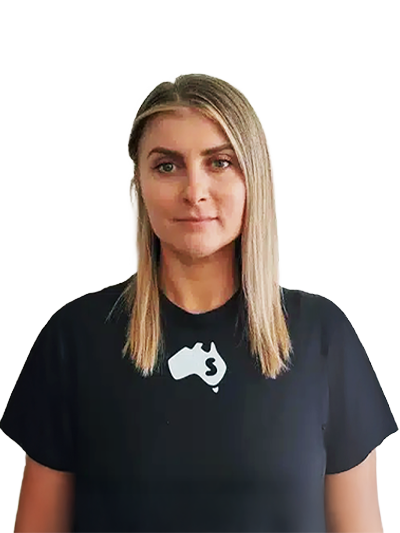
Sarah
I’ll listen to your Zoho needs to understand your business challenges and goals, ensuring a tailored approach.
I’ll bring a certified Zoho engineer to our first consultation to explore solutions and clarify your requirements.
We’ll deliver your free project plan quotation, detailing the steps, timeline, and costs—up to this point, it’s completely free!
“My mission is to solve your key problems, build your trust in our capabilities and deliver exceptional value for money.”