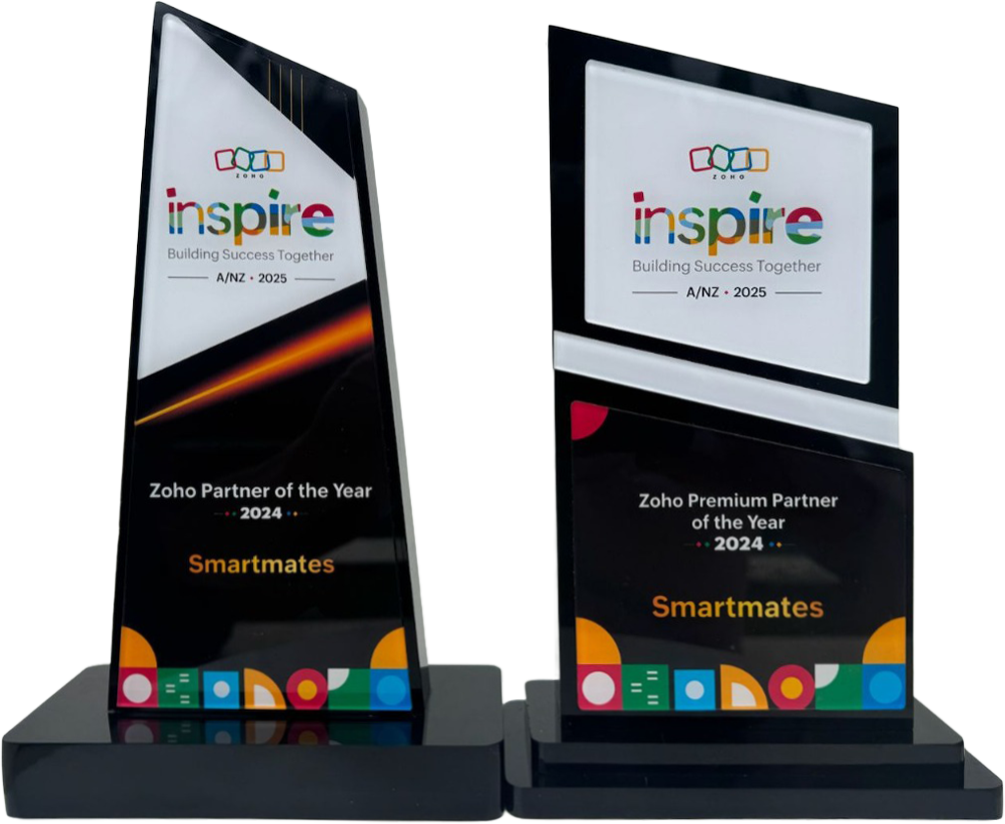
4 Years in a Row
Officially awarded Zoho Partner of the Year in Australia for 2022, 2023, 2024 and 2025. Chosen from 60+ Australian Zoho Partners by Zoho themselves.*
- First Top-Up Special $129 $99/hr + GST
Book your free video conference with our Zoho Consultants
Get your free comprehensive Zoho rollout quotation
Recognised as Australia’s #1 Zoho Partner, 4 years running
Minimum project size 10 consulting hours.

Find A Zoho Partner That Supports Ongoing Optimisation


There’s a particular kind of disappointment that comes six months after a successful technology implementation.
The launch went brilliantly. Your Zoho system is up and running. Everyone got trained. Initial enthusiasm was high. The partner handed over documentation, shook hands, and disappeared. Project complete. Success declared.
Then reality settles in. Your business has changed. New products launched. New team members joined. New processes emerged. New competitors appeared. Market dynamics shifted.
And your Zoho system? Still configured exactly as it was on day one. Workflows that made perfect sense six months ago now feel clunky. Reports that were useful initially miss metrics you now care about. Integrations don’t account for the new tools you’ve adopted. Your team has developed workarounds for limitations that could easily be fixed.
The system works. It’s just not evolving with your business. And slowly, imperceptibly, it’s becoming less effective. Less valuable. Less relevant.
Welcome to the static system problem. The frustrating reality that one-time implementations degrade over time because businesses aren’t static and technology shouldn’t be either.
This is why finding a Zoho partner who supports ongoing optimisation isn’t just a nice-to-have. It’s essential for maximising your technology investment over time. You don’t need a partner who implements and disappears. You need a partner who evolves your systems as your business evolves.
Let me show you exactly what ongoing optimisation means, why it matters more than initial implementation quality, and how to find Zoho partners who genuinely commit to continuous improvement.
Why One-Time Implementations Inevitably Degrade
Before we explore ongoing optimisation, let’s understand why static systems lose effectiveness over time despite perfect initial implementation.
Your Business Isn’t Static
The business that launched Zoho six months ago isn’t the same business operating today. You’ve learned. You’ve grown. You’ve pivoted. You’ve adapted.
New products or services. New markets. New team members. New processes. New competitors. New customer expectations. New regulatory requirements.
Each change creates a gap between your current business reality and your static Zoho configuration. These gaps accumulate until the system feels increasingly misaligned with actual needs.
Zoho Evolves Constantly
Zoho releases new features, improvements, and capabilities regularly. But these enhancements don’t automatically benefit your implementation.
Without ongoing optimisation, you’re stuck with yesterday’s capabilities while competitors leveraging newer features pull ahead. Your static system slowly becomes outdated even though the platform itself keeps improving.
Usage Reveals Optimisation Opportunities
Initial implementation reflects best guesses about what you’ll need. Real usage reveals what actually works and what doesn’t.
Some workflows are brilliant. Others are clunky. Some reports are perfect. Others miss the mark. Some automations save time. Others create confusion.
Without ongoing optimisation based on actual usage patterns, these problems persist indefinitely rather than being refined and improved.
Also read: How Zoho Partners Simplify Complex Business Processes
Team Needs Change As Competence Grows
New users need simplified interfaces and basic capabilities. Experienced users want advanced features and sophisticated functionality.
As your team’s Zoho competence develops, system configuration should evolve to support growing sophistication. Static systems force experienced users to work within constraints designed for beginners.
Strategic Priorities Shift
What matters most to your business changes over time. Growth phases require different capabilities than stability phases. Market expansion needs different support than operational efficiency.
Your Zoho system should evolve to align with current strategic priorities rather than remaining optimised for last year’s objectives.
What Ongoing Optimisation Actually Means
Let’s get specific about what ongoing optimisation involves beyond just being available for support questions.
Regular System Health Reviews
Optimisation partners conduct periodic reviews assessing how well Zoho is serving current needs.
What’s working well? What’s causing friction? Where are workarounds emerging? What new capabilities would add value? Which features are underutilised? What’s changed in the business that affects system requirements?
These structured reviews identify optimisation opportunities proactively rather than waiting for problems to become critical.
Continuous Refinement Based on Usage Patterns
Optimisation partners monitor how people actually use the system and refine based on real patterns.
Workflows that could be streamlined. Reports that need adjustment. Fields that should be added or removed. Automations that could be improved. Integrations that need enhancement.
This usage-based refinement keeps systems aligned with reality rather than theoretical design.
Proactive Feature Adoption
When Zoho releases new capabilities that benefit your business, optimisation partners implement them proactively.
You don’t need to track Zoho updates or figure out which apply to you. Partners bring relevant new features to your attention and implement those that add value.
Scalability Adjustments As You Grow
As volume increases or team size grows, system configuration needs adjustment to maintain performance and usability.
Optimisation partners anticipate scaling challenges and adjust architecture proactively before growth creates problems.
Strategic Evolution Support
When business strategy shifts, systems need to evolve accordingly. Optimisation partners help align Zoho configuration with changing strategic priorities.
New market entry? Let’s adjust the system to support that. Operational efficiency focus? Let’s optimise for maximum productivity. Customer experience priority? Let’s enhance service capabilities.
The Smartmates Ongoing Optimisation Commitment
Right, let’s talk about what exceptional ongoing optimisation actually looks like. And since we’re being direct, let me show you how Smartmates approaches continuous improvement for Australian businesses.
Why Smartmates Commits to Ongoing Optimisation
First, they don’t view implementation as the end of the relationship. It’s the beginning. Success isn’t measured by launch completion but by sustained value delivery over time.
This long-term partnership mindset shapes how they approach every engagement.
Certified Zoho expertise that stays current. The Smartmates team continuously learns about new Zoho capabilities and evolving best practices. They bring this ongoing expertise to every client relationship automatically.
Proactive optimisation approach. Smartmates doesn’t wait for clients to request improvements. They proactively identify opportunities and recommend enhancements based on business changes and platform evolution.
Australian business understanding. Being locally based means Smartmates understands how Australian businesses evolve, grow, and adapt. Optimisation addresses real local business dynamics.
Dual platform mastery. Unlike partners locked into one platform, Smartmates works with both Zoho and HubSpot. This flexibility means they can recommend cross-platform enhancements or migrations when genuinely beneficial.
But here’s what genuinely sets Smartmates apart: their structured ongoing optimisation programs that ensure continuous improvement rather than hoping clients remember to request enhancements.
What working with Smartmates delivers:
You get quarterly system health reviews identifying optimisation opportunities. You get continuous refinement based on actual usage patterns. You get proactive implementation of beneficial new features. You get scaling support as your business grows. You get strategic evolution assistance as priorities shift.
And critically, you get partnership that views your success as ongoing journey, not one-time project.
Visit smartmates.com.au to discover how ongoing optimisation maximises Zoho investment over time.
Ongoing Optimisation in Practice: What It Looks Like
How does ongoing optimisation actually work beyond theoretical commitment? Here’s what practical continuous improvement delivers.
Monthly or Quarterly Check-Ins
Regular scheduled conversations reviewing how Zoho is working and what could be better.
Usage patterns discussed. Friction points identified. New requirements captured. Quick wins implemented. Larger improvements planned.
These structured check-ins prevent optimisation from being perpetually deprioritised behind urgent daily work.
Usage Analytics Review
Partners review actual system usage to identify patterns and opportunities.
Which features are heavily used versus ignored? Where are people spending disproportionate time? What processes are creating bottlenecks? Where are errors occurring?
This data-driven approach reveals optimisation opportunities that aren’t obvious from anecdotal feedback alone.
Rapid Response to Emerging Issues
When problems arise between scheduled reviews, optimisation partners respond quickly.
Not “we’ll look at that next quarter” but “let’s fix that this week.” Quick resolution prevents minor issues from becoming major problems.
Continuous Documentation Updates
As systems evolve, documentation stays current. Training materials reflect latest configuration. Process guides remain accurate.
This maintained documentation prevents the common problem where systems change but documentation becomes outdated and misleading.
Skill Development Support
As your team’s Zoho competence grows, training evolves to support developing sophistication.
Advanced training for power users. Refreshers for existing users. Onboarding for new team members. Continuous learning rather than one-time training event.
| Optimisation Activity | Frequency | Value Delivered |
|---|---|---|
| System health reviews | Quarterly | Proactive improvement identification |
| Usage pattern analysis | Monthly | Data-driven refinement opportunities |
| New feature evaluation | Ongoing | Beneficial capability adoption |
| Performance monitoring | Continuous | Scaling and efficiency maintenance |
| Strategic alignment check | Bi-annually | System evolution with business |
| Documentation updates | As needed | Accuracy and usability |
| Skill development | Ongoing | Growing team capability |
Finding Zoho Partners Who Truly Commit to Optimisation
Not all partners who claim ongoing optimisation actually deliver it. Here’s how to identify genuine commitment versus marketing claims.
Structured Optimisation Programs, Not Just “Available for Support”
Real optimisation commitment means structured programs with defined activities, not just being theoretically available if you request help.
Ask potential partners: What does your ongoing optimisation program include? How often do you proactively review systems? What’s included versus what costs extra?
Partners with genuine commitment have clear programs they can articulate. Partners just claiming availability provide vague responses.
Proactive Approach, Not Reactive
Optimisation partners proactively identify improvement opportunities and bring them to your attention. They don’t wait for you to notice problems and request fixes.
Ask: How do you identify optimisation opportunities? Do you monitor usage? Do you proactively recommend improvements?
Partners committed to optimisation have systematic approaches to identifying and implementing improvements rather than just responding to your requests.
Long-Term Client Relationships as Evidence
If partners genuinely deliver ongoing value, clients stay with them long-term. If they disappear after implementation, clients don’t renew.
Ask for references from clients who’ve worked with the partner for 2+ years. Talk to those clients about ongoing relationship.
Do they feel the partner continues adding value? Do they receive proactive recommendations? Would they characterise the relationship as ongoing partnership or just occasional support?
Clear Service Level Agreements for Ongoing Support
Optimisation commitment should be documented in clear service level agreements.
What response times can you expect? What’s included in ongoing optimisation versus billable extras? How often are reviews conducted? What metrics define success?
Partners serious about ongoing optimisation document commitments clearly rather than keeping arrangements vague.
Cultural Fit for Long-Term Partnership
You’ll work with optimisation partners for years, not weeks. Cultural compatibility matters enormously for sustained relationships.
Do you trust them? Do they communicate well? Do they listen? Do they feel like partners or vendors?
Technical competence with poor cultural fit creates frustrating long-term relationships. Find partners who are both capable and compatible.
The Economics of Ongoing Optimisation
Is ongoing optimisation worth the investment versus just paying for support as needed? Let’s examine the economics honestly.
Proactive Optimisation Costs Less Than Reactive Problem-Solving
Catching issues early through regular reviews costs far less than fixing problems after they’ve caused significant operational pain.
Small adjustments during quarterly reviews versus major overhauls when systems have degraded substantially. Prevention is cheaper than cure.
Continuous Improvement Compounds Value
Each optimisation delivers incremental value. Compounded over time, these improvements create dramatic cumulative benefit.
5% efficiency improvement quarterly equals substantial annual gain. Small refinements accumulating create major performance improvements.
Avoided Opportunity Costs
How much revenue or efficiency are you losing to suboptimal systems? Even small improvements can generate value far exceeding optimisation costs.
If optimisation enables closing one additional deal monthly or saving your team five hours weekly, ROI is typically immediate and substantial.
Extended System Lifespan
Well-optimised systems remain effective far longer than static implementations. This extended lifespan amortizes initial investment over more years.
Static system might need replacement after 3-5 years. Continuously optimised system might deliver value for 7-10 years.
Reduced Risk of Expensive Rebuilds
Regular optimisation prevents the system degradation that eventually requires complete rebuilds.
Expensive rip-and-replace projects become unnecessary when systems evolve continuously rather than becoming outdated.
Common Optimisation Pitfalls to Avoid
Even with good partners, certain patterns can undermine ongoing optimisation effectiveness. Here’s how to avoid common problems.
Perpetual Deferral of Optimisation
Daily urgencies always feel more pressing than optimisation. Without commitment, continuous improvement gets perpetually deferred.
Prevention: Schedule reviews in advance and protect that time. Treat optimisation as strategic investment, not optional nice-to-have.
Optimisation Without Clear Business Connection
Technical improvements disconnected from business objectives waste resources without delivering meaningful value.
Prevention: Connect all optimisation to specific business outcomes. Why does this improvement matter? What business result will it drive?
Over-Optimisation Creating Unnecessary Complexity
Not every possible improvement should be implemented. Some add complexity without proportional value.
Prevention: Evaluate optimisations critically. Does value justify added complexity? Could simpler approach achieve same outcome?
Optimisation That Breaks Existing Functionality
Improvements that inadvertently break working features create more problems than they solve.
Prevention: Proper testing before deploying optimisations. Staged rollouts when changes are significant. Quick rollback capability if issues emerge.
Getting Started: Establishing Ongoing Optimisation Partnership
Ready to find Zoho partner committed to continuous improvement? Here’s your practical approach.
Define Your Optimisation Expectations
Before engaging partners, clarify what ongoing optimisation means to you.
How often do you want reviews? What support response times matter? What metrics will you use to evaluate success? What’s your budget for ongoing partnership?
Clear expectations enable productive partnership discussions and prevent misaligned assumptions.
Evaluate Multiple Partners Against Optimisation Criteria
Don’t just evaluate implementation capability. Specifically assess ongoing optimisation commitment.
Ask about structured programs. Request long-term client references. Clarify what’s included versus extra cost. Assess proactive versus reactive orientation.
Start With Trial Period
Consider beginning with short-term engagement to evaluate partnership quality before long-term commitment.
How do they perform during initial implementation? Are they proactive? Do they communicate well? Do they deliver value?
Trial period reveals partnership quality more reliably than sales conversations.
Document Optimisation Commitments Clearly
Ensure ongoing optimisation commitments are documented in clear service agreements.
What exactly is included? How often do reviews occur? What response times apply? How is success measured?
Clear documentation prevents disappointment from unmet expectations that were never explicitly agreed.
Transform Static Systems Into Continuous Value
Here’s the bottom line, and I’ll be direct because your long-term technology ROI depends on it.
One-time Zoho implementations degrade inevitably because businesses aren’t static and technology evolution doesn’t pause. Perfect launch doesn’t guarantee sustained value.
Finding a Zoho partner who genuinely commits to ongoing optimisation transforms technology from depreciating asset into appreciating capability. Systems that evolve with your business rather than becoming increasingly misaligned. Continuous improvement rather than slow degradation.
This ongoing optimisation creates compounding value. Each refinement delivers incremental benefit. Compounded over years, these improvements transform technology from operational tool into genuine competitive advantage.
But genuine ongoing optimisation requires partnership, not just vendor relationship. Partners who proactively identify opportunities. Partners who monitor usage and recommend improvements. Partners who stay current with platform evolution and bring relevant capabilities to you. Partners who view your success as ongoing journey, not completed project.
That’s exactly what Smartmates delivers for Australian businesses. You get structured quarterly reviews proactively identifying improvements. You get continuous refinement based on actual usage. You get new feature adoption keeping you current. You get scaling support as you grow. You get strategic evolution assistance.
And you get partnership that measures success by sustained value delivery over years, not just successful project completion.
Your Zoho investment should deliver growing value over time, not degrading effectiveness. The difference is ongoing optimisation through committed partnership.
Ready to find a Zoho partner who commits to continuous improvement rather than one-time implementation? Connect with Smartmates at smartmates.com.au and discover how ongoing optimisation maximises technology investment, maintains system effectiveness, and creates compounding value that transforms operations. Your technology should evolve with your business. Partner with commitment to continuous improvement.
Request a Callback from Smartmates

Sarah
I’ll listen to your Zoho needs to understand your business challenges and goals, ensuring a tailored approach.
I’ll bring a certified Zoho engineer to our first consultation to explore solutions and clarify your requirements.
We’ll deliver your free project plan quotation, detailing the steps, timeline, and costs—up to this point, it’s completely free!
“My mission is to solve your key problems, build your trust in our capabilities and deliver exceptional value for money.”