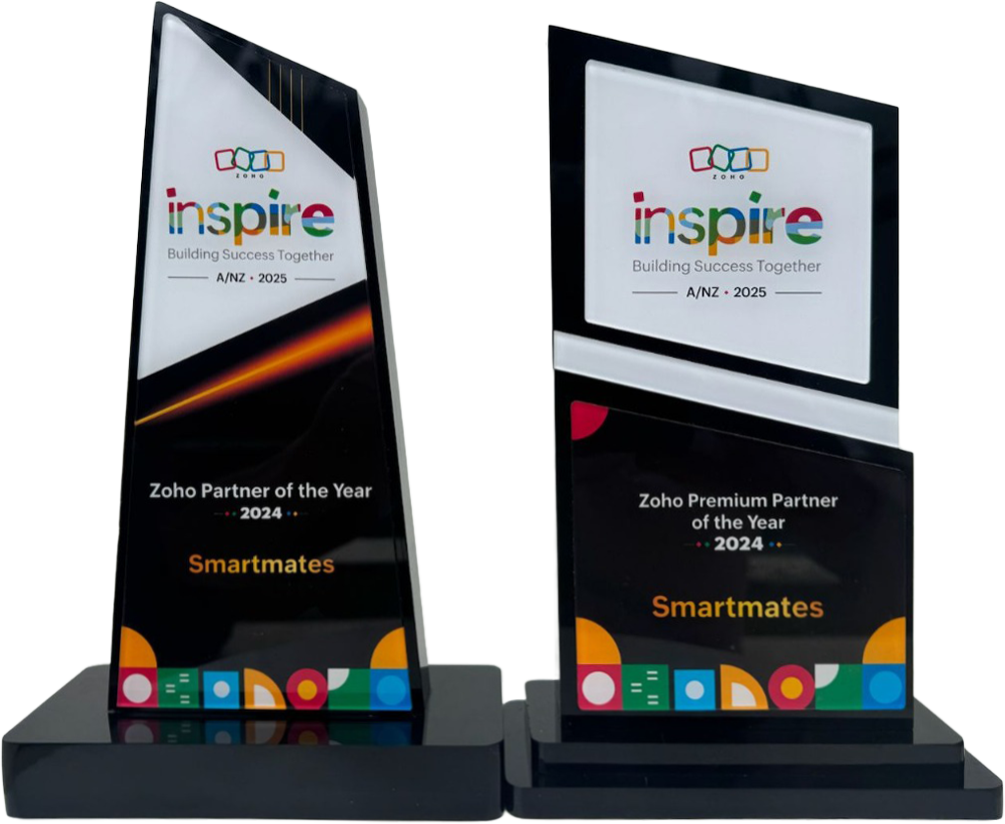
4 Years in a Row
Officially awarded Zoho Partner of the Year in Australia for 2022, 2023, 2024 and 2025. Chosen from 60+ Australian Zoho Partners by Zoho themselves.*
- First Top-Up Special $129 $99/hr + GST
Book your free video conference with our Zoho Consultants
Get your free comprehensive Zoho rollout quotation
Recognised as Australia’s #1 Zoho Partner, 4 years running
Minimum project size 10 consulting hours.

Driving Operational Alignment With Zoho Partners


Your sales team is chasing leads in one system. Marketing is tracking campaigns in another. Customer service has their own separate platform. Finance is doing everything in spreadsheets. Sound familiar?
This isn’t just inefficient. It’s expensive. When your departments operate in silos, you’re essentially running multiple businesses under one roof, each speaking a different language and working toward goals that may or may not align with the bigger picture.
Operational alignment isn’t some corporate buzzword. It’s the difference between a business that runs smoothly and one that constantly fights fires. And here’s the thing: the right Zoho partners can help you achieve it faster than you think.
What Operational Alignment Actually Means
Let’s cut through the jargon. Operational alignment means your entire business is working from the same playbook. Everyone has access to the same information. Processes flow logically from one department to the next. Data doesn’t get lost in translation.
Think of it like an orchestra. Each section has different instruments, different sheet music, different skills. But they’re all playing the same symphony, following the same conductor, aiming for the same outcome. When one section goes rogue, the whole performance suffers.
In business, misalignment shows up in predictable ways. Marketing generates leads that sales never follows up on. Customer service can’t see purchase history when a client calls with an issue. Finance chases different teams for data that should already be in the system. Management makes decisions based on outdated reports because nobody’s looking at real-time information.
The cost? Missed opportunities. Frustrated customers. Burned-out staff. Wasted budget.
Operational alignment fixes this. But achieving it requires more than good intentions. You need the right systems, the right processes, and the right expertise to tie it all together.
Also read: Create A Clear Automation Roadmap With Zoho CRM Consultants
Why Most Businesses Struggle With Alignment
Here’s what typically happens. A business starts small. Everyone knows what everyone else is doing. Communication is easy. Processes are simple, often just understood rather than documented.
Then the business grows. New people join. Departments form. Someone buys a CRM for sales. Marketing gets their own automation tool. Customer service implements a ticketing system. Finance sticks with their trusted spreadsheets because “they’ve always worked fine.”
Before long, you’ve got a Frankenstein setup. Different systems that don’t talk to each other. Data scattered across platforms. Teams working in isolation because sharing information is too complicated.
Leadership knows this is a problem. They’ve probably tried to fix it. Maybe they mandated that everyone use the same system. Maybe they hired someone to “integrate everything.” Maybe they ran a workshop on collaboration and teamwork.
But without addressing the underlying technology and process issues, nothing really changes. You can’t align operations when your systems are fundamentally misaligned.
This is where Zoho partners become valuable. Not just because they understand the technology, but because they understand how businesses actually work. They’ve seen this problem before. Many times. And they know how to fix it.
The Role of Zoho Partners in Creating Alignment
A good Zoho partner doesn’t just install software. They architect solutions that bring your entire operation into harmony.
They start by mapping your current state. What systems are you using? How does information flow between departments? Where are the bottlenecks? What gets lost in translation? They’ll talk to your sales team, your marketing people, customer service reps, finance staff. They want to understand not just what you do, but how you do it and why.
Then they design your future state. This isn’t about forcing your business to fit Zoho’s structure. It’s about configuring Zoho to match how your business should work. Custom modules for your unique processes. Automated workflows that eliminate manual handoffs. Integrations that ensure data flows seamlessly between functions.
They implement with alignment in mind. Every field, every automation, every report is designed to support cross-functional visibility and collaboration. Sales can see marketing’s lead scoring. Customer service has access to purchase history. Finance gets real-time revenue data. Management has dashboards that show the complete picture.
They train your entire team. Not just on how to use Zoho, but on why alignment matters and how the new system supports it. When people understand the bigger picture, adoption improves dramatically.
They provide ongoing support. Because alignment isn’t a one-time project. As your business evolves, your systems need to evolve with it. Good Zoho partners stick around to make that happen.
The best partners bring something else to the table too: experience. They’ve helped other Australian businesses solve similar challenges. They know what works, what doesn’t, and how to avoid common pitfalls.
Breaking Down Silos Between Departments
Let’s get specific about how Zoho partners help align different parts of your business.
Sales and Marketing alignment is the classic problem. Marketing generates leads and hands them over to sales. Sales complains the leads are low quality. Marketing says sales isn’t following up fast enough. Both teams have data to support their position, but they’re looking at different data.
A Zoho partner fixes this by creating a unified lead management process. Marketing automation tools connect directly to your CRM. Lead scoring is transparent and agreed upon by both teams. Automated workflows ensure timely follow-up. Shared dashboards show exactly what’s happening at each stage of the funnel. Suddenly, both teams are looking at the same numbers and working toward the same goals.
Sales and Customer Service alignment matters more than many businesses realize. When a customer calls with a problem, your service team should see their complete history. What they bought, when they bought it, who their sales rep is, any previous support tickets. Without this visibility, customers get frustrated repeating themselves, and your team looks unprofessional.
Zoho partners build 360-degree customer views that both sales and service can access. When service spots an upsell opportunity, it flows to sales. When sales makes a promise during the deal, service knows about it. The customer experience improves, and internal friction disappears.
Finance and Operations alignment is often overlooked but critically important. Your finance team needs accurate, timely data from the rest of the business. Revenue forecasts from sales. Budget requests from marketing. Inventory information from operations. Chasing this information manually is painful for everyone involved.
The right Zoho setup automates data flow to finance. Sales forecasts update automatically as deals progress. Marketing spend is tracked in real-time. Operational metrics feed into financial reports. Your finance team spends less time collecting data and more time analyzing it.
Management and Everyone Else need alignment too. Leaders need visibility into what’s happening across the business without micromanaging or requesting constant reports. Teams need to understand how their work contributes to company goals.
Zoho partners create executive dashboards that aggregate data from across the business. Real-time insights without bothering the team for updates. And they can set up goal tracking that connects individual activities to company objectives, so everyone sees how their work matters.
The Technical Side: Integration and Automation
Here’s where Zoho partners really earn their keep. Alignment requires technical expertise that most businesses don’t have in-house.
Integration is about making different systems talk to each other. Your accounting software needs to share data with your CRM. Your e-commerce platform should update inventory in real-time. Your marketing automation should trigger sales notifications.
Zoho partners handle these integrations using APIs, webhooks, and middleware platforms. They ensure data flows accurately and securely between systems. And they build in error handling so you’re alerted if something breaks.
Automation eliminates the manual handoffs that slow things down and introduce errors. When a lead reaches a certain score, it’s automatically assigned to sales. When a deal closes, finance is automatically notified. When a support ticket goes unresolved for too long, management is automatically alerted.
Good automation isn’t about replacing people. It’s about freeing them from repetitive tasks so they can focus on work that requires human judgment and creativity.
Custom development handles unique business requirements that out-of-the-box features can’t address. Maybe you need a custom approval workflow. Or a specialized calculation for your pricing model. Or a unique way of categorizing customers.
Zoho partners build these customizations using Deluge (Zoho’s scripting language) and ensure they integrate seamlessly with the rest of your system.
The technical complexity here is significant. Trying to do this yourself, or hiring a generalist developer, usually ends badly. Zoho partners have the specific expertise needed to get it right.
Measuring the Impact of Alignment
Operational alignment isn’t just a feel-good initiative. It delivers measurable business results. Let’s talk numbers.
Time savings are usually the first thing businesses notice. Tasks that took hours now take minutes. Reports that required manual compilation are now automated. Information that people used to hunt for is now readily available. We typically see teams saving 10-15 hours per week on administrative tasks alone.
Revenue impact comes from multiple sources. Sales cycles shorten because information flows faster. Conversion rates improve because follow-up is more timely and informed. Customer lifetime value increases because service quality improves. Many businesses see 20-30% revenue growth within the first year of achieving true operational alignment.
Customer satisfaction metrics improve across the board. Response times decrease. First-contact resolution increases. Customers stop complaining about having to repeat information. Net Promoter Scores typically jump 15-20 points.
Employee satisfaction often surprises business leaders. When systems work properly and departments collaborate effectively, people enjoy their jobs more. They spend less time fighting technology and more time doing meaningful work. Staff turnover drops. Recruitment becomes easier because your company runs professionally.
Decision-making speed accelerates dramatically. Leaders have real-time data instead of week-old reports. They can spot trends earlier and respond faster. Strategic planning becomes data-driven rather than gut-feel-driven.
These aren’t hypothetical benefits. They’re outcomes we’ve seen with Australian businesses across different industries. The right Zoho partner makes this transformation possible.
Common Pitfalls and How to Avoid Them
Even with good intentions, businesses make predictable mistakes when trying to achieve operational alignment. Here’s what to watch out for.
Rushing implementation is mistake number one. Alignment takes time. If your Zoho partner promises everything will be perfect in two weeks, they’re either lying or cutting corners. Good discovery alone takes time. Proper configuration and testing take more time. Training takes even more time. Expect several months for a comprehensive implementation.
Skipping stakeholder input leads to systems that look good on paper but don’t work in practice. Your Zoho partner should talk to people across the business, not just senior leadership. The person doing the work often has better insight into what’s needed than the person managing them.
Over-customizing is tempting but dangerous. Yes, your business is unique. But not everything needs a custom solution. Sometimes the standard approach works fine. Excessive customization creates complexity, increases costs, and makes future updates harder. Good Zoho partners know when to customize and when to adapt processes to fit the platform.
Neglecting change management kills many projects. You can build the perfect system, but if people don’t use it, you’ve achieved nothing. Training matters. Communication matters. Getting buy-in matters. Your Zoho partner should help with this, but leadership needs to champion the change too.
Treating it as a one-time project rather than an ongoing journey is another common error. Your business will change. New products, new markets, new team members, new competitors. Your systems need to evolve accordingly. Choose a Zoho partner who offers ongoing support, not just implementation.
Why Australian Businesses Trust Smartmates
We’ve spent years helping Australian businesses achieve operational alignment with Zoho. And we’ve learned what works.
We understand the local context. Australian business culture, regulations, time zones, market dynamics. We’re not adapting international templates. We’re building solutions designed specifically for how Australian businesses operate.
We focus on outcomes, not features. We don’t sell you Zoho modules you don’t need. We solve business problems. If operational alignment is your goal, we design the solution that achieves it most effectively.
We involve your entire team. Not just leadership. We talk to the people who’ll actually use the system daily. Their insights shape our approach. Their feedback improves the outcome.
We provide comprehensive training. Not a quick demo. Proper, role-based training that ensures everyone knows how to use the system effectively. We include documentation, video tutorials, and ongoing support resources.
We stick around after go-live. Implementation is just the beginning. We’re here for questions, optimizations, new requirements, and strategic advice as your business grows.
We’re certified Zoho experts. Our team holds certifications across multiple Zoho products. We know the platform deeply. But more importantly, we know how to apply that knowledge to solve real business challenges.
Our approach is simple but effective. Listen carefully. Design thoughtfully. Build properly. Train thoroughly. Support continuously.
Transform Your Business Through Alignment
Imagine your business running like that orchestra we mentioned earlier. Every department playing its part, but all working toward the same beautiful outcome. Information flowing seamlessly. Processes running smoothly. Teams collaborating effortlessly.
That’s not a fantasy. It’s what operational alignment looks like. And it’s achievable with the right Zoho partners guiding the way.
The transformation starts with acknowledging where you are now. Those disconnected systems. Those information silos. Those frustrated team members. That’s your current reality. But it doesn’t have to be your future.
With proper Zoho implementation, your sales and marketing teams start working together instead of pointing fingers. Your customer service delivers experiences that build loyalty. Your finance team gets accurate data without chasing people. Your leadership makes informed decisions based on real-time insights.
Your business becomes more efficient, more profitable, more enjoyable to run. You stop fighting fires and start building for the future.
Ready to achieve true operational alignment? Smartmates has helped hundreds of Australian businesses transform their operations with Zoho. We bring the expertise, the experience, and the commitment to make it happen for you.
Let’s talk about your specific challenges and how we can help you overcome them. Because alignment isn’t just about technology. It’s about unlocking your business’s full potential.
Your teams deserve systems that support them. Your customers deserve seamless experiences. Your business deserves to run at its best.
Let’s make it happen together.
Request a Callback from Smartmates

Sarah
I’ll listen to your Zoho needs to understand your business challenges and goals, ensuring a tailored approach.
I’ll bring a certified Zoho engineer to our first consultation to explore solutions and clarify your requirements.
We’ll deliver your free project plan quotation, detailing the steps, timeline, and costs—up to this point, it’s completely free!
“My mission is to solve your key problems, build your trust in our capabilities and deliver exceptional value for money.”