

Zoho Books Partners vs Generic Accounting Integrations

Every growing Australian business reaches a point where a CRM manages customer relationships, an accounting platform handles invoices and cash flow, and a manual gap sits in between. Deal values get copied by hand, payment statuses are checked across multiple systems, and reports that should align somehow don’t.
This isn’t a software problem, it’s an integration problem. And how that gap is closed, whether through a generic accounting integration or a specialist who truly understands Zoho Books, makes a significant difference to the outcome.
Let’s get into it.
What Zoho Books Actually Is
Before we compare anything, it is worth being clear about what Zoho Books brings to the table, because it is often underestimated.
Zoho Books is a full-featured cloud accounting platform designed for small to medium-sized businesses. It handles invoicing, expense tracking, bank reconciliation, GST compliance, purchase orders, and financial reporting. For Australian businesses, it comes ready for BAS lodgements and tax compliance, which removes a significant administrative burden from the finance team.
But here is the part that gets interesting. Because Zoho Books sits inside the broader Zoho ecosystem, it connects natively with Zoho CRM, Zoho Inventory, Zoho Projects, and dozens of other Zoho products. When configured properly by experienced Zoho Books partners, it becomes the financial backbone of a fully integrated business operation, not just a standalone accounting tool.
That distinction matters enormously when you are comparing it against a generic integration approach.
The Generic Accounting Integration Problem
Generic accounting integrations are off-the-shelf connections between a CRM and an accounting tool. They appeal because setup is quick and requires little technical effort. Two platforms are connected, a few fields are mapped, and data begins to flow, at least in theory.
In practice, limitations surface quickly. Built for the broadest audience, generic integrations rarely fit any business well. Some data syncs, but often not the fields that matter most. One-way data flow replaces the two-way movement real operations require, and simple scenarios work only until real-world complexity appears.
Data quality becomes the next issue. Generic integrations typically lack the logic to handle exceptions. Changes to deal values after invoicing, duplicate customer records, and split payments across invoices all create edge cases. These are where generic integrations quietly fail, often going unnoticed until financial discrepancies emerge at the worst possible time.
What Zoho Books Partners Do Differently
Zoho Books partners are certified consultants with deep, specific knowledge of both the Zoho Books platform and the broader Zoho ecosystem. They do not connect two platforms and hope for the best. They design an integration that reflects how your business actually works.
The difference in approach is significant, and it shows up in the quality of what gets built:
| Integration Factor | Generic Accounting Integration | Zoho Books Partner |
|---|---|---|
| Setup approach | Pre-built connector, minimal configuration | Custom-designed around your business processes |
| Data flow | Often one-directional or limited fields | Bi-directional with full field mapping control |
| Exception handling | Minimal or none | Built-in logic for real-world edge cases |
| GST and BAS compliance | Basic, may require manual adjustment | Configured for Australian tax requirements |
| Multi-currency support | Limited | Properly handled for businesses with international clients |
| Inventory and fulfilment sync | Rarely included | Can be connected as part of broader Zoho suite integration |
| Customisation options | Fixed to what the connector allows | Fully customisable based on your requirements |
| Ongoing support | Community forums | Dedicated expert with knowledge of your specific setup |
The gap between those two columns is not just technical. It is commercial. An integration that handles your actual business processes, rather than a simplified version of them, saves time, reduces errors, and gives your finance team data they can actually trust.
Also read: Zoho One Implementation Partner for Smarter Workflows
Why Australian Businesses Specifically Need Expert Zoho Books Integration
Australia has some specific requirements that generic integrations often handle poorly.
GST compliance is non-negotiable. Your accounting integration needs to handle tax correctly from the moment it goes live. Incorrect GST coding on automated transactions can create reconciliation nightmares and compliance risks. Experienced Zoho Books partners configure tax rules correctly from the start, including the various GST categories, BAS reporting requirements, and the nuances of Australian invoicing standards.
Bank feeds and reconciliation need to be clean. Zoho Books connects to Australian banks, but setting up feeds and ensuring your transaction categorisation logic is correct requires someone who understands both the platform and Australian banking conventions.
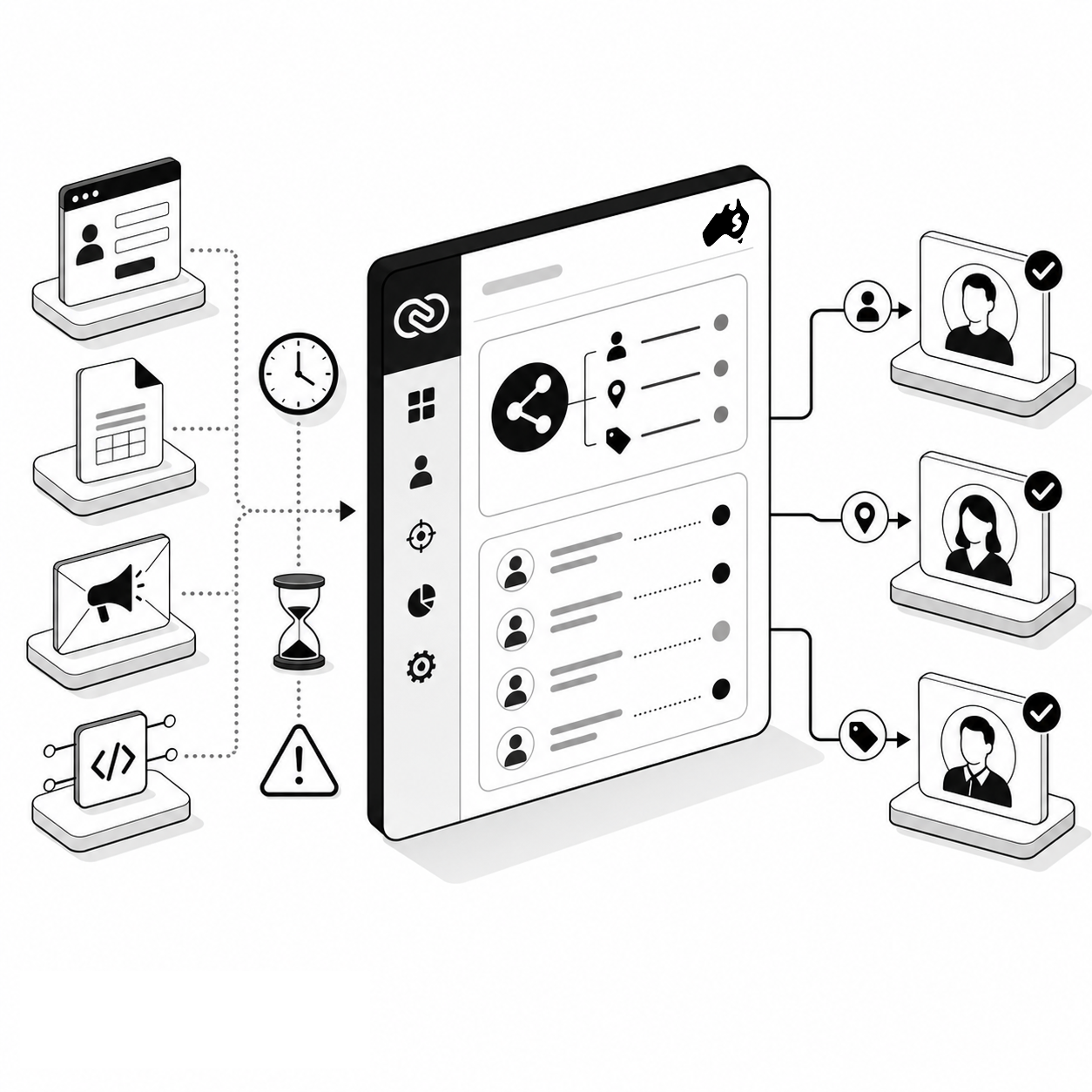
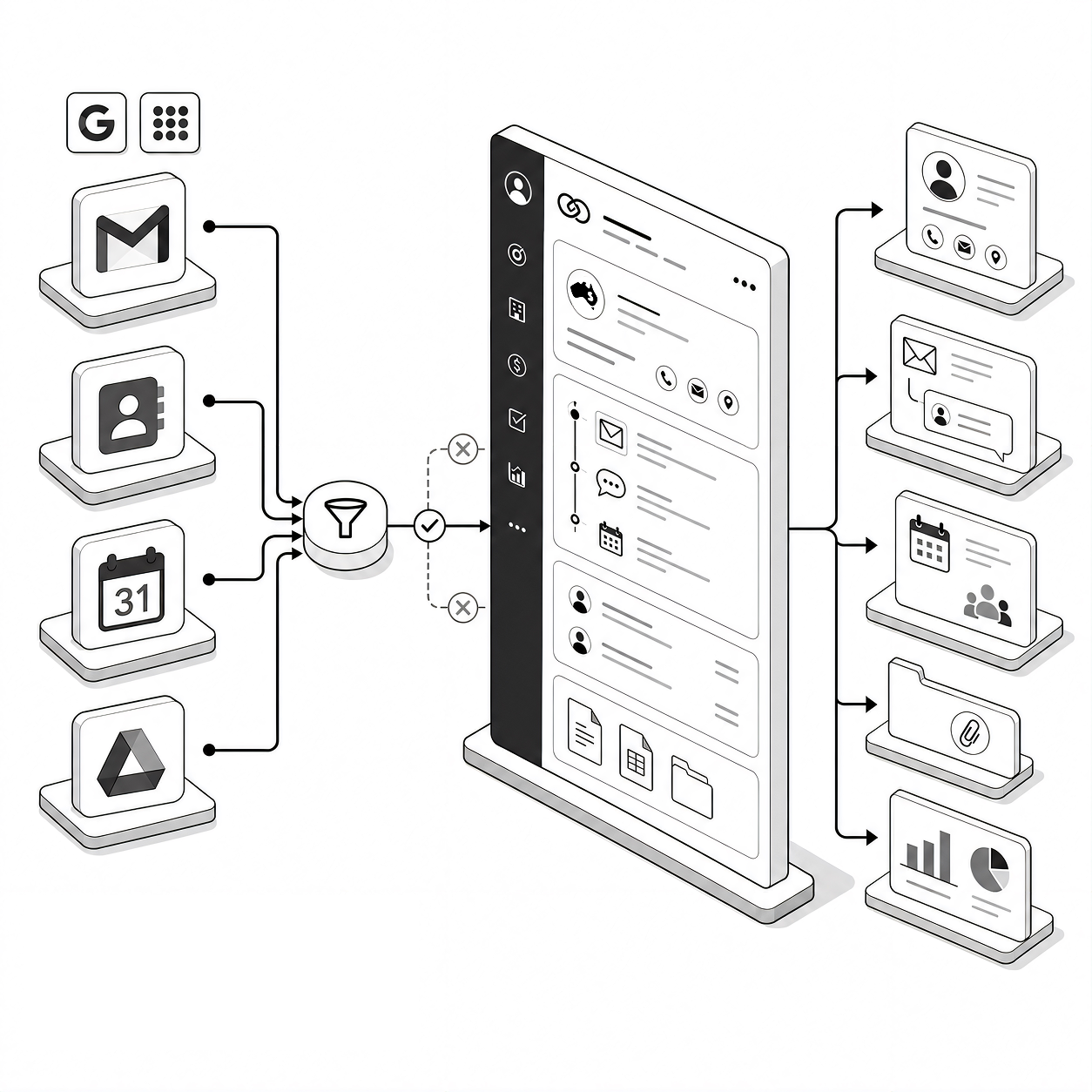
The Zoho suite integrates better when configured by someone who knows both sides. If you are using Zoho CRM alongside Zoho Books, a specialist partner can build the connection between them with a level of depth that a generic integration simply cannot match. Deals in CRM can automatically generate draft invoices in Zoho Books. Payments received in Zoho Books can update deal statuses in CRM. Revenue reports can draw from both systems to give leadership a complete picture.
None of this happens automatically. It is designed, configured, and tested by someone who understands the full Zoho ecosystem.
The Real Cost of Getting This Wrong
Here is something worth thinking about before you opt for the quick integration solution.
A generic integration that silently passes incorrect data between your CRM and your accounting platform does not just create an accounting problem. It creates a trust problem. When the numbers in your sales reports do not match the numbers in your financial reports, confidence erodes. Decisions get deferred because nobody is sure which figure to believe. And untangling the source of the discrepancy often takes longer than the original integration took to set up.
We have seen this pattern play out in Australian businesses of all sizes. The generic integration looked fine for a few weeks. Then edge cases started slipping through. Data accumulated in both systems with inconsistencies. By the time someone flagged it, there were months of financial records that needed to be reviewed and corrected.
That clean-up work is expensive. It pulls finance team time away from meaningful work. And it delays the very visibility that the integration was supposed to create.
An experienced Zoho Books partner builds in the logic and validation that prevents these issues from arising in the first place. Prevention, as always, is cheaper than correction.
What to Look for When Choosing Zoho Books Partners
If you have decided that specialist expertise is the right approach, here is what to look for in the partner you choose.
Zoho certification. This is the baseline. Make sure the partner holds current Zoho certification, not a credential from three years ago. Zoho Books evolves regularly, and a partner who is not keeping their knowledge current may be working with outdated approaches.
Demonstrated Zoho Books experience specifically. Some Zoho partners are primarily CRM specialists who have limited depth in the financial products. Ask directly about their Zoho Books implementations. How many have they done? What were the typical use cases? What challenges have they navigated?
Understanding of Australian accounting requirements. Your partner needs to understand GST, BAS, and the Australian tax environment. Ask how they approach tax configuration in Zoho Books and whether they have worked with Australian businesses of similar size and structure to yours.

The ability to connect Zoho Books to your other platforms. If Zoho Books needs to talk to your CRM, your inventory system, your e-commerce store, or any other tool, your partner needs the development capability to build those connections properly. Not all Zoho partners have this.
Post-launch support. Financial integrations need maintenance as your business evolves, as transaction volumes grow, and as Australian tax requirements change. A partner who disappears after go-live is not a partner you want managing something this important.
How Smartmates Approaches Zoho Books Integration
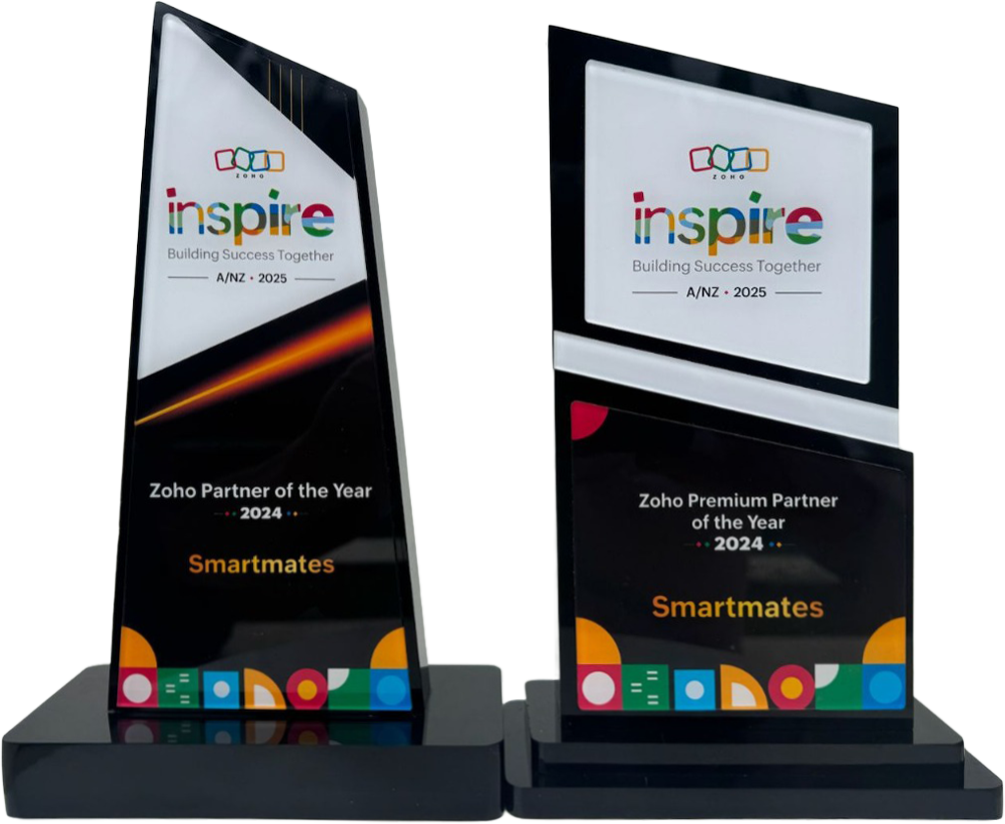
Smartmates is an Australian tech consultancy and a certified Zoho Premium Partner. We work with Australian businesses to implement and integrate Zoho Books as part of a broader, connected business system, not just as a standalone accounting tool.
Our approach starts with understanding your financial workflows, your compliance requirements, and the way your sales and operational data needs to connect with your accounting records. That understanding shapes the integration we design, which is always built around your business rather than a template.
Our services related to Zoho Books include:
- Zoho Books setup and configuration tailored for Australian GST and BAS compliance
- CRM to Zoho Books integration connecting your sales pipeline directly to your financial records
- Workflow automation that creates, sends, and updates financial documents based on CRM activity
- Data migration that brings your existing financial history into Zoho Books cleanly and accurately
- Custom app development for financial processes that go beyond standard platform functionality
We have worked with Australian businesses across professional services, retail, trades, and technology, building Zoho Books integrations that their finance teams actually trust and their leadership teams genuinely rely on.
The Transformation That Follows
When your CRM and your accounting platform are properly connected, something shifts in the way your business operates.
Invoices go out faster because they are created automatically the moment a deal closes. Cash flow visibility improves because payment status updates are reflected in real time. Financial reporting becomes more meaningful because the underlying data is clean and consistent. And the finance team, the one that used to spend hours reconciling figures between two systems, starts spending that time on analysis rather than data entry.
That transformation, from a business where finance and sales operate in separate silos to one where they inform and support each other seamlessly, is what the right Zoho Books partner builds. Not just a working integration, but a connected operation that makes better decisions faster.
It is a genuinely different way to run a business. And once you experience it, going back is not something you would consider.
Let’s Talk About Where You At
Book a free planning session with Smartmates today. We will walk you through your options, discuss your specific requirements, and offer you a free Zoho trial so you can see what a properly connected financial setup looks like before committing to anything.
Request a Callback from Smartmates

Sarah
I’ll listen to your Zoho needs to understand your business challenges and goals, ensuring a tailored approach.
I’ll bring a certified Zoho engineer to our first consultation to explore solutions and clarify your requirements.

We’ll deliver your free project plan quotation, detailing the steps, timeline, and costs—up to this point, it’s completely free!
“My mission is to solve your key problems, build your trust in our capabilities and deliver exceptional value for money.”