Zoho One Partners Turning Disconnected Tools Into One Platform

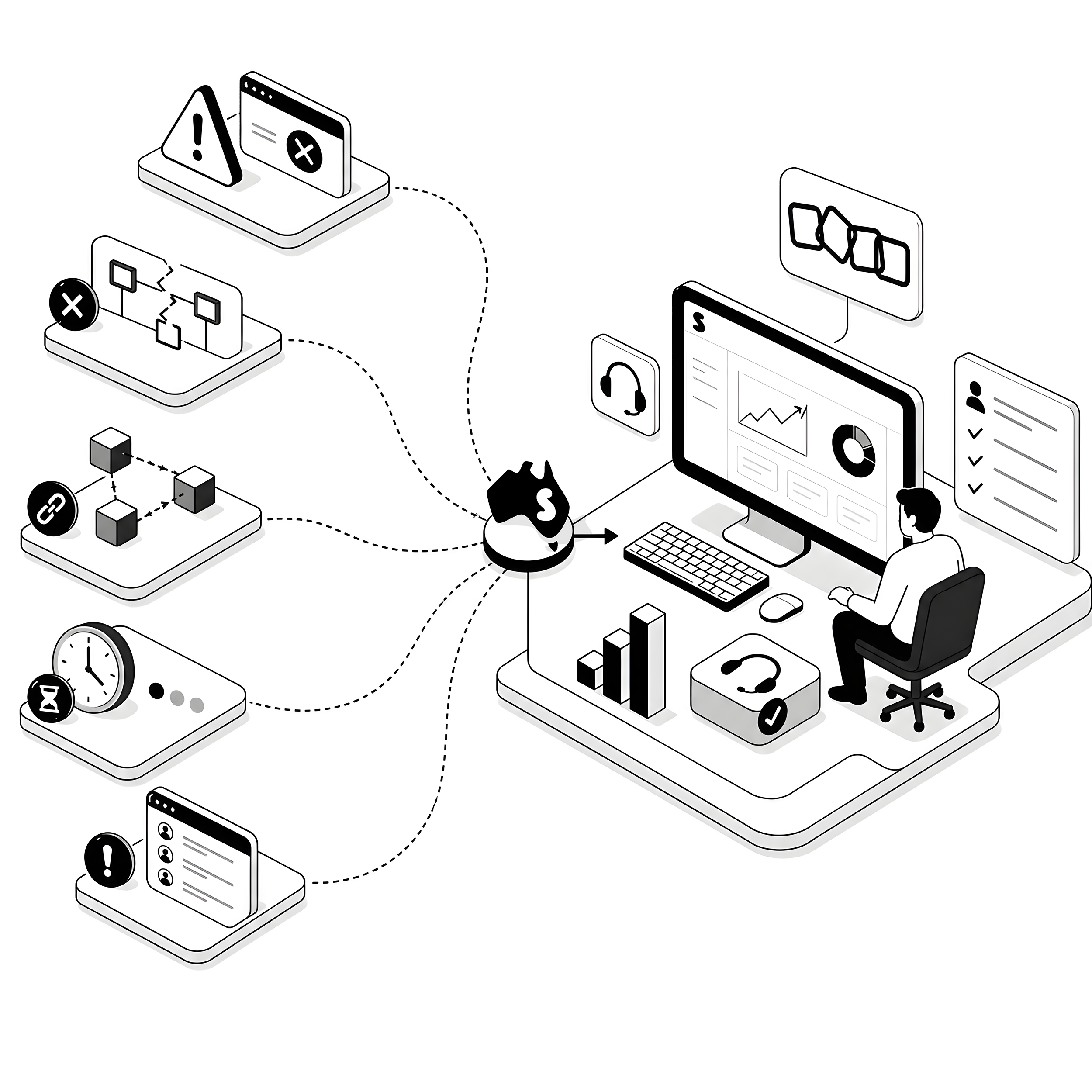
Your sales team uses one CRM. Marketing has their own platform. Customer service operates in a different system. Finance uses accounting software that doesn’t talk to anything else. Projects are managed in yet another tool. HR has their own suite.
Each tool works fine in isolation. But together? It’s chaos.
Here’s what most Australian businesses discover as they grow. You start with one or two tools that solve immediate problems. Then you add another because someone needs specific functionality. Before you know it, you’re paying for a dozen different subscriptions, maintaining multiple logins, and manually moving data between systems that refuse to communicate.
The promise of business software was supposed to make operations smoother. Instead, you’ve created a technology nightmare where information lives in silos, nothing syncs properly, and your team spends more time managing tools than doing actual work.
This is where Zoho One partners become invaluable. Not just implementing another platform, but consolidating your fragmented technology ecosystem into one unified system that actually works together. Let’s talk about how this transformation happens and why it matters more than you might think.
The Hidden Cost of Tool Sprawl
Before we discuss solutions, let’s be honest about what disconnected tools are actually costing your business.
The Subscription Creep
It starts innocently enough. You need a CRM, so you sign up for one. Marketing needs automation capabilities, so you add another platform. Customer service requires ticketing functionality, so you subscribe to a support tool. Projects need management software. HR needs a system. Finance needs accounting tools.
Each individual subscription seems reasonable. But add them all up and you’re paying thousands monthly for a patchwork of tools that don’t integrate properly. The total cost of ownership far exceeds what you’d pay for a unified platform, but it happened gradually so nobody noticed.
The Integration Tax
None of these tools work together natively. So you pay for integration platforms to connect them. Zapier subscriptions. API connectors. Custom development to make systems talk to each other. Ongoing maintenance when integrations break.
You’re essentially paying twice. Once for the tools themselves. Again to make them work together. And even then, the integrations are often fragile and require constant attention.
The Productivity Drain
Your sales rep needs to check three different systems to get a complete picture of a customer. Your marketing coordinator manually exports data from the CRM to import into the email platform. Your customer service team can’t see sales history without switching systems.
Every context switch costs time and mental energy. Every manual data transfer creates opportunities for error. Every disconnected workflow slows operations. The productivity cost compounds across your entire team, every single day.
Also read: Nonprofits Streamlining Systems With Zoho Authorized Partners
The Data Inconsistency Problem
When the same information exists in multiple systems, which version is correct? The contact email in the CRM? The one in the email platform? The customer record in the support system?
Data conflicts create confusion and undermine trust. Your team stops relying on any system because they’ve all been wrong before. Reports become meaningless because underlying data is inconsistent.
The Scaling Wall
As your business grows, complexity increases. More products, more customers, more team members, more processes. Disconnected tools that barely worked at small scale become completely unmanageable.
You hit a wall where adding more people or processes just creates more chaos. Growth becomes painful instead of exciting because your technology can’t scale with you.
Why Consolidation Is Harder Than It Looks
You’ve probably thought about consolidating. Maybe you’ve even tried. Here’s why it’s more difficult than simply signing up for a unified platform.
The Data Migration Challenge
You’ve got years of customer data, transaction history, project records, and business information scattered across multiple systems. Getting all this into one platform without losing anything or corrupting data requires serious expertise.
Different systems structure data differently. What’s a “contact” in one system might be split between “accounts” and “contacts” in another. Custom fields in your old CRM need to map to something in the new platform. Historical data needs to maintain referential integrity.
DIY migration attempts often result in lost information, duplicate records, or data corruption that undermines the entire consolidation effort.
The Process Redesign Reality
Your current processes are built around your fragmented tools. Moving to a unified platform isn’t just migrating data. It’s redesigning how work actually gets done.
How do sales and marketing collaborate when they’re in the same system instead of different ones? How do customer service and sales share information? How do projects connect to client records? These process questions require thoughtful answers, not just technical configuration.
The Change Management Mountain
Your team is used to their current tools, however frustrating. Consolidation means everyone learning new systems and new workflows simultaneously. Without proper change management, resistance derails the entire project.
People need to understand why consolidation matters, what’s in it for them personally, and how to be successful in the new environment. Training alone doesn’t cut it. You need genuine change management.
The Integration Unknowns
Even a unified platform like Zoho One needs to integrate with some external systems. Your payment processor. Your shipping platform. Industry-specific tools you can’t replace. Banking connections. Whatever’s essential to your operations.
Understanding which integrations are critical, how to implement them properly, and how to maintain them requires expertise most businesses don’t have internally.
How Zoho One Partners Turn Disconnected Tools Into One Platform
Right, so what does successful consolidation actually look like when you work with experienced Zoho One partners?
Comprehensive Tool Audit
Partners start by mapping your complete technology landscape. Every tool you’re using. What it does. Who uses it. What data it contains. Which other systems it connects to. What business processes it supports.
This audit reveals the complete picture of your tool sprawl. Often businesses are surprised by how many subscriptions they’re actually paying for when everything’s listed out.
The audit also identifies which tools are genuinely necessary and which can be replaced by Zoho One capabilities. Some tools are essential and will remain. Others are redundant once you consolidate onto a unified platform.
Strategic Migration Planning
With the complete picture clear, partners develop a migration strategy that minimizes disruption while maximizing benefits.
This includes sequencing. What gets migrated first? Often it’s your CRM and core customer data because everything else builds on that foundation. Then related systems like marketing automation and customer service. Then supporting systems like projects and HR.
Each phase delivers value while building toward complete consolidation. You see benefits progressively instead of waiting months for everything to be finished.
The plan also accounts for risk management. What happens if migration encounters problems? How do you roll back if needed? What’s the contingency plan? Professional migration includes fail-safes.
Data Consolidation and Cleansing
Partners manage the complex work of actually moving data into Zoho One. They map data structures from multiple sources. They deduplicate records that exist in several systems. They clean data during migration, fixing inconsistencies and errors accumulated over years.
They validate that everything transferred correctly before declaring migration complete. Critical business data gets treated with the care it deserves.
Process Redesign for Unified Operations
Moving to one platform enables process improvements that weren’t possible with disconnected tools. Partners help redesign workflows to take advantage of unified data and integrated functionality.
Sales and marketing alignment becomes real instead of aspirational. Customer service can see complete customer history. Projects connect to clients and deals automatically. Reporting spans your entire operation because everything’s in one system.
These process improvements often deliver more value than the consolidation itself. You’re not just replicating old processes in new software. You’re fundamentally improving how work gets done.
Integration Architecture for Essential External Systems
For systems that must remain external, partners build proper integration architecture. Clean API connections. Reliable data synchronization. Error handling that catches problems early. Monitoring that alerts you to failures.
Your unified Zoho One platform connects smoothly to whatever external systems your business truly needs, creating a cohesive technology ecosystem instead of fragmented silos.
Training and Change Management
Partners provide training that’s specific to your configured Zoho One environment. Not generic feature overviews but practical instruction on how to do actual work in your specific setup.
They also support change management. Communicating why consolidation matters. Identifying and supporting champions. Addressing concerns and resistance. Building momentum through early wins.
Successful consolidation requires people embracing new ways of working, not just technical implementation.
Ongoing Optimization
Consolidation isn’t finished at go-live. As your team uses the unified platform, optimization opportunities emerge. Workflows that could be more efficient. Reports that would be more useful. Integrations that could be tighter.
Partners provide ongoing support to continuously improve your consolidated platform. Your Zoho One environment evolves with your understanding and needs.
The Smartmates Consolidation Approach
At Smartmates, we’ve helped dozens of Australian businesses escape tool sprawl by consolidating onto Zoho One. Our approach combines technical expertise with business understanding.
Business-First Thinking
We don’t start with technology. We start with your business. What are you trying to achieve? How do operations currently work? Where are the pain points? What would success look like?
This business context shapes our consolidation strategy. We’re solving business problems, not just implementing software.
Minimal Disruption Migration
We plan migrations to minimize operational disruption. Phased approaches mean you’re never completely down. Parallel running when appropriate ensures smooth transitions. Your business keeps operating while consolidation happens.
Knowledge Transfer
We don’t just consolidate and leave. We transfer knowledge so your team can manage and optimize the platform ongoing. We document thoroughly. We train comprehensively. We want you confident and capable.
Australian Expertise
Being based in Australia means we understand local business culture and operate in your timezone. We can meet in person when valuable. We get the context your business operates in.
Certified Zoho Specialists
Our team includes certified Zoho experts with deep platform knowledge. We know what Zoho One can do and how to configure it properly for Australian businesses.
Real Examples of Successful Consolidation
Let’s make this concrete with examples from our consolidation work.
A Sydney professional services firm was using seven different tools. Separate systems for CRM, email marketing, proposals, project management, time tracking, invoicing, and document management. Each subscription cost money. None talked to each other properly. Productivity suffered.
We consolidated everything onto Zoho One. CRM became their central customer database. Campaigns handled email marketing. Projects managed client work. Books handled invoicing. WorkDrive replaced their document system. Everything connected because it was all one platform.
They went from seven subscriptions and constant integration headaches to one unified system. Monthly software costs dropped by 60%. More importantly, productivity jumped because information flowed naturally instead of requiring manual intervention.
A Melbourne manufacturer had grown through acquisition. Each acquisition brought its own technology stack. The result was chaos. Different divisions used different systems. Nothing was standardized. Consolidation seemed impossible.
We developed a phased Zoho One consolidation strategy. Started with one division as a pilot. Proved the model worked. Rolled out systematically across other divisions. Within eighteen months, the entire company operated on one unified platform.
Reporting that was previously impossible became routine. Cross-division collaboration improved dramatically. Their technology finally supported their business instead of fragmenting it.
A Brisbane retailer had accumulated tools organically over a decade. Their e-commerce platform, inventory system, CRM, email marketing, customer service, and accounting software all existed in silos. Manual data entry between systems consumed hours daily.
We consolidated onto Zoho One with proper integration to their e-commerce platform which needed to remain external. Customer data from online purchases flowed into CRM automatically. Inventory synced properly. Customer service could see complete purchase history. Marketing could target based on actual buying behavior.
The time saved on manual data entry alone paid for the consolidation within months. The strategic benefits of unified data were even more valuable.
The Transformation Unified Platforms Enable
Six months after proper consolidation with experienced Zoho One partners, your business operates differently.
One login instead of a dozen. One place to find customer information instead of checking multiple systems. Data that flows automatically instead of manual transfers. Reports that span your entire operation instead of fragmented views.
Your team spends time on work that matters instead of fighting with disconnected tools. Productivity increases because information is at their fingertips. Decisions improve because data is complete and trustworthy.
Integration headaches disappear because everything’s already integrated within the platform. Maintenance becomes manageable instead of constantly fighting fragile connections between disparate systems.
Scaling becomes possible because your platform grows with you instead of fragmenting further as complexity increases.
This transformation is what consolidation with expert Zoho One partners delivers. Not just fewer subscriptions but fundamentally better operations.
Ready to Consolidate?
If you’re drowning in disconnected tools, if integration headaches consume too much time and energy, if tool sprawl is costing more than you realised, consolidation onto Zoho One with expert partners can transform your operations.
Smartmates specializes in consolidating fragmented technology ecosystems onto unified Zoho One platforms for Australian businesses. We’re certified Zoho partners with proven consolidation methodology, deep technical expertise, and a track record of successful migrations. We turn tool chaos into platform clarity.
Ready to transform your disconnected tools into one unified platform? Contact Smartmates today and discover how Zoho One partners make consolidation successful, delivering immediate cost savings and long-term operational excellence. Let’s simplify your technology and amplify your results.
Request a Callback from Smartmates

Sarah
I’ll listen to your Zoho needs to understand your business challenges and goals, ensuring a tailored approach.
I’ll bring a certified Zoho engineer to our first consultation to explore solutions and clarify your requirements.

We’ll deliver your free project plan quotation, detailing the steps, timeline, and costs—up to this point, it’s completely free!
“My mission is to solve your key problems, build your trust in our capabilities and deliver exceptional value for money.”