Modern Systems Built With Zoho Consultants

Your operations manager just emailed asking if you can generate a report showing customer lifetime value by acquisition channel, filtered by product category, for the past 18 months. Simple question. Completely impossible with your current systems.
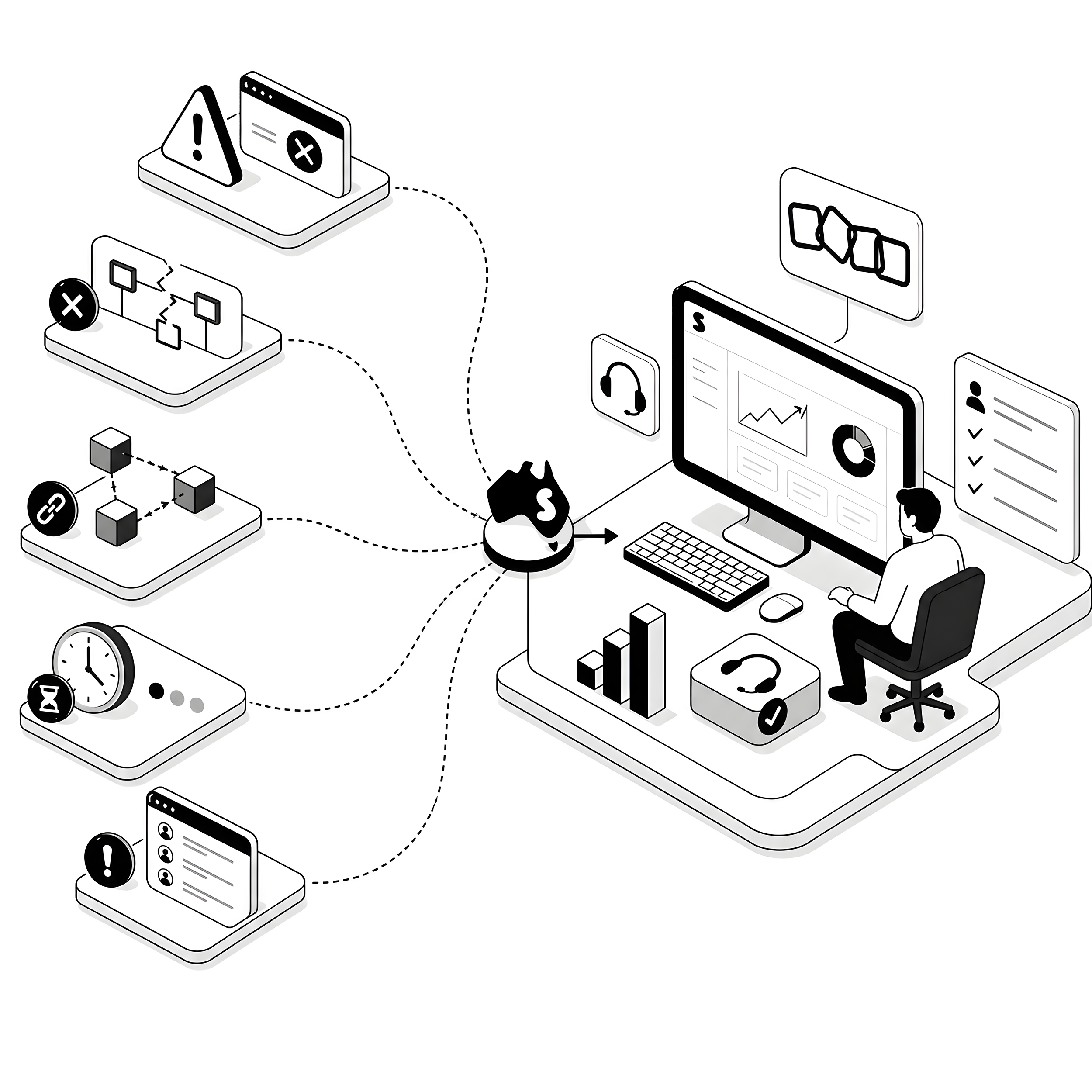
Why? Because your customer data lives in one system. Purchase history lives somewhere else. Acquisition source tracking exists in a third place. Product categories are maintained in yet another database. Pulling all this together requires exporting data from four systems, manually merging it in Excel, cleaning up inconsistencies, and spending three hours hoping your formulas are correct.
By the time you finish, the data’s already outdated and nobody trusts the accuracy anyway.
This is what legacy systems look like in 2025. Not mainframes from the 1980s necessarily, but patchwork collections of tools that were never designed to work together, can’t provide real-time insights, struggle with mobile access, and fundamentally can’t support how modern businesses actually operate.
Meanwhile, some of your competitors seem to have systems that just work. They make decisions based on current data, not month-old spreadsheets. They automate processes you’re still doing manually. They scale operations without proportionally increasing headcount. They’re operating in the present while you’re stuck in the past.
Here’s what they know: modern business systems built by experienced Zoho consultants aren’t just faster versions of old approaches. They’re fundamentally different operational infrastructure designed for how business works today and will work tomorrow.
Let me show you what modern actually means and why it matters for Australian businesses trying to compete effectively.
What Makes Systems Actually Modern
Before we dive into solutions, let’s clarify what “modern” actually means beyond marketing buzzword status. Modern systems have specific characteristics that separate them from legacy approaches:
Cloud-native architecture. Modern systems live in the cloud from the foundation, not retrofitted desktop software awkwardly moved online. This means genuine multi-device access, automatic updates, reliable backups, and infrastructure that scales with demand.
API-first design. Modern systems are built to connect with other tools from day one. Integration isn’t an afterthought requiring expensive custom development. It’s fundamental architecture that makes your entire technology ecosystem work together.
Real-time data processing. Modern systems provide current information instantly. You’re not waiting for overnight batch processes or manual report generation. Data updates flow through your organization immediately as events occur.
Mobile-optimized experiences. Modern systems work properly on phones and tablets, not just tolerate them. Mobile isn’t desktop crammed onto small screens. It’s purpose-built experiences for how people actually work away from desks.
Automation-centric workflows. Modern systems automate repetitive work by default. Human effort focuses on judgment, creativity, and relationship building, not manual data entry and coordination overhead.
Scalable foundation. Modern systems handle growth gracefully. What works at your current size continues working as you double or triple. You’re not constantly hitting performance walls or capacity limits.
User-friendly interfaces. Modern systems are genuinely easy to use without extensive training. Interfaces feel intuitive because they’re designed around how humans think, not how databases structure information.
Most businesses are operating with systems that fail multiple or all of these criteria. They’re not technically “legacy” in the sense of being old. They’re legacy in the sense of being built on outdated architectural assumptions that can’t support modern operational requirements.

Why DIY Modern System Attempts Fail
You’ve probably tried modernizing your systems yourself. Maybe you migrated to cloud versions of your existing software. Maybe you subscribed to new platforms promising everything you need. Maybe you hired IT people to “fix” things.
Most attempts fail for predictable reasons:
Piecemeal approach. You modernize one system without addressing the broader ecosystem. Your shiny new CRM still can’t talk to your old accounting software. You’ve created modern islands in a legacy ocean.
Tool-first instead of strategy-first. You pick software based on features or price without designing how your complete operational infrastructure should work. The result is disconnected tools that don’t create coherent systems.
Underestimating complexity. Modern systems require expertise in cloud architecture, API integration, data modeling, workflow design, user experience, and change management. General IT knowledge isn’t sufficient for proper modernization.
No governance framework. You implement powerful tools without establishing who owns what data, how information flows between systems, or what standards ensure consistency. Chaos with modern tools is still chaos.
Inadequate change management. Technology alone doesn’t create modern systems. People need to understand and adopt new approaches. Without proper change management, fancy technology gets ignored or misused.
This is where experienced Zoho consultants become invaluable. They’re not just implementing software. They’re architecting modern operational infrastructure using contemporary best practices that actually deliver the benefits modern systems promise.
Also read: Driving Measurable Business Outcomes With Zoho Implementation Partners
How Zoho Consultants Build Modern Systems
Let’s get specific about how experienced Zoho consultants create genuinely modern operational infrastructure:
Cloud Architecture Done Properly
The foundation of modern systems is cloud architecture that’s designed for reliability, performance, and scalability from day one. Zoho consultants don’t just move data to the cloud. They architect cloud-native systems that leverage cloud capabilities properly.
Multi-region redundancy ensures your operations continue even if entire data centers fail. Automated backups happen continuously without human intervention. Elastic capacity means systems handle peak loads without crashing or slowing down.
We worked with a Perth-based e-commerce business experiencing rapid growth. Their old systems would crash during sales events when traffic spiked. After Zoho consultants built proper cloud architecture, they handled 10x traffic increases without performance degradation. The infrastructure automatically scales to demand.
Unified Data Architecture
Modern systems require unified data architecture where information flows coherently across your entire operation. Zoho consultants design this architecture strategically rather than bolting systems together reactively.
Single source of truth for each data type eliminates conflicting information across systems. Automated synchronization ensures updates propagate everywhere instantly. Data validation prevents garbage from entering your systems in the first place.
One Melbourne manufacturer we worked with had customer information in seven different places, none matching perfectly. After implementing unified data architecture, customer records became authoritative and consistent. Sales, operations, service, and finance all work from identical current information.
Intelligent Automation Framework
Modern systems automate extensively, but intelligently. Zoho consultants design automation frameworks that handle routine work while routing exceptions to humans appropriately.
Trigger-based workflows respond immediately to events without human initiation. Conditional logic handles complexity and variations without requiring custom code for every scenario. Exception handling ensures automation gracefully manages unusual situations.
A Sydney professional services firm we worked with was manually onboarding new clients through 37 steps involving five departments. After implementing intelligent automation, the process became largely automatic. Humans intervene only for decisions requiring judgment while routine tasks happen reliably in the background.

API-First Integration Strategy
Modern systems connect seamlessly with your broader technology ecosystem. Zoho consultants implement API-first integration where systems coordinate automatically without manual data transfer.
Real-time data exchange means changes in one system immediately reflect everywhere. Bidirectional synchronization allows information to flow in both directions as needed. Error detection and recovery handles integration failures gracefully.
This integration strategy transforms disconnected tools into coherent operational infrastructure where everything works together rather than creating coordination overhead.
Mobile-First User Experience
Modern work happens everywhere, not just at desks. Zoho consultants design mobile-first experiences that genuinely work for how Australians actually operate.
Context-aware interfaces show different information and options based on user role, location, and current activity. Offline capability ensures mobile users remain productive even when internet connectivity is unreliable. Touch-optimized controls work properly on phones and tablets rather than requiring precise mouse clicks.
We designed a mobile-first system for a Brisbane field service business with 40 technicians. They now complete job documentation, access customer history, order parts, and update schedules entirely from phones. Office productivity improved because techs aren’t returning to base to file paperwork.
Real-Time Analytics and Reporting
Modern systems provide instant insights instead of requiring manual report generation. Zoho consultants implement analytics that update continuously as your business operates.
Live dashboards show current status without waiting for overnight processing. Automated alerts notify relevant people immediately when metrics exceed thresholds or problems emerge. Self-service reporting lets people answer their own questions without bothering IT or data teams.
That report your operations manager wanted about customer lifetime value? In a modern system built by Zoho consultants, it exists already. Automatically updated. Accurate. Available in seconds, not hours.
Real Modern System Results From Australian Businesses
Let’s look at actual outcomes from businesses that invested in modern systems with Zoho consultants:
| System Characteristic | Legacy Approach | Modern System | Improvement |
|---|---|---|---|
| Data Accessibility | Hours to manual compile | Instant access | Real-time insights |
| System Integration | Manual transfer, errors | Automated, reliable | 95% reduction in manual work |
| Mobile Functionality | Limited/nonexistent | Full capability | Complete operational flexibility |
| Scalability | Frequent system changes | Seamless growth | 10x capacity without infrastructure changes |
| Automation Coverage | 20-30% of processes | 70-85% of processes | 3x more automated |
Take Richard’s Adelaide distribution business. Before working with Zoho consultants, his operations relied on systems from 2012 that required extensive manual work and provided limited visibility. Scaling meant hiring more administrative staff to handle coordination overhead.
After implementing modern systems, they tripled revenue with only 40% increase in staff. Automation handles routine work that previously required people. Real-time data enables faster decisions. Mobile access means team members stay productive anywhere. The modern infrastructure enabled growth that old systems would have made impossible.
Or consider Lisa’s Auckland-based (operating in Australia) importing business. Her legacy systems couldn’t handle the compliance complexity of modern Australian import regulations. Manual tracking created constant errors and regulatory risks.
Modern systems built by Zoho consultants automated compliance workflows based on product type, origin country, and regulatory requirements. What was manual chaos became automated compliance that scales reliably while reducing regulatory risk.
The Australian Modern Systems Context
Building modern systems for Australian businesses requires understanding specific local contexts:
Australian regulatory environment. Privacy Act compliance, Fair Work requirements, industry-specific regulations, modern systems need these built into architecture from the foundation.
Integration with Australian platforms. Your modern systems need to work seamlessly with MYOB, Xero, Australian banking APIs, and other local tools. Overseas consultants often lack this specific expertise.


Australian work patterns. Mobile-first makes particular sense in Australia where field teams, remote workers, and geographic distribution are common. Modern systems need to support how Australians actually work.
Cloud infrastructure location. Data sovereignty and latency matter. Modern systems should use Australian data centers for performance and compliance rather than routing everything through overseas servers.
Business communication culture. Modern systems for Australian businesses should reflect local communication preferences, direct but professional, collaborative but efficient.
Scalability for Australian market size. Modern systems need to scale appropriately for Australian business sizes, not assume massive American or European enterprise scales.
Zoho consultants with Australian experience build modern systems that fit this context rather than forcing adaptation to overseas assumptions.
Common Modernization Mistakes That Create Problems
We’ve rescued several Australian businesses from botched modernization attempts. The mistakes are predictable:
Mistake one: Lift and shift. Taking old systems and processes and just moving them to cloud platforms. You end up with legacy architecture in modern wrappers. Real modernization requires redesigning, not just relocating.
Mistake two: Technology without process redesign. Implementing modern tools while maintaining old workflows. You’re automating inefficiency rather than creating efficient operations.
Mistake three: No data migration strategy. Moving data from old systems to new without cleaning, validating, or restructuring it. Garbage in, garbage out, just faster now.
Mistake four: Ignoring user adoption. Building technically impressive systems that confuse users who continue using old workarounds rather than embracing modern capabilities.
Mistake five: Inadequate testing. Rushing modern systems into production without thorough testing across real business scenarios. Problems emerge during actual operations rather than controlled testing.
Mistake six: No ongoing optimization. Treating modernization as one-time project rather than continuous evolution. Technology and business needs change constantly. Modern systems require ongoing refinement.
Experienced Zoho consultants avoid these through proper methodology, phased implementation, comprehensive testing, and change management that ensures adoption.
What Quality Zoho Consultants Deliver
When evaluating Zoho consultants for modern system development, look for:
Strategic planning capability. They should design your complete modern infrastructure based on business objectives, not just implement tactical tools.
Cloud architecture expertise. They need deep understanding of cloud-native design, not just familiarity with cloud-hosted software.
Integration specialization. They should architect API-first ecosystems that make your entire technology stack work together coherently.
User experience focus. They design interfaces and workflows around how humans work, not just how databases structure information.
Australian platform knowledge. They understand local systems, compliance requirements, and business practices rather than applying overseas templates.
Change management skills. They ensure teams adopt modern systems successfully through proper training, support, and communication.
Ongoing partnership model. They provide continued optimization and evolution as your business and technology landscape change.
Demonstrated results. They share specific examples of modern systems they’ve built for similar businesses with measurable outcomes.
The Investment And Transformation
Let’s be transparent about investment. Building modern systems with experienced Zoho consultants typically requires $40,000 to $150,000 depending on complexity, scope, and integration requirements.
Significant investment. But compare to alternatives:
Continuing with legacy systems means growing operational costs, competitive disadvantages, frustrated teams, and eventually crisis-driven expensive emergency modernization.
Piecemeal DIY modernization often costs more in aggregate through false starts, integration failures, and eventual recognition that professional expertise was needed all along.
Modern system investment delivers operational infrastructure that enables rather than constrains growth for years, with ROI typically achieved within 12 to 18 months through efficiency gains, better decisions, and competitive advantages.
Beyond direct ROI, modern systems deliver:
Strategic agility to adapt as markets and business models evolve.
Competitive advantages from operational capabilities competitors can’t easily replicate.
Team satisfaction from working with tools that enable rather than frustrate.
Decision confidence from real-time reliable data instead of outdated guesswork.
Growth scalability that supports ambitions without requiring constant infrastructure rebuilds.
The businesses that dominate their markets over the next decade won’t necessarily have the best products. They’ll have the best operational infrastructure enabling them to execute faster, serve better, and scale further than competitors stuck on legacy systems.
Your Path To Modern Systems
You’re probably operating with systems built on assumptions from years ago that no longer match how business works today. You’re fighting legacy constraints when you should be leveraging modern capabilities.
You can keep limping along, hoping your current systems somehow keep up, or you can invest in modern infrastructure designed for how business actually operates in 2025 and beyond.
The businesses pulling ahead aren’t lucky. They’ve modernized their operational infrastructure through expert implementation that delivers genuine contemporary capabilities.
At Smartmates, we’ve specialized in building modern systems for Australian businesses across industries. We’re not generic Zoho consultants offering template implementations. We’re experienced architects who design contemporary operational infrastructure that becomes genuine competitive advantages.
We’ve modernized systems for manufacturers, distributors, professional services firms, retailers, importers, and numerous other businesses across Sydney, Melbourne, Brisbane, Perth, Adelaide, and throughout Australia. We know the difference between cosmetic modernization and fundamental transformation.
We understand Australian business contexts, regulatory requirements, platform ecosystems, and operational patterns. We build modern systems that fit your reality while positioning you for sustained competitive success.
If you’re frustrated with legacy constraints, if you know your systems should enable rather than limit your operations, if you’re ready to compete with modern infrastructure instead of yesterday’s tools, we should talk.
Not next year after more opportunities slip away. Now, while you can build advantages that compound over time.
Because every month you operate with legacy systems is another month of competitive disadvantage against businesses with modern infrastructure. Another month of frustrated teams fighting outdated tools. Another month of missed insights from data you can’t access properly.
Transform your legacy constraints into modern capabilities. Transform your operational limitations into competitive advantages. Transform your business infrastructure into strategic assets.
Let’s make it happen.
Request a Callback from Smartmates

Sarah
I’ll listen to your Zoho needs to understand your business challenges and goals, ensuring a tailored approach.
I’ll bring a certified Zoho engineer to our first consultation to explore solutions and clarify your requirements.
We’ll deliver your free project plan quotation, detailing the steps, timeline, and costs—up to this point, it’s completely free!
“My mission is to solve your key problems, build your trust in our capabilities and deliver exceptional value for money.”