

Enhance CRM Hygiene Company-Wide With A Zoho Authorised Partner

Your sales rep calls a prospect. The number’s disconnected. The contact moved companies six months ago. Your CRM still lists them at their old job with outdated details. Awkward.

Meanwhile, marketing just sent 5,000 emails. Half bounced. A quarter went to duplicates. And somewhere in your database, there are three different records for the same person, each with slightly different information. Nobody’s sure which one is correct.

Welcome to the messy reality of CRM hygiene. Or rather, the lack of it.

If you’re running a business in Australia and your CRM feels like a digital hoarder’s garage, you’re not alone. Most organisations let their data quality slide over time. It starts innocently enough. Someone enters a contact quickly without checking for duplicates. Another person abbreviates a company name differently. A third imports a spreadsheet without cleaning it first.

Fast forward a year, and your CRM is a tangled mess of outdated information, duplicate records, incomplete data, and entries that nobody’s touched since 2019. Your team wastes time searching for accurate information. Your marketing campaigns underperform. Your sales forecasts are unreliable because the data underneath is questionable.

But here’s the good news: CRM hygiene doesn’t have to be a lost cause. And fixing it doesn’t require hiring a dedicated data janitor or spending months manually cleaning records. Working with a Zoho authorised partner can transform your CRM from chaotic liability into strategic asset, company-wide.

Also Read: Cleaner Accounting Workflows Built By Zoho Authorised Partner

What CRM Hygiene Actually Means (And Why It Matters More Than You Think)

Let’s strip away the jargon for a moment.

CRM hygiene is basically keeping your customer relationship management system clean, accurate, and useful. Think of it like maintaining your home. You wouldn’t let dishes pile up for months, let mould grow in the bathroom, or never throw away expired food. Same principle applies to your CRM.

Good CRM hygiene means:

Accurate information.
Contact details are current. Company names are correct. Job titles reflect reality. When someone looks up a record, they can trust what they see.

No duplicates.
Each contact and company exists once in your system. Not three times with slight variations. Not scattered across different records that nobody’s bothered to merge.

Complete records.
Essential fields are filled in. You know which industry a company operates in. You have the information needed to personalise outreach. Records aren’t just name and email with everything else blank.

Consistent formatting.
Company names follow the same conventions. Phone numbers use the same format. States and countries are standardised. This consistency makes searching, filtering, and reporting actually work.

Active maintenance.
Old data gets updated or archived. Bounced emails trigger reviews. Regular audits catch problems before they spread. Hygiene isn’t a one-time cleanup, it’s an ongoing practice.

Why does this matter beyond making your database look tidy?

Your team’s productivity depends on it.
Sales reps spend an average of 30% of their time searching for or verifying information. Imagine cutting that in half. That’s hours back every week for actual revenue-generating activities.

Your marketing results suffer with bad data.
Email bounce rates increase. Personalisation fails spectacularly. Segmentation becomes meaningless when you can’t trust the data you’re segmenting on. You’re essentially shouting into the void and wondering why nobody responds.

Your decisions are only as good as your data.
If leadership is making strategic choices based on CRM reports, but the underlying data is rubbish, those decisions are built on sand. Pipeline forecasts. Customer lifetime value calculations. Churn predictions. All meaningless if the data quality is poor.

Your customer experience takes a hit.
Nothing says “we don’t care about you” quite like calling someone by the wrong name, sending them information for the wrong industry, or contacting them at a number they haven’t used in years. Poor CRM hygiene directly impacts how professional you appear to prospects and customers.

The cost of bad CRM hygiene isn’t just annoying. It’s measurable. Lost productivity. Failed campaigns. Missed opportunities. Damaged reputation. These add up faster than you’d think.

The Common CRM Hygiene Problems Plaguing Australian Businesses

We see the same issues crop up repeatedly when businesses come to Smartmates looking for help with their Zoho implementations. Let’s walk through the usual suspects.

The Duplicate Record Disaster

Someone imports contacts from a trade show. Three weeks later, marketing imports leads from a webinar. Sales has been manually entering people they meet at networking events. Nobody checks whether these contacts already exist in the system.

Result? You’ve now got three records for the same person. One says they work at “ABC Corp”, another lists “ABC Corporation”, and the third has “ABC Corp Pty Ltd”. Each record has different partial information. One has their mobile number. Another has their direct office line. The third has their email but nothing else.

Which record is the master? Nobody knows. So when your sales rep looks them up, they see one incomplete record and assume that’s all you have. The other two records with additional context sit ignored in the database.

Multiply this across hundreds or thousands of contacts, and you’ve got a serious problem.

The Data Decay Death Spiral

Here’s a sobering fact: business contact data decays at roughly 30% per year. People change jobs. Companies relocate. Phone numbers get reassigned. Email addresses become invalid.

If you’re not actively maintaining your CRM, a third of your data becomes outdated every twelve months. After three years without proper hygiene practices, the majority of your database is potentially unreliable.

But most organisations treat their CRM like a write-only database. Information goes in. It never gets reviewed, updated, or cleaned. The decay just compounds until the system is more historical archive than useful tool.

The Incomplete Record Epidemic

Sales rep has a great conversation with a prospect. Enters their name and email into the CRM to follow up later. Doesn’t bother filling in company size, industry, or any qualifying information because they’re in a hurry.

Marketing can’t use this contact for segmented campaigns because there’s no industry data. Leadership can’t analyse pipeline by company size because that field is blank. Finance can’t forecast accurately because deal values are missing.

Incomplete records might as well not exist for many purposes. They’re taking up space without providing value.

The Formatting Chaos Catastrophe

Australia has different conventions than other countries for phone numbers, addresses, and business structures. But your CRM probably has contacts from multiple countries, entered by different people, with no standardised format.

Some phone numbers include +61. Others start with 0. Some have spaces, some have hyphens, some have nothing. Company names might include “Pty Ltd”, “PTY LTD”, “Pty. Ltd.”, or nothing at all. States could be “NSW”, “New South Wales”, or “nsw”.

This inconsistency breaks searching, filtering, and reporting. Try to pull a list of all contacts in New South Wales, and you’ll miss half of them because they’re formatted differently.

The Permission and Compliance Minefield

With GDPR, Australia’s Privacy Act, and various industry-specific regulations, tracking consent and communication preferences isn’t optional. You need to know who’s opted in to marketing, who’s requested no contact, and who’s asked to be forgotten.

But most CRM implementations don’t set this up properly from the start. Consent isn’t tracked. Unsubscribes don’t update the CRM automatically. There’s no audit trail showing when permission was granted.

This isn’t just bad hygiene. It’s a legal and reputational risk waiting to explode.

Why DIY CRM Cleanup Usually Fails

You might be thinking “right, we need to clean up our CRM. Let’s get the team on it.”

We’ve seen this play out many times. It almost never works the way you hope. Here’s why.

It’s genuinely tedious work.
Scrolling through records, identifying duplicates, deciding which information to keep, merging carefully. It’s mind-numbing. People start enthusiastically, then motivation evaporates after the first hour. The cleanup project stalls and never gets completed.

It requires consistent judgment calls.
When two records conflict, which one is correct? That decision requires context and experience. Different team members will make different calls, leading to inconsistency. Or worse, people make random choices just to get through the work faster.

The root causes remain.
You can spend weeks cleaning up existing data. But if you haven’t fixed the processes and systems that created the mess in the first place, it’ll be messy again in six months. You’re bailing water from a leaking boat without patching the holes.

Nobody has time.
CRM cleanup is always urgent but never important enough to prioritise over revenue-generating activities. It gets perpetually delayed. Meanwhile, the problem gets worse, making the eventual cleanup even more daunting.

Technical barriers create limits.
Maybe you need to merge 500 duplicate companies. Doing this manually, one by one, would take forever. Zoho has bulk operations capabilities, but using them effectively requires knowing what you’re doing. One wrong move could make things worse instead of better.

This is where working with a Zoho authorised partner changes the equation completely.

How A Zoho Authorised Partner Transforms CRM Hygiene Company-Wide

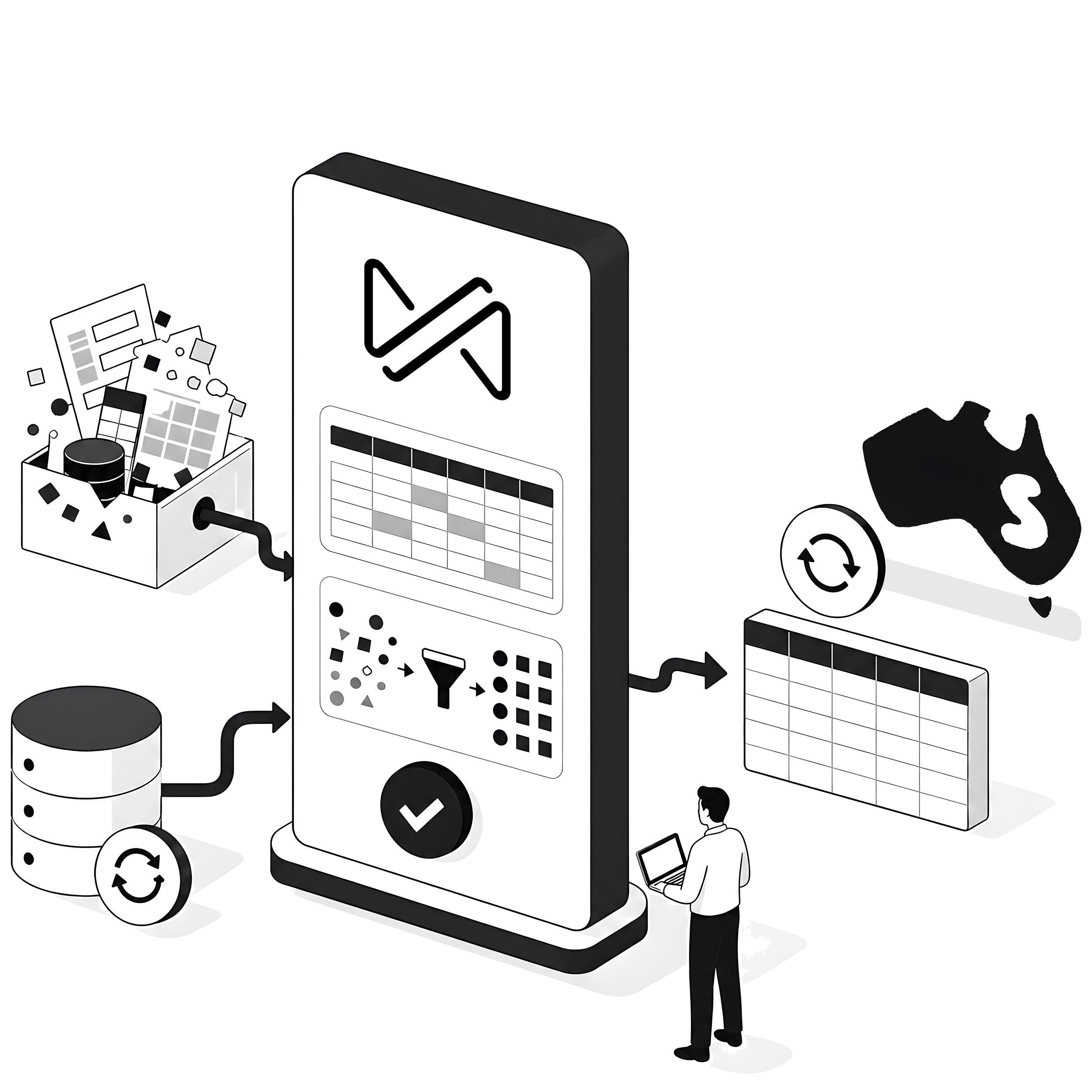
We’re not talking about hiring someone to manually clean your data, though we can certainly help with that when needed. We’re talking about implementing systems, processes, and automations that maintain hygiene automatically and prevent problems from occurring in the first place.

Starting With A Comprehensive Data Audit

Before we fix anything, we need to understand exactly what we’re dealing with. How many duplicates exist? What’s the completeness rate across critical fields? Where are the formatting inconsistencies? Which data is oldest and most likely to be outdated?

We run systematic audits using Zoho’s built-in tools plus custom scripts when needed. This gives you a clear picture of data quality issues, prioritised by impact. Not everything needs fixing immediately. We help you focus on what matters most for your business.

This audit also reveals the root causes. Why are duplicates happening? Which teams are most responsible for incomplete records? Where in your processes is bad data entering the system?

Understanding these patterns is crucial because the solution isn’t just cleaning existing data. It’s preventing future problems.

Implementing Duplicate Prevention At The Source

The best duplicate is the one that never gets created.

We configure Zoho’s duplicate detection rules to catch potential duplicates before they’re saved. When someone tries to create a new contact that looks similar to existing records, the system flags it and offers to open the existing record instead.

These rules can check email addresses (obvious), but also names, phone numbers, and company combinations. The logic is customisable based on your needs. Some industries need stricter matching. Others need looser rules to avoid false positives.

We also set up de-duplication workflows for imported data. When you bring in a list from an event or campaign, the system automatically identifies and merges duplicates according to rules you define, rather than creating a mess you’ll need to clean up later.

Automating Data Enrichment And Updates

Here’s where things get interesting. Instead of relying on sales reps to manually fill in company details, we can integrate Zoho with data enrichment services that automatically populate information like company size, industry, revenue, and location based on the company domain or name.

When a contact changes jobs (which happens frequently), LinkedIn integration or other data sources can flag this and trigger an update workflow. Your CRM stays current without manual effort.

We also implement validation rules that prevent incomplete records from being saved. If certain fields are essential for your business processes, we make them required. Or we set up workflows that alert managers when records are created without critical information, prompting follow-up.

Creating Standardised Data Entry Processes

Consistency requires structure. We configure pick-lists, drop-downs, and predefined options for fields where free-text entry creates chaos. Instead of people typing company names with random capitalisation and punctuation, they select from a standardised list or the system auto-formats their entry.

Phone number fields get input masks that enforce consistent formatting. Address fields use standardised components. Industry classifications follow a defined taxonomy. This prevents the formatting chaos before it starts.

We also create custom layouts for different teams. Sales might need different fields than marketing or customer success. Rather than everyone seeing the same overwhelming form and ignoring half of it, each team gets a tailored view with just the fields relevant to their role.
Building Automated Hygiene Maintenance Workflows

Data quality isn’t a one-time project. It’s an ongoing practice. That’s why we build automated workflows that maintain hygiene continuously.

Examples include:

Bounce management workflows.
When emails bounce, the system flags the record for review. After multiple bounces, it marks the contact as invalid and removes them from marketing lists. This keeps your email reputation intact and your lists clean.

Aging data reviews.
Records that haven’t been updated in 12 months trigger alerts. Someone reviews whether the information is still accurate and relevant. Old, inactive records can be archived to keep your active database lean.

Duplicate monitoring.
Regular scans identify potential duplicates that slipped through initial prevention. These get queued for review and merging, preventing duplicate buildup over time.

Incomplete record alerts.
When high-value opportunities are created with incomplete contact information, the system alerts the relevant manager. This ensures important records get the attention they need.

Compliance tracking.
Automated reminders ensure consent is refreshed periodically. Unsubscribe requests immediately update all relevant fields. Audit logs track every change for compliance purposes.

These workflows run in the background, requiring minimal human intervention, keeping your CRM healthy without constant manual effort.

Providing Training That Sticks

Technology alone doesn’t solve hygiene problems. Your team needs to understand why data quality matters and how to maintain it as part of their daily workflow.

We provide training that goes beyond “here’s how to create a contact.” We explain the downstream impacts of poor data entry. We show people how to use the duplicate prevention tools effectively. We demonstrate the validation rules and explain the reasoning behind them.

This training is role-specific. Sales reps need different knowledge than marketing coordinators or customer success managers. We make sure everyone understands their part in maintaining data quality.

And we create documentation that people can reference later. Video tutorials. Quick reference guides. FAQs. Because people forget, and having resources available prevents bad habits from returning.

Establishing Governance And Accountability

Who’s responsible for CRM hygiene in your organisation? If the answer is “everyone” or “nobody”, you’ve identified a core problem.

We help you establish clear governance frameworks. Who has permission to delete records? Who can merge duplicates? Who’s responsible for maintaining company hierarchies? What’s the process for resolving data conflicts?

These might seem like minor administrative details, but they’re crucial for maintaining long-term hygiene. Without clear ownership and processes, entropy takes over and quality degrades.

We also help you implement monitoring dashboards that track key data quality metrics over time. Duplicate rates. Record completeness. Data age. Bounce rates. When these metrics are visible to leadership, maintaining hygiene becomes a priority rather than an afterthought.

The Technology That Makes Company-Wide Hygiene Possible

Let’s talk specifically about Zoho’s capabilities that support excellent CRM hygiene when configured properly.

  • Validation rules ensure data meets quality standards before being saved. Required fields. Format checks. Cross-field validations. This catches problems at entry rather than discovering them months later.
  • Workflow automation handles routine hygiene tasks automatically. Data enrichment. Duplicate detection. Record updates. Compliance tracking. All running in the background without manual intervention.
  • Custom functions allow for complex data manipulation that goes beyond standard features. Custom de-duplication logic. Advanced data cleaning. Integration with external data sources. When standard tools aren’t enough, we can code solutions.
  • Blueprints enforce consistent processes across teams. Sales processes. Onboarding workflows. Customer success journeys. When everyone follows the same structured path, data quality improves naturally.
  • Reports and dashboards provide visibility into data quality metrics. Track hygiene over time. Identify problem areas. Hold teams accountable. What gets measured gets managed.
  • Integration capabilities connect Zoho to your other business systems. Marketing automation. Customer support. Accounting. Keeping data synchronised across platforms prevents the silos that lead to hygiene problems.
  • Analytics and AI identify patterns and anomalies that humans might miss. Zia, Zoho’s AI assistant, can predict fields, detect unusual data patterns, and suggest corrections.

But again, having access to these capabilities is different from implementing them effectively. This is where authorised partner expertise becomes invaluable.

Real Results: What Good CRM Hygiene Actually Delivers

Let’s talk about concrete outcomes you can expect when CRM hygiene improves company-wide.

Sales productivity increases measurably.
When reps spend less time searching for information and verifying data accuracy, they spend more time selling. We’ve seen organisations recover 5-10 hours per week per rep. That’s real capacity for revenue generation.

Marketing campaign performance improves.
Email deliverability goes up when bounce rates drop. Personalisation works when data is accurate. Segmentation becomes effective when you can trust field values. Campaign ROI typically improves by 20-40% with better data quality.

Forecasting becomes reliable.
When pipeline data is accurate and complete, sales forecasts stop being wishful thinking and start being useful planning tools. Leadership can make decisions based on real insights rather than hunches.

Customer experience gets better.
Imagine never calling someone by the wrong name. Never sending irrelevant information. Always having the full context when a customer reaches out. This level of professionalism is only possible with clean, accurate CRM data.

Compliance risk drops.
When consent is properly tracked and unsubscribes are handled automatically, you avoid the regulatory and reputational risks of communication violations.

Team morale improves.
It might sound minor, but working with good tools and clean data is genuinely more satisfying than fighting with messy systems all day. Reducing frustration has real impact on retention and engagement.

These aren’t theoretical benefits. These are outcomes we see regularly with clients who commit to improving CRM hygiene with proper support.

The Investment Question: What Does This Actually Cost?

Different organisations have different needs, so there’s no one-size-fits-all price tag. But let’s talk about the investment framework.

Working with a Zoho authorised partner typically involves an initial implementation or improvement project, then ongoing support as needed. Initial projects might range from a few thousand dollars for straightforward implementations to larger investments for complex enterprises with years of accumulated data problems.

But here’s the thing: the cost of NOT fixing CRM hygiene is almost certainly higher than the cost of addressing it.

Calculate how much time your team wastes on data-related issues each week. Multiply that by their hourly cost. Add the lost revenue from marketing campaigns that underperform due to bad data. Factor in the opportunities missed because sales didn’t have accurate information at critical moments.

Most organisations discover that proper CRM hygiene pays for itself within months through productivity gains and improved outcomes.

Plus, Zoho itself is significantly more affordable than enterprise alternatives like Salesforce. You’re getting powerful capabilities without the eye-watering price tag, making the overall investment much more reasonable for Australian businesses.

Taking Action: Your Path From Messy To Magnificent

If you’ve made it this far, you’re probably thinking one of two things. Either “yes, this is exactly what we need” or “this sounds like a lot of work and we’ll get to it eventually.”

Let’s be honest about the “eventually” approach. Eventually usually means never. CRM hygiene doesn’t get better on its own. It gets progressively worse until the pain becomes unbearable and you’re forced to address it in crisis mode.

Here’s what we’d recommend instead:

Start with an honest assessment.
Look at your CRM with fresh eyes. How many obvious duplicates can you spot in five minutes? How many records are missing critical information? When was the last time anyone reviewed data quality systematically?

Identify your biggest pain points.
Is it duplicates causing confusion? Incomplete records making marketing segmentation impossible? Outdated information leading to embarrassing outreach? Focus on what hurts most rather than trying to fix everything at once.

Have a conversation with experts.
Talk to us at Smartmates. Not a sales pitch, a genuine discussion about your specific situation. Sometimes the solution is straightforward. Sometimes it’s complex. We’d rather tell you the truth upfront than promise easy fixes that don’t exist.

Commit to ongoing maintenance.
Remember, hygiene isn’t a project with an end date. It’s a practice that requires consistent attention. But with the right systems and automation, it doesn’t require constant manual effort.

Get leadership buy-in.
CRM hygiene improvements only work company-wide when everyone understands why it matters and supports the necessary changes. This isn’t just an IT initiative. It’s a business improvement that needs executive sponsorship.

Transform Your CRM From Liability To Strategic Asset

Your CRM should be one of your most valuable business tools. It should give you clarity about customers, confidence in your data, and capability to execute sophisticated marketing and sales strategies.

If it’s currently a mess that people complain about and avoid using, that’s fixable. Not overnight, not without effort, but absolutely fixable with the right approach.

Working with a Zoho authorised partner like Smartmates means you’re not tackling this alone. You’re getting expertise from people who’ve solved these problems dozens of times. You’re getting systems designed around best practices. You’re getting automation that maintains quality without constant manual work.

Your team deserves tools that make their jobs easier. Your customers deserve the professional experience that only comes from accurate, complete data. Your business deserves the insights and capabilities that a properly maintained CRM provides.

Ready to transform your CRM hygiene company-wide? Let’s talk about what that journey looks like for your organisation. Visit smartmates.com.au or reach out today. Because messy data is costing you more than you realise, and clean data creates possibilities you haven’t yet imagined.

Request a Callback from Smartmates

Sarah the sales engineer

Sarah

Senior Sales Engineer
  • I’ll listen to your HubSpot needs to understand your business challenges and goals, ensuring a tailored approach.

  • I’ll bring our engineer onto our first consultation to explore solutions and clarify your requirements.

  • We’ll deliver your free project plan quotation, detailing the steps, timeline, and costs—up to this point, it’s completely free!

“My mission is to solve your key problems, build your trust in our capabilities and deliver exceptional value for money.”


Fill in your details and

we’ll contact you fast.

Fill in your details and

we’ll contact you fast.