HubSpot Solutions Partner
Certified HubSpot Solutions Partner delivering expert support across all HubSpot products with seamless integrations tailored to Aussie businesses.
- First Top-Up Special $129 $99/hr + GST
One stop HubSpot solutions
Serving 30+ industries, Australia-wide
Trusted and highly rated on Google Reviews
Minimum project size 10 consulting hours.

Smarter Customer Journeys With HubSpot Professional

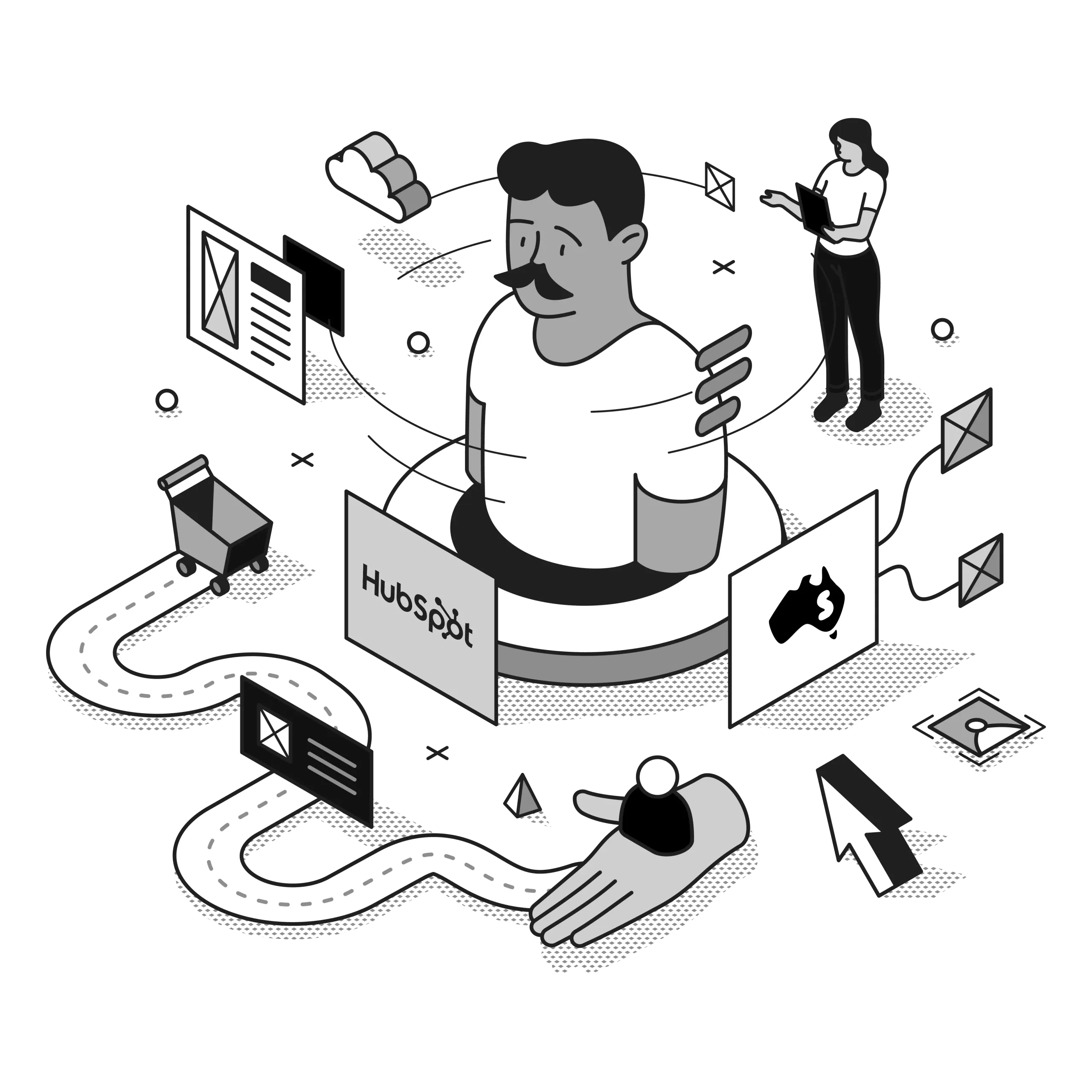
Your newest customer just churned after three months. Frustrating, but here’s the really troubling part: when you review their journey from first contact to cancellation, you discover they never received your onboarding sequence, missed the webinar invitation that usually drives engagement, and got generic marketing emails completely irrelevant to their industry. Every touchpoint was wrong because nobody was actually orchestrating their experience.
This isn’t an exception. It’s probably your norm. You’ve got email sequences running in marketing automation, sales reps following their own outreach patterns, customer success doing ad-hoc check-ins, and nobody coordinating any of it into coherent journeys that guide people from strangers to advocates.
The result? Prospects get contradictory messages from different departments. Customers receive sales pitches after they’ve already bought. High-value accounts get the same treatment as small deals. Your customer experience feels random and disjointed because, well, it is.
Meanwhile, some Australian businesses seem to have customer journeys that just work. Prospects move smoothly from awareness through consideration to decision. Customers get appropriately nurtured based on their specific situation. Nobody falls through cracks or receives irrelevant communication. It feels orchestrated because it actually is.
Here’s what they understand: HubSpot Professional configured properly doesn’t just track customer interactions. It enables you to design, implement, and continuously optimize intelligent journeys that guide people through experiences actually designed for conversion, satisfaction, and growth.
Let me show you how to build customer journeys that genuinely work.
The Journey Problem Most Businesses Don’t Recognize
Before we talk solutions, let’s acknowledge how most Australian businesses actually handle customer journeys. Spoiler: they don’t. They have disconnected tactics pretending to be strategy.
Department silos create disjointed experiences. Marketing runs their campaigns. Sales follows their process. Customer success does their thing. Nobody’s coordinating these into coherent journeys, so customers experience contradictory messaging and awkward transitions.
One-size-fits-all approaches. Everyone gets the same sequence regardless of their industry, company size, role, behavior, or needs. A startup founder receives identical nurturing to an enterprise procurement manager. Neither gets appropriate treatment.
Linear assumptions about non-linear journeys. You design journeys assuming people move neatly from stage A to B to C. Reality is messier. People research, go dormant, re-engage, loop back, skip stages, and generally refuse to follow your predetermined path.
Lack of personalization. Communications reference generic pain points rather than specific situations. “Dear valued customer” instead of acknowledging their actual business challenges and engagement history.
No journey analytics. You don’t know where people get stuck, which touchpoints drive progress, or why conversions happen. You’re flying blind, unable to systematically improve because you can’t measure effectively.
Inflexible execution. Journeys exist on whiteboards or in documentation but don’t actually happen consistently because manual processes fail under volume and complexity.
One Sydney-based software company we audited had seventeen different customer journeys documented. Beautiful diagrams showing ideal paths from awareness to advocacy. Reality? None of them actually happened reliably because execution depended on individual team members remembering what to do when. Their documented journeys were fiction masquerading as strategy.
Also read: HubSpot Professional Supporting Long-Term Digital Growth in Australian Businesses
What HubSpot Professional Enables For Journey Design
HubSpot Professional isn’t just better contact management. It’s fundamentally different capability for designing and executing sophisticated customer journeys:
Lifecycle stage tracking that accurately reflects where contacts are in their relationship with your business, from stranger through evangelist, automatically updating based on behavior and interactions.
Multi-pathway workflows that adapt journeys based on engagement, responses, and actions rather than forcing everyone down identical paths.
Behavioral triggering that responds to what people actually do rather than just time-based sequences that proceed regardless of engagement.
Cross-object automation coordinating across contacts, companies, deals, and tickets so journeys account for complete relationship context rather than just individual actions.
Personalization tokens and smart content that customize messages based on properties, behavior, and relationship history so communications feel relevant rather than generic.
Journey analytics and visualization showing how people actually move through your funnel, where they get stuck, and what drives progression or dropout.
A/B testing within journeys enabling continuous optimization based on actual performance rather than assumptions about what works.
Seamless handoffs between teams ensuring smooth transitions from marketing to sales to customer success without gaps or duplicated efforts.
A Melbourne professional services firm implemented proper journey design with HubSpot Professional. Their conversion rate from inquiry to client jumped from 14% to 31% purely from creating coordinated journeys instead of disconnected tactics. Same services, same pricing, dramatically different experience.
How To Build Intelligent Journeys With HubSpot Professional
Let’s get specific about creating customer journeys that actually guide people toward desired outcomes:
Journey Mapping Based On Actual Behavior
Start by understanding how customers actually move through relationship with your business, not how you wish they moved. HubSpot Professional provides data revealing real patterns.
Analyze common paths. What do successful customers typically do before buying? Which content do they consume? What questions do they ask? How long does consideration typically take? Build journeys around observed reality rather than theoretical models.
Identify dropout points. Where do prospects commonly disengage? After which touchpoint do you lose them? Understanding failure points helps design interventions that prevent dropout.
Recognize different personas. Your CFO buyers journey differently than operations managers. Enterprise decisions follow different patterns than SMB purchases. Design distinct journeys for meaningfully different segments.
Map cross-departmental touchpoints. Document every interaction across marketing, sales, and service. Identify gaps where handoffs fail or messaging conflicts. Design coordination that eliminates these friction points.
We worked with a Brisbane manufacturer who assumed technical specifications drove purchase decisions. Journey analysis revealed buyers actually needed ROI validation and internal stakeholder management support more than technical depth. Redesigning journeys around this insight improved conversion 28%.
Lifecycle Stage Automation
HubSpot Professional enables automatic lifecycle progression based on qualifying actions rather than manual updates that rarely happen correctly.
Subscriber to lead transition. Automatically promote subscribers to leads when they demonstrate buying interest through specific actions like pricing page visits, demo requests, or competitor comparison downloads.
Lead to opportunity progression. Move leads to sales-qualified status when they meet defined criteria around engagement, fit, and timing rather than relying on SDRs to manually qualify everyone.
Customer lifecycle management. Automatically transition won deals into customer journeys, ensuring onboarding begins immediately rather than falling into gaps between teams.
Advocate identification. Detect customer advocacy behaviors like referrals, reviews, or case study participation and move high-value customers into advocacy nurturing automatically.
This automation ensures journeys adapt as relationships evolve without requiring constant manual intervention that fails under volume.
Behavioral Branching Workflows
Linear sequences fail because people don’t behave linearly. HubSpot Professional enables journeys that branch based on actual engagement and actions.
Engagement-responsive nurturing. If prospects engage heavily, accelerate their journey with more frequent touchpoints and direct sales outreach. If they’re less engaged, slow the cadence and shift content style rather than continuing to spam.
Content preference adaptation. Track which content formats people consume (videos, whitepapers, webinars, case studies) and adapt future communications to their demonstrated preferences.
Industry-specific pathways. Branch journeys based on industry to provide relevant examples, case studies, and use cases rather than generic content that applies to nobody specifically.
Role-appropriate messaging. Executive buyers need business case content. Technical evaluators need depth. End users need usability focus. Branch journeys to address role-specific needs.
Objection handling paths. When prospects demonstrate specific concerns (pricing hesitation, feature questions, competitive comparison), branch into targeted sequences addressing those specific objections.
An Adelaide SaaS company implemented behavioral branching with HubSpot Professional. Instead of one nurture sequence, they created six primary paths with multiple branches based on engagement and behavior. Their nurture-to-opportunity conversion jumped from 11% to 26% because relevance increased dramatically.
Seamless Multi-Team Coordination
Customer journeys span departments. HubSpot Professional enables coordination that prevents gaps and duplicated efforts.
Marketing-to-sales handoffs. When leads reach sales-ready status, automatically notify appropriate reps, create tasks with relevant context, pause marketing sequences, and begin sales-specific outreach. The transition feels seamless rather than disjointed.
Sales-to-customer success transitions. When deals close, trigger onboarding workflows, notify customer success teams, create training schedules, and shift messaging from acquisition to retention focus automatically.
Service-to-expansion coordination. Customer service interactions revealing expansion opportunities automatically create tasks for account managers and adjust nurturing to support upsell conversations.
Win-back journey triggering. Churned customers automatically enter appropriate re-engagement journeys after cooling-off periods, attempting to recapture value rather than permanently losing relationships.
Personalization That Actually Matters
HubSpot Professional enables personalization beyond just inserting names into templates. You can customize entire journey experiences based on properties and behavior.
Dynamic content blocks. Show different sections of emails or web pages based on industry, company size, lifecycle stage, or past behavior so each person sees most relevant content.
Smart send times. Deliver communications when recipients typically engage rather than arbitrary times that might be midnight in their timezone or during their busy periods.
Contextual CTAs. Show different calls-to-action based on lifecycle stage. Subscribers see educational content offers. Leads see demo requests. Customers see product training or expansion opportunities.
Historical reference. Acknowledge past interactions and behaviors in communications so messages feel like continuing conversations rather than starting from scratch each time.
A Perth technology distributor implemented deep personalization with HubSpot Professional. Instead of generic product promotions, customers received recommendations based on past purchases, current inventory levels (tracked in integrated systems), and upcoming seasonal demand for their industry. Repeat purchase rates increased 34%.
Real Journey Optimization Results From Australian Businesses
Let’s look at actual improvements from businesses implementing intelligent journeys with HubSpot Professional:
| Journey Metric | Disconnected Tactics | Intelligent Journeys | Improvement |
|---|---|---|---|
| Inquiry-to-Customer Conversion | 8-14% | 22-35% | 2-3x increase |
| Average Deal Cycle | 90-120 days | 60-75 days | 30-40% faster |
| Customer Onboarding Completion | 45-60% | 85-95% | Near universal |
| Cross-Sell/Upsell Success | 12-18% | 28-40% | 2x improvement |
| Journey Consistency | Highly variable | Reliably executed | Predictable experience |
Take Sarah’s Canberra-based professional services firm. Before implementing intelligent journeys, their customer experience was whatever individual team members remembered to do. Prospects might get three follow-ups or none. Customers might receive onboarding or fall through gaps. Everything felt random.
After designing and implementing coordinated journeys with HubSpot Professional, every prospect experiences appropriate nurturing based on their specific situation and engagement. Every customer receives structured onboarding ensuring they extract value. Their NPS score jumped 28 points because the experience became reliably excellent rather than inconsistently mediocre.
Or consider David’s Melbourne manufacturing business. His challenge was long complex sales cycles involving multiple stakeholders across customer organizations. Prospects would engage enthusiastically then disappear for months. Without intelligent journeys, these dormant opportunities rarely reactivated.
After implementing sophisticated journey workflows that maintained appropriate contact during dormant periods, provided stakeholder-specific content, and re-engaged strategically when buying windows approached, their dormant reactivation rate improved from 8% to 34%. Millions in pipeline that would have died now converts.
The Australian Journey Design Context
Creating effective customer journeys in Australia requires understanding specific local contexts:
Relationship-oriented culture. Australians value genuine relationships over transactional interactions. Journeys should feel personal and helpful rather than mechanically pushing toward sales.
Communication style preferences. Direct but friendly works in Australia. Overly formal or aggressively salesy journeys feel off-putting. Messages should sound like helpful colleagues, not pushy salespeople.
Market size considerations. Smaller Australian markets mean you can’t afford to burn prospects through poor experiences. Journeys need higher quality because you can’t simply replace dissatisfied prospects infinitely.
Geographic distribution. Operating across Sydney, Melbourne, Brisbane, Perth, and regional areas requires journeys that account for location differences without feeling generic.
Industry-specific nuances. Australian industries have particular patterns and preferences. Manufacturing buying processes differ from professional services which differ from technology. Generic international journey templates miss these nuances.
HubSpot Professional journeys designed for Australian contexts perform better than generic international approaches.
Common Journey Mistakes That Kill Conversions
We’ve rescued several Australian businesses from journey implementations that damaged rather than enhanced customer experience. The mistakes are predictable:
Mistake one: Over-automation that feels robotic. Journeys so mechanical they feel impersonal and annoying. Automation should enable personalization, not replace human touch entirely.
Mistake two: Ignoring non-responders. Continuing to send messages to people clearly disengaged. Intelligent journeys adapt or pause when people don’t respond rather than blindly continuing.
Mistake three: No exit paths. Trapping people in sequences without clear ways to opt down or change preferences. This creates frustration and spam complaints.
Mistake four: Conflicting cross-team messages. Marketing, sales, and service sending contradictory communications because nobody’s coordinating the complete journey.
Mistake five: Static journeys that never evolve. Building once and never optimizing based on performance data. Effective journeys continuously improve through testing and refinement.
Mistake six: Forgetting existing customers. Focusing all journey design on acquisition while existing customers receive no structured nurturing toward expansion and advocacy.
Avoiding these requires both HubSpot Professional expertise and customer experience understanding.
Your Path To Journey Excellence
Right now, your customer experience probably feels disjointed and random because it is. People get contradictory messages, fall through gaps, and receive irrelevant communications because nobody’s actually orchestrating coherent journeys.
Every prospect experiencing poor journeys is potential revenue lost to competitors with better experiences. Every customer receiving inadequate nurturing is retention risk you’re creating unnecessarily.
You’ve invested in HubSpot Professional. The question is whether you’ll use it to design genuinely intelligent journeys or continue operating with disconnected tactics pretending to be strategy.
At Smartmates, we’ve specialized in customer journey design using HubSpot Professional for Australian businesses. We’re not generic consultants implementing template sequences. We’re journey architects who design experiences that guide people toward desired outcomes.
We’ve implemented intelligent journeys for SaaS companies, professional services firms, manufacturers, distributors, and technology businesses across Sydney, Melbourne, Brisbane, Perth, Canberra, Adelaide, and throughout Australia. We know the difference between documented journeys that exist on whiteboards and executed journeys that actually happen reliably.
We understand Australian business contexts, communication preferences, market dynamics, and customer expectations. We design journeys that feel appropriately Australian while leveraging HubSpot Professional’s sophisticated capabilities.
If you’re frustrated that customer experience feels random, if conversions suffer from poor journey design, if you know coordinated experiences should work better but can’t execute them consistently, we should talk.
Not next year after more prospects slip away. Now, while you can build journey advantages that compound over time.
Because every month without intelligent journeys is another month of suboptimal conversions. Another month where prospects experience poor coordination. Another month of competitive disadvantage against businesses with superior customer experiences.
Transform your disconnected tactics into coordinated journeys. Transform your random touchpoints into designed experiences. Transform your HubSpot Professional investment into genuine competitive advantage through journey excellence.
Let’s make it happen.
Request a Callback from Smartmates
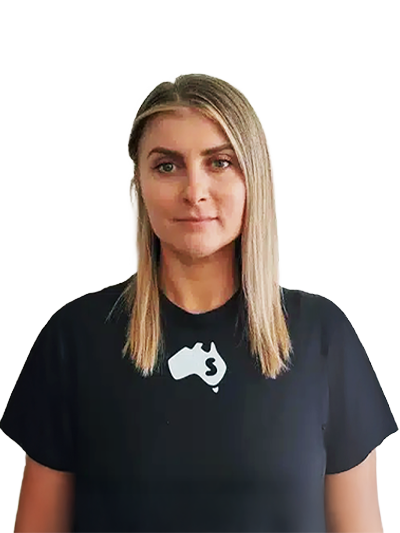
Sarah
I’ll listen to your HubSpot needs to understand your business challenges and goals, ensuring a tailored approach.
I’ll bring our engineer onto our first consultation to explore solutions and clarify your requirements.
We’ll deliver your free project plan quotation, detailing the steps, timeline, and costs—up to this point, it’s completely free!
“My mission is to solve your key problems, build your trust in our capabilities and deliver exceptional value for money.”