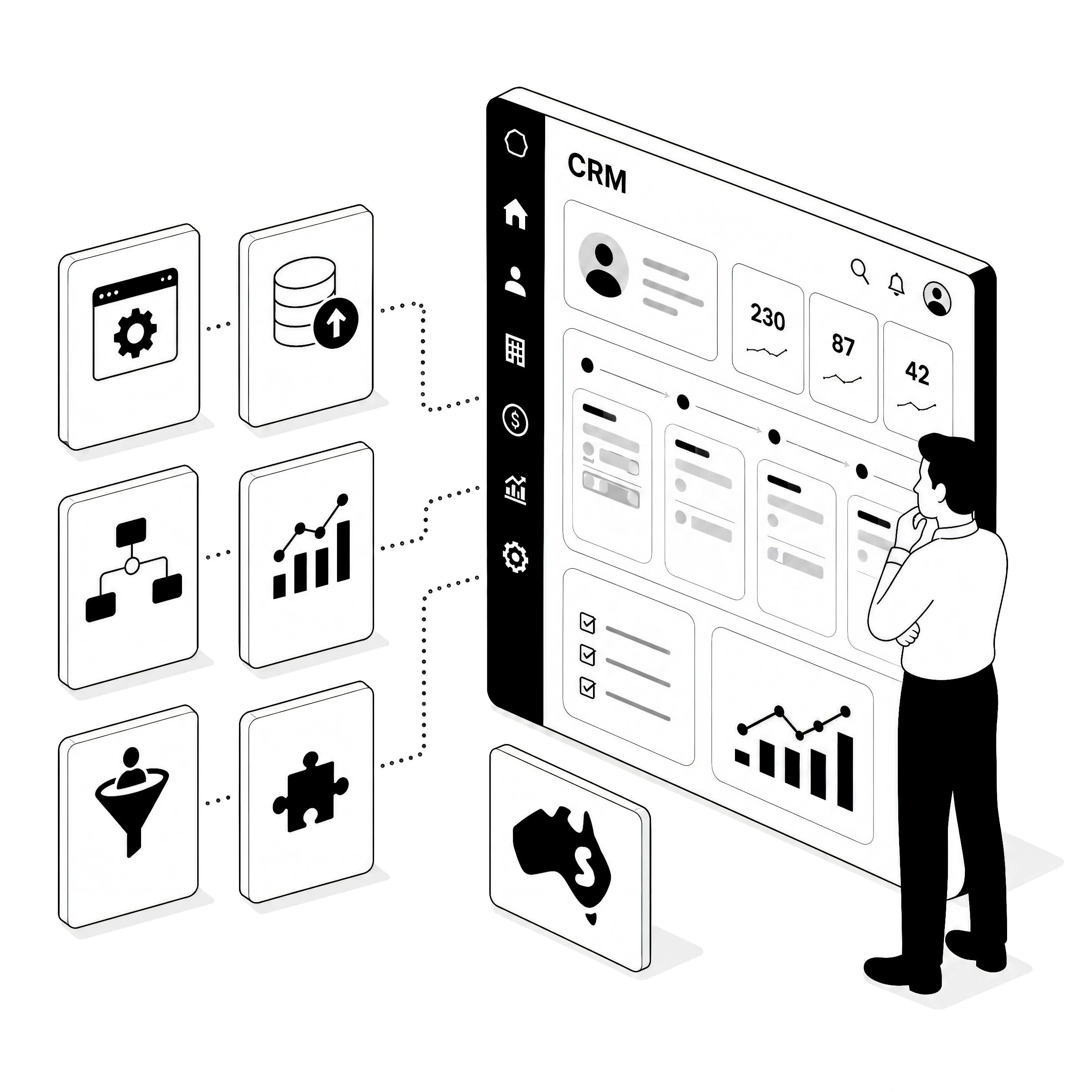


Smarter Revenue Systems Shaped By A HubSpot Agency Partner

Your marketing team generates leads. Your sales team closes deals. Your customer service keeps clients happy. Three separate functions doing their jobs reasonably well.

So why isn’t revenue growing the way it should?

Here’s what most Australian businesses discover as they mature. Having separate teams doing separate things isn’t enough anymore. You need a revenue system. Not just sales, not just marketing, not just service, but all three working together as one coordinated engine that drives predictable, scalable growth.

The problem? Building that system is complicated. It requires technology that connects everything. Processes that span departments. Data that flows seamlessly. Strategy that aligns everyone toward common goals.

This is where a HubSpot agency partner becomes essential. Not just implementing software, but designing and building complete revenue systems that actually work. Systems where marketing, sales, and service aren’t isolated silos but interconnected parts of a unified growth machine.

Let’s talk about what revenue systems actually are and how the right HubSpot agency partner transforms how your business grows.

What A Revenue System Actually Is

Before diving into solutions, let’s clarify what we mean by a revenue system. Because it’s more than just your sales process or CRM.

Beyond Departmental Thinking

Traditional businesses organize around departments. Marketing has their goals and metrics. Sales has different ones. Customer service operates independently. Each optimizes their own function without necessarily considering how they impact the others.

A revenue system thinks differently. It recognizes that revenue isn’t generated by any single department. It’s the outcome of coordinated activities across the entire customer journey from first awareness through to loyal advocacy.

Marketing doesn’t just generate leads. They qualify and nurture prospects until they’re genuinely ready for sales conversations. Sales doesn’t just close deals. They set up successful customer relationships that service can build on. Service doesn’t just solve problems. They identify expansion opportunities and create advocates who fuel new pipeline.

Technology As The Foundation

You can’t run a modern revenue system on spreadsheets and disconnected tools. You need technology that supports coordination across teams.

HubSpot provides this foundation. Marketing Hub, Sales Hub, and Service Hub working together as one platform. Data flowing between them automatically. Everyone seeing the same customer information. Handoffs happening smoothly because the technology enables it.

But having the technology isn’t enough. Someone needs to configure it properly to support your specific revenue system. That’s where agency partners come in.

Process Alignment

A revenue system includes aligned processes across the customer lifecycle. How marketing qualifies leads before passing to sales. How sales conducts discovery and moves deals forward. How service onboards new customers and identifies expansion opportunities. How insights from each stage inform the others.

These processes need to be designed, documented, and built into your technology. They need to evolve as you learn what works. They require ongoing optimization based on results.

Also Read: HubSpot Agency Bridging Strategy And Day-To-Day Execution

Data and Measurement

Revenue systems run on data. Not just sales numbers but complete visibility into what’s happening across the entire customer journey. Marketing metrics that predict sales outcomes. Sales activities that correlate with close rates. Service interactions that indicate expansion potential or churn risk.


This data needs to be accessible, trustworthy, and actionable. Leaders need dashboards that show system health. Teams need reports that inform daily decisions. Strategy needs analytics that reveal what’s working and what needs adjustment.

The Cost Of Systems That Don’t Work Together

Let’s be honest about what happens when marketing, sales, and service operate independently instead of as one system.

Leads Get Lost

Marketing generates leads. Some get followed up quickly. Others sit for days or weeks. Some never get contacted at all because they fell through cracks in the handoff process.

Without a coordinated system, lead response is inconsistent. Hot prospects go cold because nobody reached out fast enough. Marketing’s hard work gets wasted because sales execution is spotty.

Context Disappears

A prospect engages with your marketing for months. They download content. They attend webinars. They visit your website repeatedly. Then they finally request sales contact.

The rep who calls them knows none of this context. The conversation starts from scratch. The prospect has to repeat information. The experience feels disjointed instead of continuous.

Customers Feel Forgotten

After a deal closes, the relationship changes hands from sales to service. But service doesn’t know what was promised during the sales process. They don’t understand the customer’s goals or concerns. The transition is awkward instead of seamless.

Customers feel like they’re starting over with people who don’t know them. Trust erodes. Satisfaction drops. Retention suffers.

Revenue Potential Is Missed

Your service team interacts with customers regularly. They hear about new needs, see usage patterns, identify opportunities for expansion. But this information never makes it back to sales because the systems don’t connect.

Revenue opportunities sit there unrecognized and unpursued. Your existing customers would buy more if someone was paying attention and acting on what service learns.

Strategy Is Fragmented

Marketing optimizes for lead volume. Sales optimizes for close rate. Service optimizes for satisfaction scores. But these optimizations don’t necessarily align.

Marketing might generate lots of poor-fit leads that waste sales time. Sales might oversell capabilities that create service headaches. Service might keep unhappy customers who actually hurt profitability. Without system-level thinking, local optimizations undermine global performance.

How HubSpot Agency Partners Design Smarter Revenue Systems

Right, so that’s what broken looks like. How do HubSpot agency partners actually create systems that work?

Strategic System Architecture

Agency partners start by designing the complete revenue system architecture. Not just implementing HubSpot modules, but mapping out how your entire revenue engine should work.

This includes defining your customer journey from first touch to loyal advocate. Identifying key handoff points where one team passes responsibility to another. Determining what data needs to flow where. Designing processes that span departments.

The architecture considers your specific business model, sales cycle, customer type, and growth goals. It’s not a generic template but a custom design for your specific revenue system.

Lead Management and Qualification Systems

Smart revenue systems don’t just generate leads. They qualify, nurture, and route them intelligently.

Agency partners build lead scoring that identifies sales-ready prospects based on behavior and fit. They create nurture workflows that move leads through your buying journey automatically. They set up routing rules that get leads to the right sales reps based on territory, product, or other criteria.

The result is sales receiving qualified leads with complete context at the optimal moment for conversion. No more cold leads wasting time. No more hot leads going cold. Systematic qualification and routing.

Sales Process Integration

The sales process gets integrated properly with what comes before and after. Agency partners configure HubSpot Sales Hub to support your specific methodology while connecting seamlessly to marketing and service.

Deal stages match your actual sales process. Required fields ensure critical information gets captured. Workflows automate routine tasks so reps focus on selling. Templates and sequences enable consistent, effective communication. Reporting shows what activities drive outcomes.

But it’s not isolated. Sales sees marketing engagement history. Service sees deal details and what was sold. Information flows throughout the system.

Service and Expansion Engine

Customer service becomes part of your revenue system, not just a cost center. Agency partners configure Service Hub to support retention and expansion.

Ticket routing ensures quick response. Knowledge base deflects common questions. Customer feedback loops back to product and marketing. Renewal management identifies at-risk accounts early. Expansion opportunities get flagged and routed to sales.

Service stops being the end of the journey and becomes the beginning of the next cycle.

Attribution and Revenue Analytics

Agency partners build reporting infrastructure that shows how the complete system performs. Not just sales numbers but attribution that reveals which marketing activities drive revenue. Not just deal velocity but analysis of what sales activities correlate with wins.

Custom dashboards for different roles. System-level metrics that indicate overall health. Predictive analytics that forecast future performance. All based on clean, connected data flowing through your unified HubSpot platform.

Leadership finally sees the complete picture of how revenue gets generated and what levers drive growth.

Automation That Connects Everything

Strategic automation ties the system together. Marketing automation that nurtures leads and prepares them for sales. Sales automation that guides reps through proven processes. Service automation that ensures consistent customer experiences.

But more importantly, cross-functional automation that coordinates between teams. Lead handoff workflows. Deal close notifications that trigger service onboarding. Customer feedback that creates marketing insights. Expansion opportunities that loop back to sales.

The system runs smoothly because automation handles coordination that previously required constant manual communication.

The Smartmates Approach To Revenue System Design

At Smartmates, we’ve designed revenue systems for dozens of Australian businesses struggling with disconnected teams and tools. Our approach combines HubSpot platform expertise with revenue system thinking.

System-Level Assessment

We start by understanding your complete revenue operation. Not just how each team works independently, but how they need to work together. Where handoffs happen. Where context gets lost. Where opportunities are missed.

This system-level view reveals what needs to change to create coordinated growth instead of fragmented activity.

Unified Architecture Design

We design HubSpot architecture that supports your complete revenue system. Marketing Hub, Sales Hub, and Service Hub configured to work as one coordinated platform. Custom properties that track data relevant across the journey. Workflows that automate both within and between functions.

The architecture is intentional, not accidental. Every piece fits into the larger system design.

Phased Implementation

We don’t try to transform everything overnight. We implement in phases that progressively improve system coordination while maintaining operational stability.

Early phases often focus on marketing and sales alignment since that’s where immediate revenue impact comes. Later phases integrate service and build more sophisticated attribution and analytics.

Process Design and Documentation

Technology enables systems, but processes define how they work. We help design processes that span departments and document them clearly.

How leads flow from marketing to sales. How deals get qualified and progressed. How customers transition from sales to service. How expansion opportunities get identified and pursued. Everyone understands their role in the system.

Training and Enablement

Teams need to understand how to work in coordinated systems, not just isolated functions. We provide training that emphasizes system thinking alongside functional skills.

Marketing learns why certain data matters for sales. Sales understands how their activities inform service. Service sees how they contribute to revenue growth. System-level understanding drives better execution.

Ongoing Optimization

Revenue systems need continuous refinement based on performance data. We provide ongoing partnership to optimize based on results.

Which lead sources convert best? What sales activities correlate with wins? Where are customers churning and why? What expansion opportunities are being captured? Data reveals what’s working and what needs adjustment.

Real Examples Of Smarter Revenue Systems

A Sydney SaaS company had classic disconnection. Marketing generated leads. Sales closed deals. Service kept customers happy. But leads languished between marketing and sales. Customers churned because service didn’t know what was promised. Expansion opportunities went unrecognized.

We designed a unified revenue system in HubSpot. Lead scoring and routing connected marketing to sales properly. Deal information flowed to service for smooth onboarding. Service insights triggered expansion conversations. Revenue grew 40% in twelve months because the system worked together instead of fighting itself.

A Melbourne professional services firm had visibility problems. Each team knew their numbers but nobody saw the complete picture. Attribution was impossible. Strategic decisions were made on incomplete information.

We built comprehensive revenue analytics across their HubSpot platform. Marketing could see which campaigns influenced closed deals. Sales understood which activities drove wins. Service tracked retention and expansion metrics. Leadership finally had system-level visibility that informed strategy. Resource allocation became intelligent instead of guesswork.

A Brisbane manufacturer was leaving money on the table. Their service team had deep customer relationships but no systematic way to identify or pursue expansion opportunities. Sales was always chasing new logos while existing customers would have bought more if asked.

We integrated Service Hub and Sales Hub with workflows that identified expansion signals and routed opportunities appropriately. Service insights triggered sales conversations. Existing customer revenue increased 60% because the system captured opportunities previously missed.

Measuring Revenue System Performance

How do you know if a HubSpot agency partner has built you a smarter revenue system?

Lead Response Time Improves

Time from lead generation to first sales contact should drop dramatically. Hours instead of days. Minutes for hot leads. Systems enable speed that manual processes can’t match.

Conversion Rates Increase

With better qualification, smarter nurturing, and proper context, conversion rates at every stage improve. More leads become opportunities. More opportunities close. More customers expand.

Sales Cycle Shortens

When reps have complete context and proper support, deals move faster. System efficiency translates to velocity.

Customer Retention Improves

Smooth handoffs and coordinated service reduce churn. Customers feel consistently served instead of experiencing disconnects between teams.

Revenue Per Customer Grows

Systematic expansion and upsell processes capture more value from existing relationships. Systems identify and pursue opportunities individuals might miss.

Forecasting Accuracy Increases

With clean data and proper tracking, revenue forecasts become reliable. You can plan with confidence instead of hoping your guesses are close.

The Transformation Awaiting You

Imagine your business twelve months after implementing a proper revenue system with HubSpot agency partner guidance. Marketing generates qualified leads that sales actually wants to pursue. Handoffs are smooth because context transfers automatically. Customers experience consistency because your teams work as one coordinated unit.

Sales cycles are shorter because reps have what they need. Close rates are higher because leads are better qualified. Customer lifetime value grows because expansion happens systematically. Revenue becomes predictable instead of hoping each month.

Leadership makes strategic decisions based on complete visibility into how your revenue engine performs. Resource allocation is intelligent. Investment goes where data shows it drives returns. Growth accelerates because systems support it instead of constraining it.

This transformation from departmental silos to coordinated revenue systems is what working with the right HubSpot agency partner makes possible.

Choosing The Right Agency Partner

Not all HubSpot agency partners think at the system level. When evaluating partners, ask questions that reveal their approach:

Do they start by understanding your complete revenue operation or just ask about HubSpot requirements? Do they design architecture that connects marketing, sales, and service or implement them separately? Can they show examples of revenue systems they’ve built, not just HubSpot implementations?

Partners who understand revenue systems will have substantive answers. Those focused only on software implementation won’t.

Ready For A Smarter Revenue System?

If your teams work independently instead of as one system, if leads get lost between marketing and sales, if customers experience disconnects, if revenue growth is slower than it should be, you need a HubSpot agency partner who designs complete revenue systems.

Smartmates specializes in building coordinated revenue systems for Australian businesses using HubSpot. We’re Solutions Partners who combine platform expertise with system-level thinking. We don’t just implement software. We design and build complete revenue engines that drive predictable, scalable growth.

Ready to transform disconnected teams into a unified revenue system? Contact Smartmates today and discover how the right HubSpot agency partner creates systems where marketing, sales, and service work together to drive growth. Let’s build your revenue engine properly.

Request a Callback from Smartmates

Sarah the sales engineer

Sarah

Senior Sales Engineer
  • I’ll listen to your HubSpot needs to understand your business challenges and goals, ensuring a tailored approach.

  • I’ll bring our engineer onto our first consultation to explore solutions and clarify your requirements.

  • We’ll deliver your free project plan quotation, detailing the steps, timeline, and costs—up to this point, it’s completely free!

“My mission is to solve your key problems, build your trust in our capabilities and deliver exceptional value for money.”


Fill in your details and

we’ll contact you fast.

Fill in your details and

we’ll contact you fast.