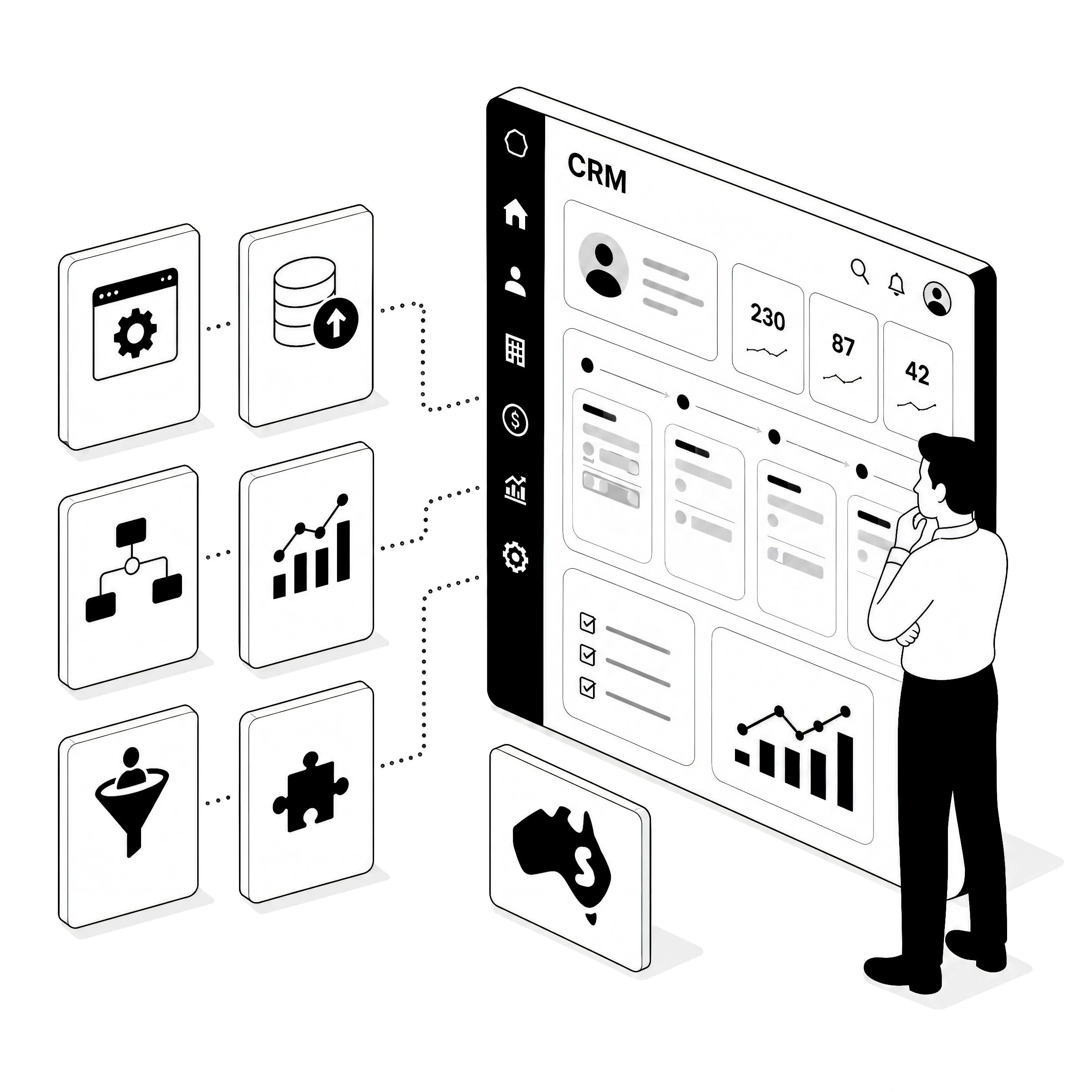


From Planning To Go-Live With HubSpot Implementation Partners

You’ve made the decision. HubSpot is the platform that’s going to transform your sales and marketing operations. The subscription is purchased. Your team is excited about the possibilities. Leadership is expecting results.

Now comes the hard part. Actually implementing it.

Here’s what most Australian businesses don’t realise until they’re knee-deep in the process. The gap between “we bought HubSpot” and “we’re successfully using HubSpot” is filled with hundreds of decisions, technical challenges, and potential pitfalls that can derail the entire project.

Do you configure it yourself and hope for the best? Or do you work with HubSpot implementation partners who’ve navigated this journey dozens of times?

Let’s walk through what proper implementation actually looks like from planning to go-live, and why having experienced partners makes the difference between success and expensive frustration.

Why Implementation Is Harder Than It Looks

From the outside, HubSpot implementation seems straightforward. Sign up, import your contacts, set up some pipelines, and you’re done. Right?

Not quite.

Successful implementation requires making hundreds of interconnected decisions. How should your deal stages be structured? Which properties do you need? How should workflows be configured? What integrations are necessary? How do you migrate data without losing critical information? How do you train your team effectively?

Get these decisions wrong early and you’re building on a shaky foundation. Everything that follows will be harder than it should be.

Also read: HubSpot Sales Consulting That Delivers Real Sales Impact

The DIY Disaster Pattern

We’ve seen this pattern repeatedly. A business assigns someone internally to handle HubSpot implementation. This person is smart and capable, but they’ve never implemented HubSpot before. They dive in with enthusiasm.

They watch tutorials. They read documentation. They start configuring things that seem obvious. They make progress but constantly encounter questions they’re not sure how to answer. They make their best guesses and move forward.

Three months later, they’ve got something that technically works. But it doesn’t quite fit how the business operates. Adoption is poor because the system feels awkward. Data quality is questionable because validation wasn’t set up properly. Reports don’t answer the questions leadership is asking because the underlying structure doesn’t support them.

The business is stuck with a mediocre implementation that cost enormous internal effort but delivers disappointing results.

This isn’t a failure of intelligence or effort. It’s the inevitable outcome of learning a complex platform while simultaneously implementing it for business-critical operations. You don’t know what you don’t know until you’ve been through it multiple times.

The Complete Implementation Journey With Partners

So what does implementation look like when you work with experienced HubSpot implementation partners? Let’s walk through the complete journey from planning to go-live.

Phase One: Discovery and Planning

Good implementation starts before anyone opens HubSpot. It starts with understanding your business deeply.

Implementation partners spend time learning how your business actually operates. Not how you think it operates or how it should operate theoretically, but how work actually gets done every day.

They talk to people at all levels. Sales reps about their process. Marketing teams about campaigns. Managers about reporting needs. Leadership about strategic goals. They map current workflows, identify pain points, understand data requirements, and document the complete current state.

This discovery reveals what HubSpot needs to support. Maybe your sales process has nuances that require custom deal stages. Perhaps your marketing approach needs specific campaign structures. Your customer journey might have touchpoints that require particular tracking.

Partners also identify quick wins that can demonstrate value early. Not everything needs to be built on day one. Strategic phasing means you see results faster while building toward comprehensive implementation.

The output of this phase is a detailed implementation plan. What gets built, in what order, by when. What integrations are necessary. What training is needed. What success looks like. Everyone understands the roadmap before execution begins.

Why This Matters

This planning phase prevents the false starts and rework that plague DIY implementations. You build the right thing the first time because you understand requirements completely before starting.

Phase Two: Architecture Design

Once requirements are clear, partners design the technical architecture that will support your business.

This includes data structure decisions. What custom properties are needed? How should objects relate to each other? What validation rules maintain data quality? How should information be organized for reporting?

It includes workflow design. What automation makes sense? How do processes flow? What triggers what? Where should humans intervene versus automation handling things?

It includes integration architecture. How do different systems connect? What data syncs where? How do you handle conflicts when the same information exists in multiple places?

Good architecture decisions make everything else easier. Poor architecture creates problems that compound over time. Partners bring experience from dozens of implementations to design structures that work.

Phase Three: Configuration and Development

With architecture designed, actual building begins. Partners configure HubSpot according to the plan.

This isn’t just clicking through setup wizards. It’s thoughtful configuration that implements the architecture properly. Creating custom properties with appropriate field types and validation. Building pipelines that match your sales process exactly. Developing workflows that automate processes reliably.

It includes custom development when necessary. Sometimes HubSpot’s out-of-the-box capabilities don’t quite fit your needs. Partners write custom code to bridge gaps, extend functionality, or create unique capabilities your business requires.

Throughout this phase, partners maintain sandbox environments for testing before anything touches production. Changes get validated thoroughly before going live. You don’t become a beta tester for untested configurations.

Why This Matters

Professional configuration prevents the messy, poorly structured implementations that emerge from learning-as-you-go approaches. You get systems built by people who’ve done this before and know what works.

Phase Four: Data Migration

Getting your existing data into HubSpot properly is often the most stressful part of implementation. Years of customer information, sales history, and business data needs to move without loss or corruption.

Partners manage this migration methodically. They map data from your old systems to HubSpot’s structure. They clean data during migration, removing duplicates and fixing inconsistencies. They validate that everything transferred correctly before considering migration complete.

They also plan for the what-ifs. What happens if something goes wrong? How do you roll back if needed? What’s the contingency plan? Professional migration includes risk management.

Why This Matters

Data is your business’s memory. Losing it or corrupting it during migration can be catastrophic. Partners ensure your data transitions safely.

Phase Five: Integration Implementation

HubSpot doesn’t exist in isolation. It needs to connect with your other business systems. Email platforms, accounting software, e-commerce systems, customer support tools. Whatever your business depends on.

Partners build these integrations properly. They design data flows that make sense. They implement error handling so problems get caught and resolved. They test thoroughly to ensure reliability.

They also document integrations so you understand what syncs, when it syncs, and what to do if something goes wrong.

Why This Matters

Integration failures create data synchronization problems that undermine trust in your systems. Professional integration prevents these issues.

Phase Six: Testing and Refinement

Before going live, everything gets tested thoroughly. Do workflows fire correctly under various scenarios? Do reports show accurate information? Do integrations sync reliably? Does the system perform well under realistic load?

Partners test systematically, documenting results and fixing issues discovered. They don’t just test the happy path but also edge cases and potential failure modes.

They also conduct user acceptance testing with your team. Real users attempt real tasks. Where do they get confused? What takes longer than expected? What needs refinement before launch?

This testing phase catches problems when they’re cheap to fix instead of discovering them after go-live when they disrupt operations.

Why This Matters

Thorough testing means your go-live is smooth instead of chaotic. You launch with confidence that systems actually work.

Phase Seven: Training and Enablement

Your team needs to know how to use what’s been built. Not generic HubSpot training but specific instruction on your customized implementation.

Partners design training around roles and workflows. Sales reps learn how to manage their deals using your specific pipeline and processes. Marketing learns how to execute campaigns using your workflows and structures. Managers learn how to access the reports and dashboards built for them.

Training includes hands-on practice, not just presentations. People use the actual system with guidance, building confidence and competency.

Partners also create documentation specific to your implementation. Not generic HubSpot docs but guides that explain your particular configuration and why things work the way they do.

Why This Matters

Good training drives adoption. When people understand how to use the system effectively, they actually use it instead of avoiding it.

Phase Eight: Go-Live and Support

Finally, it’s time to flip the switch. Your HubSpot implementation goes live for real business operations.

Partners don’t just walk away at this point. They provide hands-on support during the critical first weeks. They’re available when questions arise or issues occur. They help troubleshoot problems quickly so small issues don’t become major disruptions.

They also monitor usage and performance. Are people actually using the system? Is data quality good? Are there unexpected problems? Early intervention addresses issues before they become ingrained bad habits.

Why This Matters

The transition from testing to live operations always reveals unexpected challenges. Having expert support during this critical period prevents go-live from becoming a disaster.

What Makes Good HubSpot Implementation Partners

Not all implementation partners deliver the same value. Here’s what separates excellent partners from mediocre ones.

Experience Across Industries and Use Cases

Good partners have implemented HubSpot for diverse businesses. They’ve seen different challenges, different requirements, different approaches. This breadth of experience means they can draw on relevant examples and proven solutions.

They know what works and what doesn’t because they’ve tried many approaches. They can anticipate problems before they occur because they’ve encountered similar situations before.

Technical Depth

Implementation requires deep HubSpot expertise. Understanding not just how features work but how to configure them properly, how they interact, what their limitations are, and how to work around constraints.

Look for partners with HubSpot certifications and a track record of complex implementations. Technical depth matters when challenges arise.

Process Orientation

Good partners follow systematic processes. They don’t wing it or make it up as they go. They have proven methodologies for discovery, planning, building, testing, and launching.

This structure ensures nothing gets overlooked and reduces risk of problems.

Communication Skills

Partners need to communicate clearly with both technical and non-technical stakeholders. They should translate between business requirements and technical implementation. They should keep everyone informed about progress and challenges.

Australian Context

Local partners understand Australian business culture and market dynamics. They operate in your time zone and can meet in person when valuable. They get the context your business operates in.

The Smartmates Implementation Approach

At Smartmates, we’ve implemented HubSpot for dozens of Australian businesses. Our approach combines systematic methodology with flexibility to adapt to each client’s unique needs.

Collaborative Discovery

We work with your team to understand your business thoroughly. We don’t just collect requirements in meetings. We observe real work, shadow real users, and understand actual workflows.

This collaborative approach ensures we’re building what you genuinely need, not what sounds good in theory.

Phased Value Delivery

We implement in phases that deliver value progressively. Quick wins early demonstrate that the project is working. Complexity builds as your team’s competency grows.

You see results throughout implementation, not just at the end.

Quality Focus

We test thoroughly before anything goes live. We validate data migrations carefully. We ensure integrations are reliable. Quality takes precedence over speed because problems after go-live cost far more than getting it right initially.

Knowledge Transfer

Our goal is empowering your team, not creating dependency. We share knowledge freely, document thoroughly, and train comprehensively. We want you confident managing HubSpot after implementation.

Ongoing Partnership

Implementation isn’t the end of our relationship. We provide ongoing support as you optimize, expand, and evolve your HubSpot usage. Your success is our success.

The Transformation Proper Implementation Enables

Six months after proper HubSpot implementation with experienced partners, your business looks different.

Your sales team uses HubSpot naturally because it matches how they work. Pipeline is visible and trustworthy. Forecasting is accurate. Nothing falls through cracks.

Marketing executes campaigns efficiently because workflows support their processes. Lead nurturing is automated. Campaign performance is measured. ROI is clear.

Leadership has the visibility they need. Reports answer strategic questions. Data informs decisions. Your technology investment is delivering measurable returns.

Integration between systems is seamless. Data flows reliably. Your technology ecosystem supports operations instead of creating friction.

This transformation is what proper implementation with experienced HubSpot implementation partners delivers. Not just working software but systems that drive genuine business improvement.

Ready to Start Your Journey?

If you’re planning HubSpot implementation or struggling with a DIY attempt that isn’t delivering results, working with experienced implementation partners changes everything.

Smartmates specializes in HubSpot implementation for Australian businesses. We’re HubSpot Solutions Partners with proven methodology, deep technical expertise, and a track record of successful implementations. We guide you from planning through go-live and beyond, ensuring your HubSpot investment delivers the returns you expect.

Ready to transform your business with proper HubSpot implementation? Contact Smartmates today and discover how experienced implementation partners turn HubSpot from expensive software into a strategic asset that drives growth. Let’s build something exceptional together.

Request a Callback from Smartmates

Sarah the sales engineer

Sarah

Senior Sales Engineer
  • I’ll listen to your HubSpot needs to understand your business challenges and goals, ensuring a tailored approach.

  • I’ll bring our engineer onto our first consultation to explore solutions and clarify your requirements.

  • We’ll deliver your free project plan quotation, detailing the steps, timeline, and costs—up to this point, it’s completely free!

“My mission is to solve your key problems, build your trust in our capabilities and deliver exceptional value for money.”

Fill in your details and

we’ll contact you fast.

Fill in your details and

we’ll contact you fast.