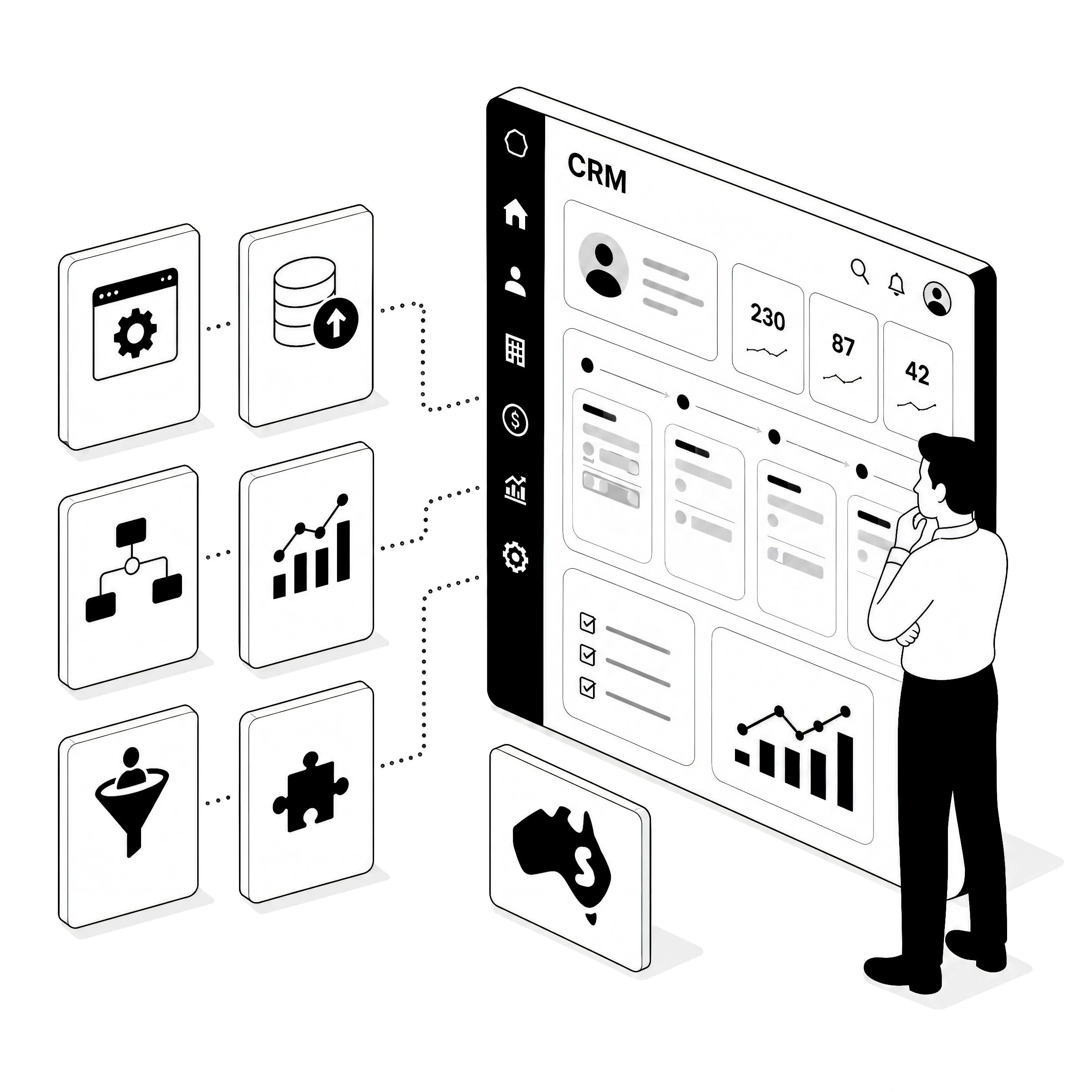


Future-Ready Systems With HubSpot For Consulting

Picture this. You’re sitting in a strategy meeting five years from now. Your consulting firm has tripled in size. You’ve expanded into new service lines. Your client base has shifted. Market conditions have changed completely.
Then someone asks the question that strikes fear into every business leader’s heart: “Can our systems handle this?”
If the answer is anything other than an immediate, confident yes, you’ve got a problem. A big, expensive, disruptive problem that could have been avoided if you’d built future-ready systems from the beginning.
This is where HubSpot for consulting firms becomes more than just another CRM choice. It’s about building digital infrastructure that doesn’t just serve today’s needs but anticipates tomorrow’s demands. Let’s talk about what future-ready actually means, why it matters specifically for consulting businesses, and how to build systems that grow with you instead of holding you back.
Why Consulting Firms Need Different Systems
Consulting isn’t like retail. It’s not like manufacturing. It’s not like most businesses, actually. And that means your systems can’t be generic off-the-shelf solutions configured exactly like everyone else’s.
Your revenue model is fundamentally different. You’re not selling products. You’re selling expertise, time, and outcomes. Your value proposition changes with every client. Your delivery model varies by engagement. Your pricing might be hourly, project-based, retainer, value-based, or some hybrid depending on the situation.
Try tracking that in a system designed for product sales. It’s possible, but it’s painful. Fields don’t quite fit. Reports don’t quite work. Your team develops elaborate workarounds that sort of function until they don’t.
The Complexity of Consulting Relationships
Your client relationships are layered in ways that simple CRM systems can’t easily represent. You’ve got the company as an entity. Multiple contacts within that company at different levels. Various decision makers, influencers, and end users. Different departments with different needs. Historical context spanning years.
Then there’s the work itself. Multiple concurrent projects. Different team members on different engagements. Varying scopes and deliverables. Evolving requirements as projects progress.
Standard systems treat every customer interaction the same. They’re built for transactional relationships, not the deep, ongoing partnerships that consulting firms cultivate. They can’t easily show you the full picture of client health, project profitability, or resource allocation.
Also Read: Faster Time-To-Value With HubSpot Sydney
The Knowledge Management Challenge
Consulting firms are knowledge businesses. What you know and how you apply it differentiates you from competitors. But knowledge lives in people’s heads, scattered documents, old emails, and informal conversations.
Systems designed for product companies don’t help with knowledge management. They track deals and contacts, but they don’t capture insights from projects, methodologies that work, lessons learned, or best practices that should be replicated.
Future-ready consulting systems need to manage knowledge as carefully as they manage client relationships. They need to make expertise accessible, transferable, and buildable over time.
What Future-Ready Actually Means for Consulting Firms
Let’s move beyond buzzwords and define what future-ready systems actually deliver for consulting businesses.
Scalability Without Rebuilding
Future-ready means your systems handle ten clients or a hundred clients without fundamental changes. They accommodate five consultants or fifty without breaking. They manage one office or multiple locations seamlessly.
You’re not rebuilding your tech stack every time you hit a growth milestone. You’re not migrating data because you’ve outgrown your platform. You’re not retraining your team because everything changed.
Your systems grow smoothly as you grow, accommodating increased complexity without increased chaos.
Flexibility for Business Model Evolution
The consulting firm you are today might not be the consulting firm you are in three years. You might add new service lines. Enter new markets. Change how you package and deliver services. Shift from hourly billing to value-based pricing.
Future-ready systems adapt to these changes without requiring complete reconfiguration. They’re flexible enough to accommodate new business models while maintaining continuity with existing operations.
This flexibility isn’t about having every possible feature. It’s about having the right architecture to customise and extend as needs evolve.
Integration That Expands
Your current tech stack includes accounting software, project management tools, time tracking systems, document management, and probably a dozen other platforms. Next year you’ll add new tools. In three years, some current tools will be replaced.
Future-ready systems integrate cleanly with other platforms through modern APIs and standard protocols. When you need to connect new tools, it’s straightforward rather than a major technical project.
Integration capabilities determine whether you can adopt best-of-breed tools or remain trapped using inferior options just because they’re already connected.
Data Architecture That Scales
As you grow, data complexity explodes. More clients mean more records. More projects generate more data points. More team members create more information. Historical data accumulates over years.
Poor data architecture collapses under this weight. Reports become slow. Searches time out. The system feels sluggish. Eventually, performance degrades so much that productivity suffers.
Future-ready data architecture handles growth gracefully. Reports remain fast. Searches stay responsive. The system performs well regardless of data volumes.
Security and Compliance That Evolves
Regulatory requirements change. Security threats evolve. Client expectations around data protection increase. Today’s adequate security becomes tomorrow’s liability.
Future-ready systems build in security and compliance capabilities that can be enhanced as standards change. They make it possible to implement new protections without complete system overhauls.
For Australian consulting firms specifically, this means systems that can adapt to changing Australian privacy regulations, industry-specific compliance requirements, and evolving data sovereignty expectations.
Why HubSpot Excels for Future-Ready Consulting Systems
HubSpot isn’t the only platform that can serve consulting firms. But it’s particularly well-suited for building future-ready systems because of specific architectural decisions and capabilities.
Built for Relationship Complexity
HubSpot’s object structure naturally handles complex B2B relationships. Companies, contacts, deals, and tickets are all interconnected. You can add custom objects for things like projects, deliverables, or methodologies.
This flexibility means you can model your actual business relationships accurately rather than forcing them into rigid structures designed for simpler business models.
You can see everything about a client relationship in one place. All contacts. All deals. All projects. All communications. Complete history. Nothing gets lost in disconnected systems.
Powerful Without Overwhelming
HubSpot balances power and usability better than most enterprise platforms. It’s sophisticated enough to handle complex consulting operations but intuitive enough that consultants will actually use it.
This matters more than technical people often realise. The most powerful system is worthless if your team won’t use it. HubSpot’s interface is clean, logical, and approachable.
Your consultants can focus on client work instead of fighting technology. They can find information quickly. Update records easily. Access what they need without extensive training.
Marketing and Sales Alignment
Many consulting firms struggle with the transition from lead to client to ongoing relationship. Marketing generates interest. Sales closes deals. Delivery teams manage projects. But these handoffs are messy, with information lost at each transition.
HubSpot brings these functions together in one platform. Marketing activities are visible to sales. Sales context transfers to delivery teams. Everyone sees the complete picture.
This alignment improves client experience because nothing falls through cracks during handoffs. It also improves efficiency because teams aren’t duplicating efforts or searching for context.
Reporting and Analytics That Matter
Consulting firms need specific insights. Which service lines are most profitable? Which clients generate the most repeat business? What’s the average project timeline by type? Where do projects typically encounter delays?
HubSpot’s reporting tools let you build custom reports and dashboards that answer your specific questions. You’re not limited to generic sales metrics designed for product companies.
Good data drives better decisions. HubSpot gives you the data you need in formats you can actually use.
Automation That Saves Time
Consulting businesses involve countless repetitive tasks. Follow-up emails. Status updates. Document generation. Approval workflows. Progress reporting.
HubSpot’s workflow automation handles these tasks reliably, freeing your team to focus on high-value consulting work. Automations can be simple or sophisticated depending on needs.
Time saved on administration is time available for billable work or business development. That’s direct impact on revenue and profitability.
Ecosystem and Integrations
HubSpot integrates with hundreds of other platforms through native integrations and APIs. This means you can connect it with project management tools like Asana, accounting software like Xero, time tracking platforms, document management systems, and virtually anything else your consulting firm uses.
You build an integrated ecosystem rather than isolated systems. Data flows automatically. Consultants work in their preferred tools while information stays synchronised across platforms.
Building Your Future-Ready HubSpot System
Understanding why HubSpot works for consulting firms is one thing. Actually building a future-ready system requires strategic thinking and careful implementation.
Start With Client Lifecycle Mapping
Before configuring anything, map your complete client lifecycle. From initial awareness through lead nurturing, sales process, onboarding, project delivery, ongoing relationship management, and potential churn or renewal.
Identify every touchpoint. Every handoff. Every piece of information that needs to flow between stages. Every decision point that triggers different paths.
This mapping reveals where systems need to support your process rather than forcing your process to conform to system limitations.
Design for Your Revenue Model
How do you actually make money? Configure HubSpot to track and optimise your specific revenue model.
If you bill hourly, integrate time tracking and ensure hours are captured against the right projects and clients. If you work on retainers, track scope against retainer limits. If you do value-based pricing, track outcomes and value delivery.

Your CRM should make it easy to see project profitability, not just whether deals closed. Consulting is about delivering value profitably, and your systems should support that.
Build Knowledge Capture Into Workflows
Don’t let project insights disappear when engagements end. Build knowledge capture into your workflows systematically.
Maybe every project conclusion triggers a lessons-learned documentation process. Perhaps monthly project reviews automatically capture what’s working and what isn’t. Possibly client feedback is systematically collected and made searchable.
Over time, this builds an institutional knowledge base that makes your entire firm smarter and more capable.
Plan for Team Collaboration
Consulting projects involve multiple people with different roles. Your HubSpot configuration should facilitate collaboration, not hinder it.
Think about permissions and visibility. What should everyone see? What’s sensitive to specific roles? How do team members communicate about clients and projects within the system?
Good collaboration tools within HubSpot mean less email, fewer status meetings, and better coordination across distributed teams.
Implement Staged Automation
Don’t try to automate everything immediately. Start with high-value, low-complexity automations. Prove they work. Build confidence. Then expand.
Maybe you start by automating proposal follow-ups. Then add automated project status updates. Then implement approval workflows. Each success builds momentum for the next.
Staged implementation lets you learn and adjust without overwhelming your team or creating complex automations that nobody understands.
Integration Strategies for Consulting Firms
HubSpot’s power multiplies when integrated with other platforms. Here’s how smart consulting firms build integrated ecosystems.
Project Management Integration
Tools like Asana, Monday, or ClickUp handle detailed project management better than CRM systems. Integrate them with HubSpot so project status flows automatically to client records.
Your consultants work in project management tools. Your client-facing teams see project status in HubSpot. Everyone has the information they need without manual updates.
This integration prevents the common problem where project teams know what’s happening but client-facing teams are in the dark.
Financial System Connection
Connect HubSpot with your accounting software, whether that’s Xero, MYOB, or something else. Deals in HubSpot become invoices in your accounting system. Payments update automatically. Financial reporting pulls from both systems.
This integration eliminates double-entry and ensures financial data stays consistent across platforms.
Time Tracking Synchronisation
If you bill hourly or track time for project management, integrate your time tracking platform with HubSpot. Hours tracked against projects flow to client records. Utilisation reporting becomes accurate and automated.
This gives you real-time visibility into project profitability and team utilisation, critical metrics for consulting businesses.
Document Management Connection
Proposals, contracts, deliverables, and project documentation need to be accessible from client records. Integration with document management systems like Google Drive or SharePoint puts relevant documents one click away from HubSpot records.
Your team finds what they need instantly instead of searching email attachments or shared drives.
Australian Consulting Firms and HubSpot
For consulting firms operating in Australia, specific considerations shape how you implement and use HubSpot effectively.
Local Data and Privacy Compliance
Australian consulting firms handle sensitive client information under Australian Privacy Principles. Your HubSpot configuration needs to support proper consent management, data handling, and privacy protection.
This includes things like properly managing marketing consent, handling data subject requests, ensuring data is stored appropriately, and maintaining audit trails.
Working with Australian HubSpot experts ensures your configuration meets local requirements from the beginning rather than requiring costly remediation later.
Integration With Australian Platforms
You’re probably using Australian or Australia-focused platforms for various business functions. Xero for accounting. Deputy for scheduling. Australia Post for shipping if you handle physical materials. Australian payment gateways.
Local HubSpot consultants have integrated these platforms repeatedly. They know what works, what doesn’t, and how to configure connections reliably.
Time Zone and Support Considerations
When you need help, you need it during Australian business hours. Overseas support means waiting, often until the next day, which can be painful when you’re facing urgent issues.
Australian HubSpot partners provide support when you need it, speaking your language and understanding your context.
Industry-Specific Experience
Different consulting specialisations have different needs. Management consultants operate differently than IT consultants. Marketing agencies have different workflows than engineering consultancies.
Australian consultants with industry experience understand your specific challenges and can configure HubSpot to match your particular flavour of consulting business.
Why Smartmates Excels at HubSpot for Consulting
When it comes to implementing future-ready HubSpot systems for Australian consulting firms, Smartmates brings unique capabilities to the table.
Smartmates understands both HubSpot and consulting businesses deeply. They’ve worked with consulting firms across specialisations, from small boutiques to larger practices, implementing systems that actually fit how consulting businesses operate.
Their team includes certified HubSpot experts with extensive experience configuring the platform for complex B2B service businesses. They don’t just know HubSpot features. They understand how to apply those features to solve real consulting business challenges.
What sets Smartmates apart is their dual expertise in both HubSpot and Zoho, giving them unusual perspective on platform selection and configuration. They can honestly assess which platform better fits your specific situation and implement either one expertly.
Their implementation methodology focuses on business outcomes rather than technical completeness. They help you define what success looks like, then configure HubSpot to deliver those results. They’re not trying to use every feature. They’re trying to solve your actual problems.
For Australian consulting firms specifically, Smartmates brings critical local expertise. They understand Australian business practices, compliance requirements, and integration ecosystems. They’ve connected HubSpot with the platforms Australian consulting firms actually use.
Their client-focused approach means they adapt to your needs rather than forcing you into rigid implementation templates. They listen carefully, ask insightful questions, and design solutions that fit your unique situation.
Smartmates also provides ongoing support and optimisation, recognising that future-ready systems evolve over time. They’re partners in your long-term success, not just vendors completing a project.
Maximising Your HubSpot Investment
If you’re implementing HubSpot for your consulting firm, here’s how to ensure you get maximum value.
Invest in Proper Planning
Don’t rush into configuration. Spend time understanding your requirements, mapping your processes, and designing your ideal system. This upfront investment pays off through better configuration and faster adoption.
Prioritise User Adoption
The best-configured system is worthless if your team won’t use it. Focus on making HubSpot intuitive and valuable for actual users. Train thoroughly. Create documentation. Provide ongoing support.
User adoption determines ROI more than any technical factor. Make it easy for your team to succeed with HubSpot.
Start Simple, Then Expand
Implement core functionality first. Get that working well. Build confidence and momentum. Then expand into more sophisticated features and integrations.
This staged approach is less overwhelming and more likely to succeed than trying to implement everything simultaneously.
Measure What Matters
Define clear success metrics before implementation. Then track them consistently. Are you winning more business? Delivering projects more profitably? Improving client retention? Growing more efficiently?
Measure business outcomes, not just system usage. HubSpot is a tool for achieving business goals, not a goal in itself.
Keep Optimising
Future-ready systems evolve continuously. Regularly review your HubSpot configuration. Identify what’s working and what isn’t. Make adjustments. Add capabilities as needs emerge.

Think of HubSpot as a living system that grows and improves over time, not a one-time implementation project.
Transform Your Consulting Firm With Future-Ready Systems
Here’s the fundamental truth about future-ready systems. They’re not about having the fanciest technology or the most features. They’re about building digital infrastructure that enables your consulting firm to grow, evolve, and succeed over the long term.
Poor systems constrain your business. They create friction. They limit what’s possible. They force you to work around technical limitations instead of focusing on serving clients and growing your firm.
Future-ready HubSpot systems do the opposite. They enable growth. They reduce friction. They expand possibilities. They let you focus on what matters while technology handles the rest quietly and reliably.
For consulting firms specifically, this transformation is profound. You gain visibility into client relationships you’ve never had before. You deliver more consistent client experiences. You capture and leverage knowledge systematically. You make better decisions based on better data.
Your team spends less time on administration and more time on valuable work. Your clients receive more responsive, coordinated service. Your business runs more efficiently and scales more easily.
The difference between consulting firms that thrive and those that struggle often comes down to their systems. Firms with future-ready infrastructure grow confidently. Those without hit growth ceilings imposed by technological limitations.
For Australian consulting firms, working with local experts who understand both HubSpot and consulting businesses is essential. You need partners who can bridge the gap between generic platform capabilities and your specific requirements.

Smartmates represents the best of what HubSpot implementation should look like for consulting firms. Deep platform expertise combined with consulting industry knowledge. Technical capability paired with business acumen. Local understanding meeting global platform power.
They’ve helped dozens of Australian consulting firms build future-ready HubSpot systems that drive real business results. They understand what works because they’ve done it repeatedly. They know what fails because they’ve seen the aftermath and helped firms recover.

Ready to build systems that grow with your consulting firm instead of holding it back? Ready to transform how you manage client relationships, deliver projects, and run your business? Ready for future-ready infrastructure that enables rather than constrains?
Connect with Smartmates today and discover what properly implemented HubSpot can do for your consulting firm. Because the future belongs to firms with systems that can handle whatever comes next. Because growth requires infrastructure that scales. Because your consulting business deserves technology that actually works the way you need it to.


Build future-ready. Grow confidently. Transform completely.
Request a Callback from Smartmates

Sarah
I’ll listen to your HubSpot needs to understand your business challenges and goals, ensuring a tailored approach.
I’ll bring our engineer onto our first consultation to explore solutions and clarify your requirements.
We’ll deliver your free project plan quotation, detailing the steps, timeline, and costs—up to this point, it’s completely free!
“My mission is to solve your key problems, build your trust in our capabilities and deliver exceptional value for money.”