

The Difference Between Tools And HubSpot Solutions

You bought HubSpot. You logged in. You clicked around. And honestly? It feels like just another tool sitting in your software stack, gathering digital dust alongside the dozen other platforms you barely use.
If this sounds familiar, you’re making the most expensive mistake in modern business technology. Because HubSpot isn’t a tool. It’s a solution. And the difference between these two things is the difference between wasting money and transforming your business.
Let’s unpack why this matters and what it means for Australian businesses trying to actually get value from their technology investments.

Tools vs Solutions: More Than Semantic Gymnastics
Here’s the uncomfortable reality: most businesses treat everything they buy as a “tool.” They purchase software the way they buy hammers. Need to track customers? Buy a CRM tool. Need to send emails? Buy an email tool. Need to manage projects? Buy a project management tool.
Each purchase solves one specific problem. Maybe. If you remember to use it. If everyone adopts it. If it actually works the way you need it to.
The tool mentality looks like this:
You’ve got a toolbox full of individual applications. CRM over here. Email marketing over there. Analytics in another tab. Customer service on a different platform. Social media management somewhere else. Each one does its thing, mostly in isolation.
Your team learns each tool separately. They switch between platforms constantly. Data lives in silos. Nobody has a complete picture of anything. Integration is either impossible or requires expensive custom development that breaks every time something updates.
Sound exhausting? It is.
HubSpot solutions work differently:
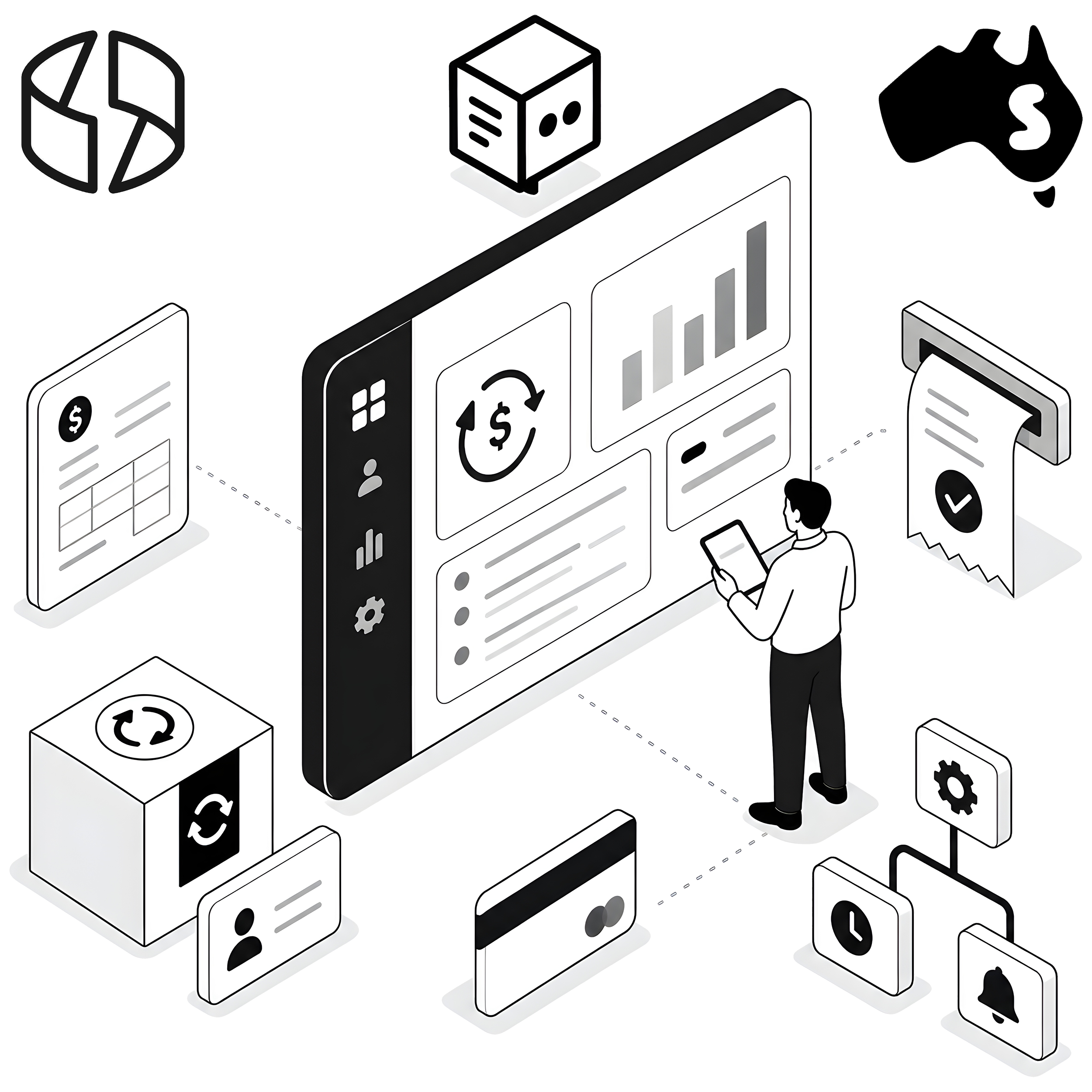
Instead of a collection of disconnected tools, you get an integrated ecosystem where everything connects naturally. Your marketing platform talks to your sales CRM. Your customer service system sees sales history. Your analytics span every customer touchpoint. Information flows automatically instead of requiring manual transfer or complex integrations.
This isn’t a subtle difference. It’s fundamental. And it’s why businesses using HubSpot as just another tool get completely different results than those implementing it as a comprehensive solution.
Also Read: HubSpot Inbound Consulting For HR Talent Journeys
The Hidden Cost of the Tool Mentality
Let’s talk money for a moment. Not the upfront cost of software purchases, but the hidden expenses that nobody calculates until they add up to something substantial.
When you treat HubSpot as a tool:
Your team spends hours every week moving data between systems. Marketing exports lead lists from HubSpot to upload into your email platform. Sales copies customer information from emails into the CRM. Customer service reps ask clients for details that already exist somewhere in your tech stack.
Multiply these small inefficiencies across your entire team, every week, for a year. We’re talking hundreds of hours of productivity lost to manual data wrangling.
Then there’s the integration tax. You pay developers or consultants to build custom connections between platforms. These connections require maintenance. They break when APIs change. They need rebuilding as your needs evolve. The ongoing cost compounds over time.
The real kicker: Despite all this effort and expense, you still don’t have reliable, complete data. Information gets lost in transfer. Details are entered inconsistently. Updates in one system don’t reflect in others. Your business decisions are based on fragmented, partially accurate information.
One Australian client came to us spending roughly $30,000 annually just maintaining integrations between their various marketing and sales tools. Not purchasing new capabilities. Not improving processes. Just keeping things from breaking.
That’s the tool mentality cost in real numbers.
What Makes HubSpot Solutions Actually Different
Alright, enough criticism. Let’s talk about what HubSpot solutions actually provide that standalone tools don’t.
Unified data architecture:
Every interaction your business has with customers and prospects lives in one place. Website visits, email opens, form submissions, sales calls, support tickets, purchases, feedback. All of it, connected to individual contact records.
Your sales rep sees that a prospect downloaded three case studies, attended a webinar, and visited the pricing page five times before requesting a demo. Your support team sees the complete purchase history and previous interactions when a customer contacts them. Your marketing team sees exactly which campaigns influenced closed deals.
This complete context transforms how your team works. No more asking customers to repeat information. No more blind outreach without understanding what someone’s already engaged with. No more guessing about what matters.
Native integration across functions:
HubSpot solutions span marketing, sales, customer service, operations, and content management. Not as separate tools bolted together, but as connected components designed to work as one system.
A lead captured through marketing automatically enters the sales pipeline with full context. A closed deal triggers customer onboarding workflows in the service hub. Support tickets can generate tasks for sales to check in on at-risk accounts. Everything connects because it’s built to connect.

Adaptive workflows that span departments:
Here’s where HubSpot solutions really separate from simple tools. You can create automated workflows that cross functional boundaries.
Example: a prospect downloads a buying guide on your website. Marketing’s automated nurture sequence begins. After three engaged emails, the lead score passes a threshold. Sales gets notified. A sales rep reaches out. The prospect becomes a customer. Customer service receives a notification to schedule onboarding. Operations gets alerted to provision access. Finance receives deal information for billing setup.
This entire chain happens automatically, with each step informed by all previous interactions. Try building that with a collection of separate tools. Go ahead. We’ll wait.
The Implementation Gap Nobody Talks About
Here’s where theory meets brutal reality. Even when businesses buy HubSpot intending to use it as a complete solution, most end up using it like a tool. Why?
Because implementation matters more than purchase.
Buying HubSpot gives you access to powerful capabilities. But accessing capabilities and actually using them strategically are entirely different things.
What typically goes wrong:
Businesses buy HubSpot, click through the setup wizard, import their contacts, and start using basic features. They send emails from HubSpot instead of their old platform. They track deals in the CRM instead of spreadsheets. Small improvements, sure.

But they never configure lead scoring properly. They don’t set up sophisticated workflows. They don’t integrate HubSpot with their other business systems. They don’t customize pipelines to match their actual sales process. They don’t train teams on strategic capabilities.


Result? They’ve got an expensive tool that does slightly more than their old cheap tools, but they’re not getting solution-level value.
The implementation difference:
Proper HubSpot solutions implementation starts with understanding your business processes, not HubSpot features. What’s your customer journey? Where are your bottlenecks? What data do you need but don’t have? What decisions would you make differently with better information?
Then you configure HubSpot specifically to address these realities. Custom properties that capture information unique to your business. Workflows that automate your specific processes. Integrations with your particular tech stack. Reports that answer your actual strategic questions.
This requires expertise, time, and strategy. It’s not something you do in an afternoon with a setup wizard.
The Single Source of Truth Advantage
Let’s get practical about why this matters day-to-day.
The tool scenario:
Your marketing director says last quarter’s campaign generated 500 leads. Your sales director says they only received 300 leads from marketing. Your finance director wants to know the cost per acquisition but different systems show different numbers. Who’s right? Nobody knows because data lives in multiple places with no single source of truth.
Meanwhile, a sales rep is on the phone with a prospect. They don’t know that marketing just sent them an email yesterday. They aren’t aware the prospect’s been researching competitors on your website. They can’t see that the prospect downloaded pricing information last week. The conversation is blind when it should be informed.
HubSpot solutions scenario:
Everyone looks at the same data in HubSpot. Marketing, sales, service, operations, executives. The numbers match because there’s only one set of numbers. When someone asks about campaign performance, you pull up a report that shows leads generated, sales contacted, deals created, revenue closed, and ROI calculated. One source, complete picture, no arguments.
That sales rep? Before picking up the phone, they see the complete interaction history. They know exactly what content the prospect engaged with, which emails they opened, what pages they visited, and when interest spiked. The conversation is informed, relevant, and timely.
| Aspect | Multiple Tool Approach | HubSpot Solutions Approach |
|---|---|---|
| Data location | Scattered across platforms | Centralized in one system |
| Information accuracy | Conflicting numbers common | Single source of truth |
| Team visibility | Siloed by department | Shared across organization |
| Context availability | Minimal or manual | Complete and automatic |
| Decision making | Based on incomplete data | Based on comprehensive data |
| System maintenance | Constant integration work | Built-in connections |
| Team efficiency | Lost to manual processes | Focused on strategic work |
| Reporting complexity | Manual compilation required | Automated and real-time |
This isn’t just convenient. It’s transformative for how businesses operate.
Scalability: Where Tools Break Down
Small-scale operations can survive with disconnected tools. You’ve got a few team members who can coordinate manually. Data volumes are manageable. Processes are simple enough to keep in your head.
Scale changes everything.
The tool breaking point:
As you grow, tool-based approaches collapse under their own complexity. You need more integrations. More manual processes. More people spending time on coordination instead of value creation. More room for errors and inconsistencies.
We’ve watched Australian businesses hit this wall repeatedly. They start with three team members and five tools. Everything works fine. Fast forward two years. They’ve got fifteen team members and twelve tools. Nothing works fine. They’re spending more time managing their tech stack than using it productively.
HubSpot solutions scale differently:
Because everything’s integrated from the start, adding team members doesn’t add complexity. Add more users. Extend more workflows. Create more automated processes. The system expands without breaking.
Your tenth sales rep operates as efficiently as your first because they’re working within the same structured system. Your hundredth customer gets the same excellent experience as your first because automated processes ensure consistency.
This scalability isn’t accidental. It’s designed into HubSpot solutions from the foundation.
Automation That Actually Makes Sense
Automation is everywhere these days. Every tool claims to automate something. But there’s automation that saves minutes, and automation that transforms operations.
Tool-level automation:
Individual tools automate isolated tasks. Your email platform automates sending sequences. Your CRM automates reminder tasks. Your project management tool automates status updates. Each automation lives in its silo, disconnected from everything else.
These automations are helpful. Marginally. But they don’t change how your business fundamentally operates.
Solution-level automation:
HubSpot solutions enable automation that spans your entire business process. Not just automated emails, but automated lead capture, scoring, routing, nurturing, hand-off to sales, deal tracking, customer onboarding, service escalation, renewal management, and feedback collection.
One automated workflow can touch every department and handle processes that previously required dozens of manual steps and coordination between multiple people.
Real-world example:
A prospect fills out a form on your website at 11pm on Saturday. Here’s what HubSpot solutions can automate:
Capture the lead with enriched company data. Score the lead based on fit and engagement. Assign to the appropriate sales rep based on territory and specialization. Send a personalized acknowledgment email. Add to a nurture sequence based on their industry. Create a follow-up task for Monday morning. Notify the rep via Slack. Update your marketing dashboard with lead source data. Add the company to a monthly performance report.
All automatic. All connected. All without anyone lifting a finger.
Try coordinating that across six separate tools. It’s technically possible with extensive custom development, but it’s so complex that most businesses never bother. That’s the difference between tool-level and solution-level automation.
The Strategic Data Advantage
Data is supposedly the new oil. But raw data is like crude oil. Useless until refined into something actionable.
Tool-based data limitations:
When data lives in separate tools, analysis becomes manual compilation. Export from here, export from there, try to match records, build spreadsheets, create charts, hope your formulas are correct. By the time you’ve got insights, the data’s already outdated.
Plus, you can’t analyze connections between data points that live in different systems. You can’t easily answer questions like “Which marketing channels generate leads that close fastest?” or “Do customers who engage with support early have higher lifetime value?” because the data needed to answer these questions is fragmented.
HubSpot solutions data capabilities:
All data in one place means all analysis in one place. Marketing attribution connects campaigns to revenue. Sales analytics show pipeline health and forecast accuracy. Customer data reveals satisfaction trends and expansion opportunities.
But more importantly, you can analyze relationships between previously disconnected data. Which marketing content correlates with shorter sales cycles? Which lead sources have the highest customer lifetime value? What early behaviors predict churn risk?
These insights transform from impossible to automatic.
| Question | Tools Can Answer | HubSpot Solutions Can Answer |
|---|---|---|
| How many leads did we get? | Yes (maybe) | Yes (definitely) |
| Which source generates quality leads? | Difficult | Easy |
| What’s our lead to customer rate by source? | Very difficult | Easy |
| How does marketing engagement affect sales cycle? | Nearly impossible | Easy |
| Which customers are at churn risk? | Impossible | Easy with predictive scoring |
| What’s the ROI of specific campaigns? | Manual calculation | Automated reporting |
| How do service interactions affect expansion? | Cannot determine | Clear correlation tracking |
| What content influences deals at each stage? | Unknown | Detailed attribution |
Strategic decisions require strategic data. HubSpot solutions provide it. Collections of tools don’t.
The Australian Business Context
Let’s bring this closer to home. Australian businesses face specific challenges that make the tool versus solution distinction particularly important.
Geographic spread:
If you’re operating nationally, coordinating across time zones and locations is challenging enough without technology making it harder. Teams in Perth, Sydney, Melbourne, and Brisbane need to work from the same information in real-time.
Disconnected tools create delays and inconsistencies. Someone in Sydney updates information that someone in Perth doesn’t see until they log into a different system hours later. HubSpot solutions keep everyone synchronized automatically.
Talent constraints:
The Australian tech talent market is competitive and expensive. You can’t afford to waste skilled people on manual data entry and system coordination. HubSpot solutions free your team to focus on strategic work that actually drives business value.
Growth expectations:
Australian businesses competing globally need to operate efficiently despite smaller market size. You can’t have Silicon Valley overheads. HubSpot solutions let you compete with larger international competitors without matching their team sizes because automation and integration multiply your effectiveness.
The Smartmates Implementation Philosophy
This is where we need to be direct about what separates successful HubSpot solutions from disappointing tool implementations.
Our approach at Smartmates:
We don’t sell HubSpot subscriptions and walk away. We implement HubSpot solutions designed specifically for your business reality. This starts with understanding how you actually operate, not how HubSpot’s default setup assumes you operate.
Discovery and strategy:
Before configuration begins, we map your current processes. How do leads become customers in your business? What information do different teams need? Where are bottlenecks and inefficiencies? What reporting would help you make better decisions?
Then we design a HubSpot solutions architecture that addresses these specific realities. Custom properties for data you need to track. Workflows for processes you need to automate. Integrations with tools you need to connect. Dashboards for questions you need to answer.
Configuration and customization:
Generic HubSpot setup takes hours. Proper HubSpot solutions configuration takes weeks. We customize everything to match your business, not force your business to match HubSpot’s defaults.
Lead scoring calibrated to your ideal customer profile. Sales pipelines matching your actual stages. Marketing workflows reflecting your customer journey. Service processes aligned with your support methodology.
Integration and migration:
Your business doesn’t run on HubSpot alone. We integrate HubSpot solutions with your accounting software, communication tools, e-commerce platforms, marketing channels, and whatever else your business relies on.
We also migrate your existing data properly. Not just bulk importing contacts, but cleaning data, mapping fields correctly, preserving relationships, and ensuring historical information transfers accurately.
Training and adoption:
Technology only delivers value when people actually use it. We train your team not just on where buttons are, but on how HubSpot solutions change their daily work for the better.
Role-specific training means marketing learns marketing capabilities, sales learns sales features, service learns service functions. Everyone understands how their piece fits into the larger solution.
Ongoing optimization:
Implementation isn’t a one-time event. As your business evolves, your HubSpot solutions should evolve too. We provide ongoing support, optimization recommendations, and strategic guidance to ensure you’re getting maximum value continuously.
The Australian advantage:
We’re based in Australia. We understand Australian business culture, market dynamics, and operational realities. When you need help, you get it during Australian business hours from people who understand your context. No offshore support confusion. No time zone frustrations.
We’re certified HubSpot experts who’ve implemented solutions for hundreds of Australian businesses. We know what works in this market and what doesn’t.
Real Outcomes: Tools vs Solutions in Practice
Theory is interesting. Results are what matter. Let’s talk about what the tool versus solution difference means in actual business outcomes.
Tool-level results:
Modest improvements over previous systems. Slightly better organization. Some time saved on specific tasks. Incremental benefits that are nice but not transformative.
Typical ROI timeline: 18-24 months to break even on investment, if adoption stays consistent.
Solution-level results:
Dramatic operational improvements. Processes that took hours now take minutes or are fully automated. Data quality and completeness that enables strategic decisions previously impossible. Team productivity multiplied because technology handles routine work.
Typical ROI timeline: 6-12 months to positive ROI, with compounding benefits as adoption deepens.
Specific examples from our clients:
One Australian B2B services company was managing leads across spreadsheets, email, and a basic CRM. They implemented HubSpot solutions with marketing automation, sales pipeline management, and integrated reporting. Within six months, lead response time dropped from 48 hours to under 2 hours. Conversion rates improved by 35%. Sales team productivity increased by 40% because automation handled routine tasks.
Another client in professional services had five different tools handling marketing, sales, client management, and billing. Integration maintenance alone cost $25,000 annually. After implementing comprehensive HubSpot solutions, they eliminated three separate tools entirely, reduced integration costs to near zero, and gained complete visibility across all client interactions. ROI was positive within four months.
These aren’t outliers. These are typical results when HubSpot solutions are implemented properly instead of used as just another tool.
Making the Shift: From Tools to Solutions
If you’re currently using HubSpot as a tool and recognizing you’re leaving massive value on the table, what’s the path forward?
Assessment:
Honestly evaluate your current usage. What percentage of HubSpot’s capabilities are you actually using? How many manual processes could be automated? How much data isn’t being captured or analyzed? Where are teams working inefficiently because systems don’t connect?
Strategic planning:
Don’t just start clicking buttons and hoping for improvement. Define what success looks like. What business outcomes would make HubSpot solutions transformative for you? Faster sales cycles? Higher conversion rates? Better customer retention? More strategic decision making?
Work backward from outcomes to required capabilities to configuration needs.
Expert implementation:
This is where most businesses need help. Moving from tool usage to solution implementation requires expertise most internal teams don’t have. It’s not about being smart or capable. It’s about specialized knowledge and experience.
Trying to DIY this transition usually results in months of frustration and marginal improvement. Working with certified experts who’ve done this dozens or hundreds of times compresses the timeline and improves the result dramatically.
Change management:
Technology changes are easy compared to human behavior changes. Your team needs to understand not just how to use HubSpot solutions, but why the new way of working is better than the old way.
This requires training, support, reinforcement, and patience. Quick wins help demonstrate value. Regular check-ins address questions and resistance. Gradual rollout prevents overwhelming people.
Continuous improvement:
The shift from tools to solutions isn’t a one-time flip. It’s an ongoing evolution. Start with core capabilities that deliver the most value. Then layer in additional functionality as teams gain confidence and competence.
Your HubSpot solutions should grow more sophisticated over time, continually delivering greater value.
The Cost of Staying with Tools
We’ve talked a lot about the benefits of HubSpot solutions. Let’s talk briefly about the cost of not making the change.
Opportunity cost:
Every day you operate with disconnected tools is a day you’re less efficient than you could be. Leads respond slower than they should. Decisions are made with incomplete information. Teams waste time on coordination that should be automatic.
Multiply these small inefficiencies across weeks, months, and years. The compound effect is substantial.
Competitive disadvantage:
Your competitors who are using HubSpot solutions properly are operating faster, more efficiently, and with better intelligence than you are. They’re winning deals you could have won with faster response times. They’re retaining customers you’re losing because their service is more coordinated. They’re growing while you’re treading water.
Team frustration:
Good people want to do meaningful work, not waste time on manual processes and system coordination. When your technology gets in the way instead of enabling productivity, talented team members get frustrated. Eventually, they leave for opportunities where they can be more effective.
Sunk costs multiplying:
The money you’ve already spent on HubSpot isn’t delivering proper value. That’s bad. But continuing to pay for capabilities you’re not using compounds the waste. Every month, you’re spending money for solution-level features while getting tool-level value.
The gap between what you’re paying and what you’re getting widens over time.
Your Path to HubSpot Solutions That Actually Work
Let’s bring everything together. The difference between tools and HubSpot solutions isn’t academic. It’s the difference between marginal improvement and operational transformation.
Tools are point solutions for specific tasks. HubSpot solutions are integrated ecosystems that transform how your entire business operates. Tools provide incremental benefits. Solutions deliver multiplicative advantages.
The question isn’t whether HubSpot can be more valuable to your business. It absolutely can. The question is whether you’re willing to make the shift from tool usage to solution implementation.
This requires:
Strategic thinking about how technology should enable your business. Expert implementation that goes far beyond basic setup. Training that ensures adoption and effective usage. Ongoing optimization as your business evolves.
Most businesses can’t do this alone. They need partners who understand both HubSpot capabilities and business operations deeply. Partners who’ve successfully implemented solutions dozens or hundreds of times. Partners who provide ongoing support, not just initial setup.
Ready to Transform Your HubSpot Experience?
Smartmates specializes in transforming HubSpot tools into genuine solutions for Australian businesses. We combine deep platform expertise with practical business knowledge to deliver implementations that actually generate ROI.
We offer CRM integration, custom app development, workflow automation, and data migration. But more importantly, we deliver strategic thinking, expert configuration, comprehensive training, and ongoing support that ensures your HubSpot investment delivers transformative value.
Request a Callback from Smartmates

Sarah
I’ll listen to your HubSpot needs to understand your business challenges and goals, ensuring a tailored approach.
I’ll bring our engineer onto our first consultation to explore solutions and clarify your requirements.
We’ll deliver your free project plan quotation, detailing the steps, timeline, and costs—up to this point, it’s completely free!
“My mission is to solve your key problems, build your trust in our capabilities and deliver exceptional value for money.”